New Tool explains how AI ‘sees’ Images and why it might Mipostake an Astronaut for a Shovel

New tool explains how AI 'sees' images and why it might mistake an astronaut for a shovel

Why is it that artificial intelligence systems can outperform humans on some visual tasks, like facial recognition, but make egregious errors on others—such as classifying an image of an astronaut as a shovel?

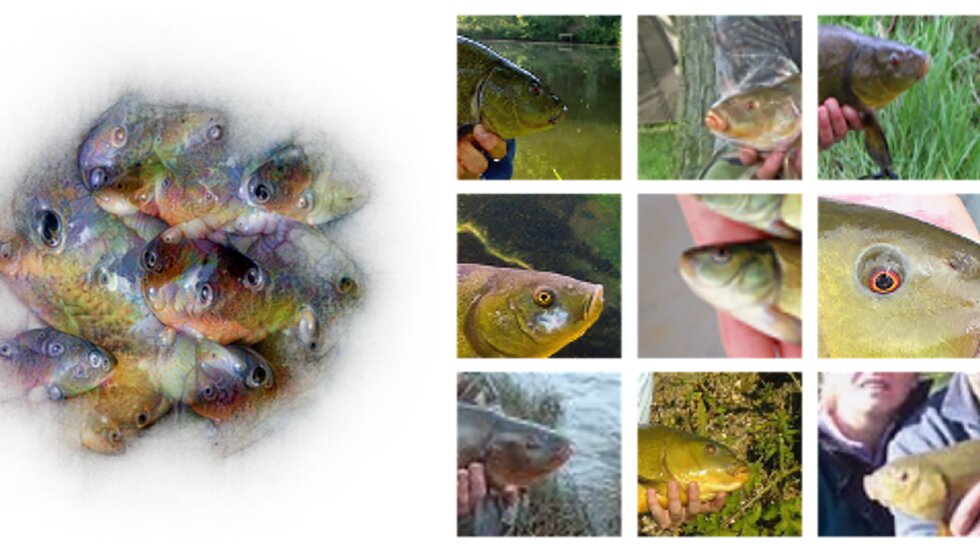
Like the human brain, AI systems rely on strategies for processing and classifying images. And like the human brain, little is known about the precise nature of those processes. Scientists at Brown University’s Carney Institute for Brain Science are making strides in understanding both systems, publishing a recent paper that helps to explain computer vision in a way the researchers say is accessible as well as more useful than previous models.

“Both the human brain and the deep neural networks that power AI systems are referred to as black boxes because we don’t know exa...

Read More

Astronomers find a Planet that Shouldn’t Exist

A "hot Jupiter" exoplanet named Halla may have orbited two stars at one time. Interactions between the two stars may have helped Halla survive a stellar outburst.
A “hot Jupiter” exoplanet named Halla may have orbited two stars at one time. Interactions between the two stars may have helped Halla survive a stellar outburst. Adam Makarenko/W.M. Keck Observatory

When our sun reaches the end of its life, it will expand to 100 times its current size, enveloping the Earth. Many planets in other solar systems face a similar doom as their host stars grow old. But not all hope is lost, as astronomers from the University of HawaiÊ»i Institute for Astronomy (UH IfA) have made the remarkable discovery of a planet’s survival after what should have been certain demise at the hands of its sun.

The Jupiter-like planet 8 UMi b, officially named Halla, orbits the red giant star Baekdu (8 UMi) at only half the distance separating the Earth and the sun...

Read More

Researchers uncover new CRISPR-like system in animals that can Edit the Human Genome

Fanzor/ωRNA/target DNA complex
Credit: Courtesy of the Zhang lab
Cryo-EM map of a Fanzor protein in complex with ωRNA and its target DNA.

A team of researchers led by Feng Zhang at the Broad Institute of MIT and Harvard and the McGovern Institute for Brain Research at MIT has uncovered the first programmable RNA-guided system in eukaryotes—organisms that include fungi, plants, and animals.

In a study published in Nature, the team describes how the system is based on a protein called Fanzor. They showed that Fanzor proteins use RNA as a guide to target DNA precisely, and that Fanzors can be reprogrammed to edit the genome of human cells...

Read More

Computer Vision System Marries Image Recognition and Generation

Computer vision system marries image recognition and generation
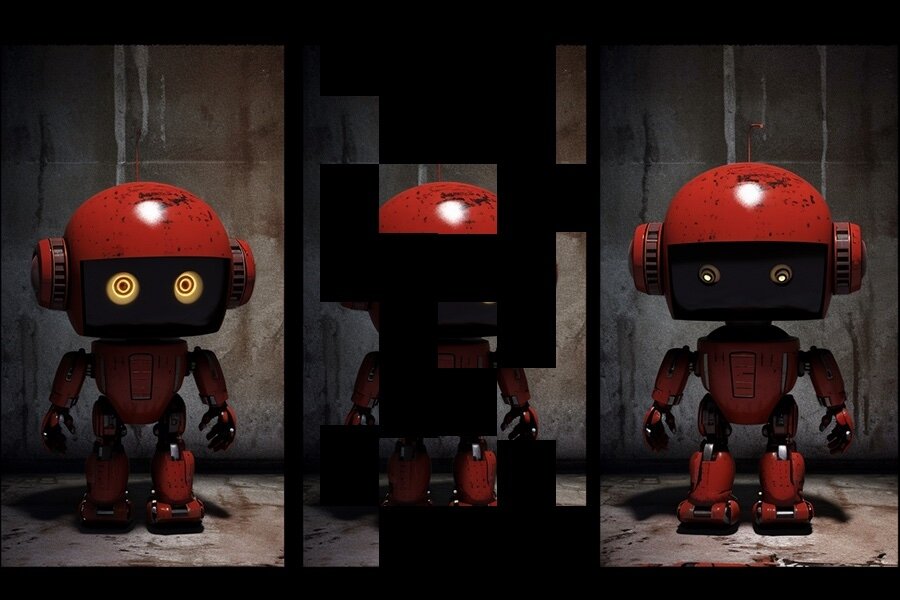
A unified vision system known as Masked Generative Encoder (MAGE), developed by researchers at MIT and Google, could be useful for many things, like finding and classifying objects in an image, learning from just a few examples, generating images with specific conditions such as text or class, editing existing images, and more. Credit: Alex Shipps/MIT CSAIL via Midjourney

Computers possess two remarkable capabilities with respect to images: They can both identify them and generate them anew. Historically, these functions have stood separate, akin to the disparate acts of a chef who is good at creating dishes (generation), and a connoisseur who is good at tasting dishes (recognition).

Yet, one can’t help but wonder: What would it take to orchestrate a harmonious union between these t...

Read More