
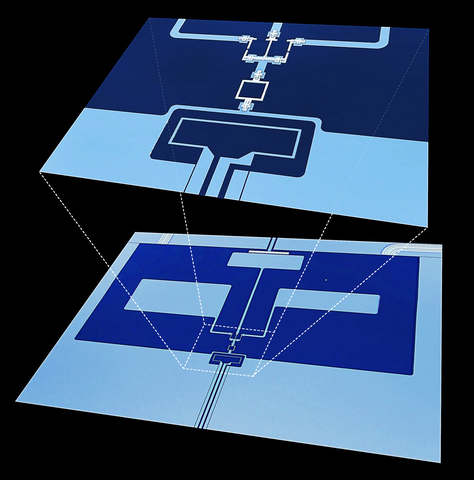
Credit: R. Simmonds/NIST
The novel device could lead to more versatile quantum processors with clearer outputs...
Read More


Until we recognize the essential role of biology, our attempts to truly unify the universe will remain a train to nowhere. ~Robert Lanza Read More

Good health is not something we can buy. However, it can be an extremely valuable savings account. ~Anne Wilson Schaef Read More

The only way forward, if we are going to improve the quality of the environment, is to get everybody involved. ~Richard Rogers Read More

To raise new questions, new possibilities, to regard old problems from a new angle, requires creative imagination and marks real advance in science. ~Albert Einstein Read More

Old Newtonian physics claimed that things have an objective reality separate from our perception of them. Quantum physics, and particularly Heisenberg's Uncertainty Principle, reveal that, as our perception of an object changes, the object itself literally changes. ~Marianne Williamson Read More

Astronomy compels the soul to look upwards and leads us from this world to another. ~ Read More
June 27, 2023,
 Physics, Technology/Electronics
The novel device could lead to more versatile quantum processors with clearer outputs...
Read More
A team of international scientists has used NASA’s James Webb Space Telescope to detect a new carbon compound in space for the first time...
Read More
June 26, 2023,
Health/Medical, Biology/Biotechnology
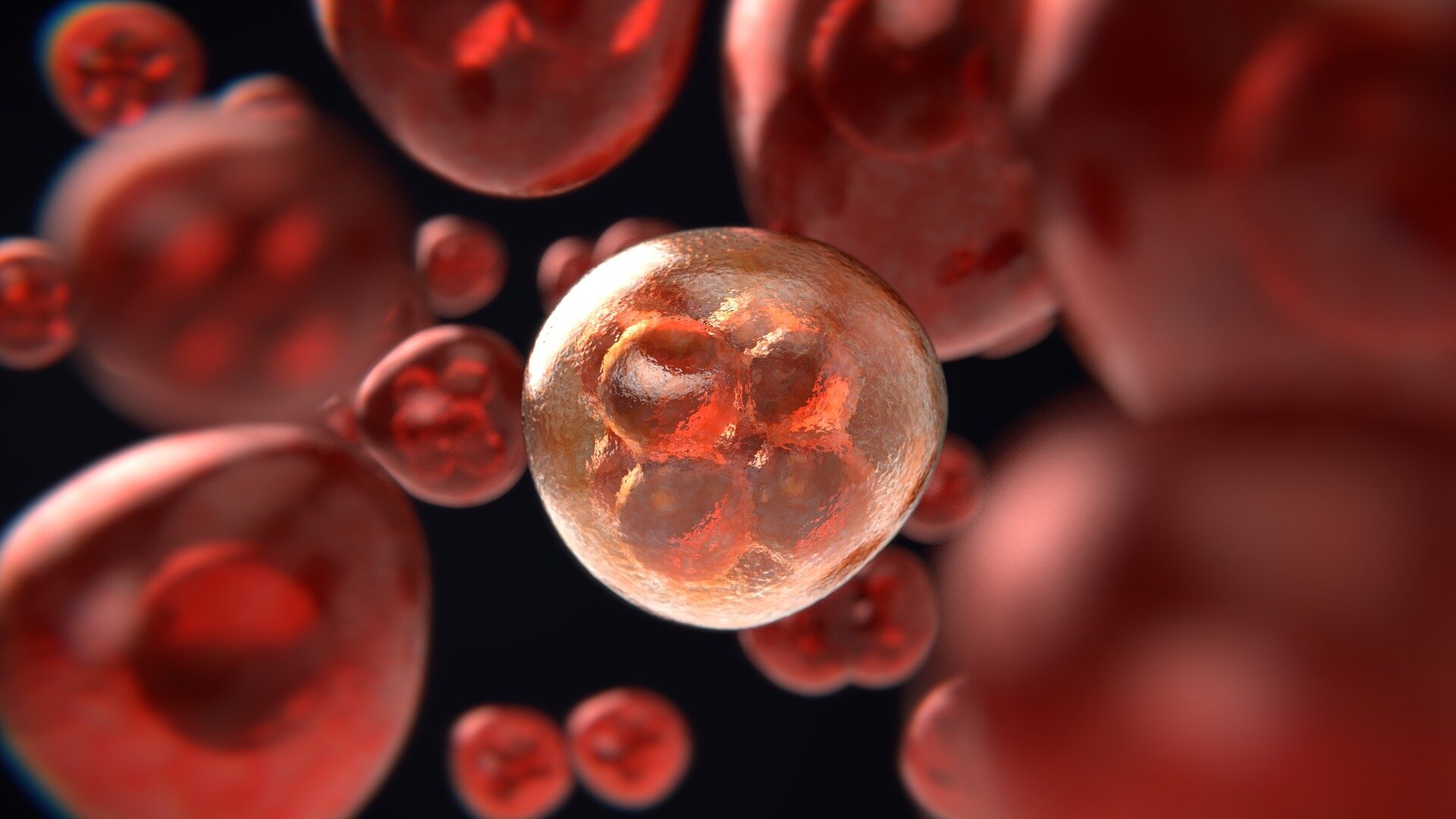
One of the big reasons that cancer is difficult to treat is that patients respond to treatments differently, and these differences can rarely be anticipated. In most cases, determining whether and how a patient will respond to any given therapy requires administering it to the patient and then waiting and watching. That is a lot of pressure for researchers and physicians and a lot of risk for cancer patients, and added expense.
If a patient’s response were predictable, optimal thera...
Read More
June 26, 2023,
Physics, Technology/Electronics

Recent Comments