Atom-thin Walls could Smash Size, Memory Barriers in Next-gen Devices

Evgeny Tsymbal
Nebraska’s Evgeny Tsymbal and an international team have demonstrated how to construct, control and explain nanoscopic walls that could yield multiple technological benefits. Craig Chandler | University Communication and Marketing

Nanomaterial feature could help electronic circuits adopt benefits of human memory. For all of the unparalleled, parallel-processing, still-indistinguishable-from-magic wizardry packed into the three pounds of the adult human brain, it obeys the same rule as the other living tissue it controls: Oxygen is a must.

So it was with a touch of irony that Evgeny Tsymbal offered his explanation for a technological wonder — movable, data-covered walls mere atoms wide — that may eventually help computers behave more like a brain.

“There was unambiguous evidence...

Read More

Complex Subsurface of Mars imaged by Chinese Rover Zhurong

Complex subsurface of Mars imaged by Chinese rover Zhurong
A selfie taken by the Zhurong rover alongside its landing platform, captured with a wireless camera. Source: CNSA. Credit: Chinese National Space Administration

Ground-penetrating radar from China’s Martian rover Zhurong reveals shallow impact craters and other geologic structures in the top five meters of the Red Planet’s surface. The images of the Martian subsurface are presented in a paper published in Geology.

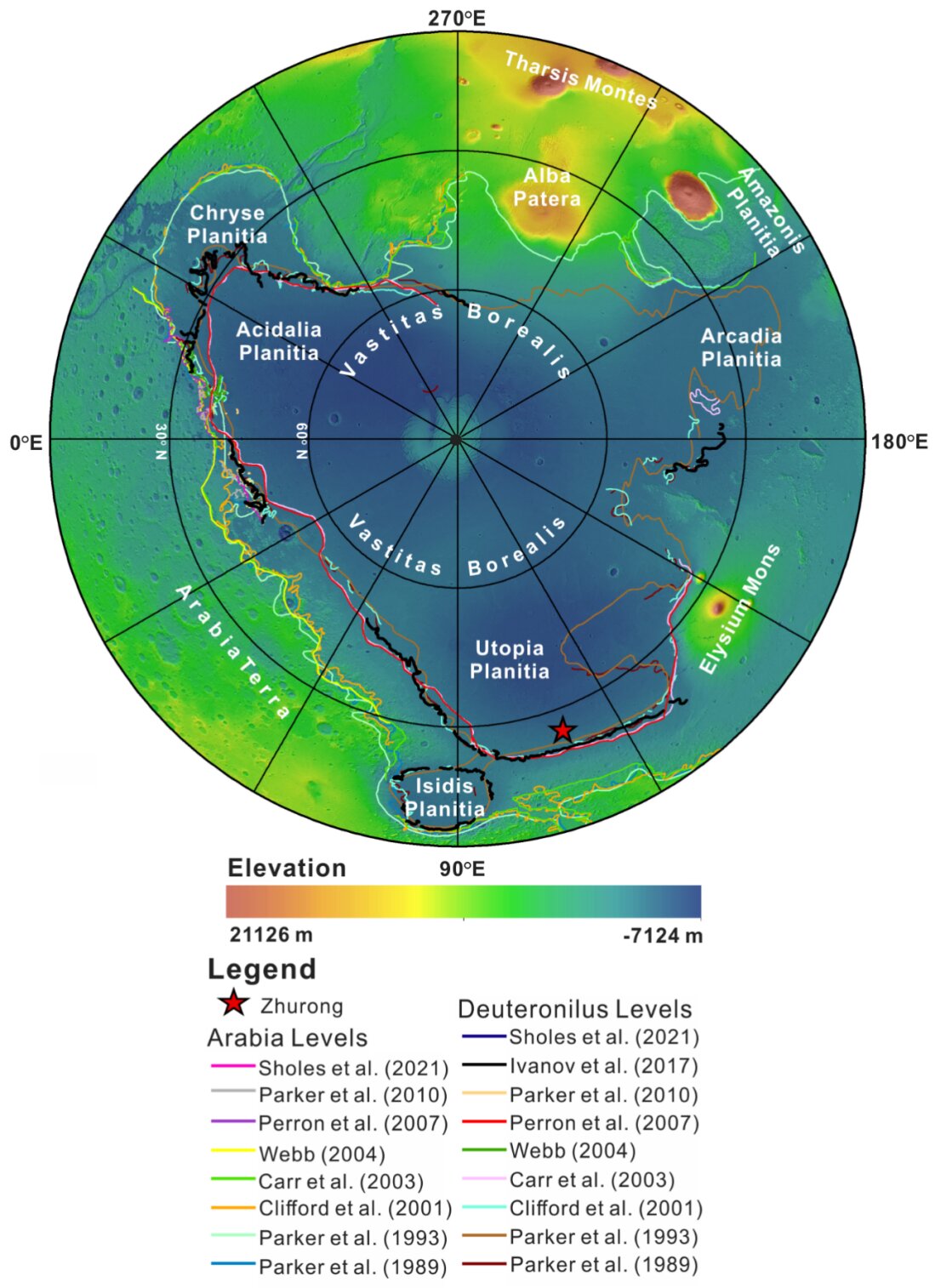
The Zhurong rover was sent to Mars as part of China’s Tianwen-1 mission. Launched in July 2020, the rover landed on the surface on 15 May 2021. The rover was sent to a large plain in the northern hemisphere of Mars named Utopia Planitia, near the boundary between the lowlands where it landed and highlands to the south.

The region was chosen because it’s near suspected a...

Read More

Previously Unknown Cell Mechanism could help Counter Cancer and Aging

•Histone H2A-H2B are recycled during DNA replication independent of H3-H4
•H2A.Z and H2BK120ub1 mark nascent chromatin prior to transcription re-start
•H2A-H2B modification and variant landscapes are restored rapidly after replication
•H2AK119ub1 facilitates accurate and timely restoration of H3K27me3 post-replication

In a new study, researchers discovered an unknown mechanism of how cells ‘remember’ their identity when they divide – the cells’ so-called epigenetic memory. As time passes and we get older, many cells need to replenish themselves. They do so by dividing into new cells: Heart cells, skin cells and so on.

But when cells continue to divide and make new cells, they lose some of the information from their mother cell...

Read More

Chiral Phonons Create Spin Current Without needing Magnetic Materials

 Spin Seebeck effect, chiral-phonon-activated spin Seebeck effect (CPASS) and experimental setup

Researchers from North Carolina State University and the University of North Carolina at Chapel Hill used chiral phonons to convert wasted heat into spin information – without needing magnetic materials. The finding could lead to new classes of less expensive, energy-efficient spintronic devices for use in applications ranging from computational memory to powergrids.

Spintronic devices are electronic devices that harness the spin of an electron, rather than its charge, to create current used for data storage, communication, and computing...

Read More