Researchers determine Global Thickness and Density of Martian Crust

Researchers de­term­ine global thick­ness and dens­ity of Martian crust
Topographic map of the Martian surface (l.) and representation of the crust thickness (r.). Credit: MOLA Science Team / Doyeon Kim, ETH Zurich

A strong quake in the last year of the NASA Mars InSight mission, enabled researchers at ETH Zurich to determine the global thickness and density of the planet’s crust. On average, the Martian crust much thicker than the Earth’s or the moon’s crust, and the planet’s main source of heat is radioactive.

After more than three years of daily monitoring and with the power levels decreasing on InSight’s seismometer, researchers were rewarded with data from a sizeable Marsquake in May 2022. The surface waves observed from this estimated 4...

Read More

This Star might be Orbiting a Strange ‘Boson Star’

This star might be orbiting a strange
Illustration of a merger of two boson stars. Credit: Nicolás Sanchis-Gual and Rocío García Souto

A team of astronomers has claimed that observations of a sun-like star orbiting a small black hole might actually be the indication of something far more exotic—the existence of a boson star, a star composed entirely of dark matter.

The Gaia survey, led by the European Space Agency, provided detailed maps of more than a billion stars in the Milky Way galaxy. While almost all of those stars behaved as expected, there were some surprises. For example, one star in particular was seen orbiting a dark companion.

The star itself was fairly typical, weighing in at 0.93 solar masses and with roughly the same chemical abundance as our own sun...

Read More

AI Generated Content helps in 3D Brain Reconstruction

AI generated content helps in 3D brain reconstruction

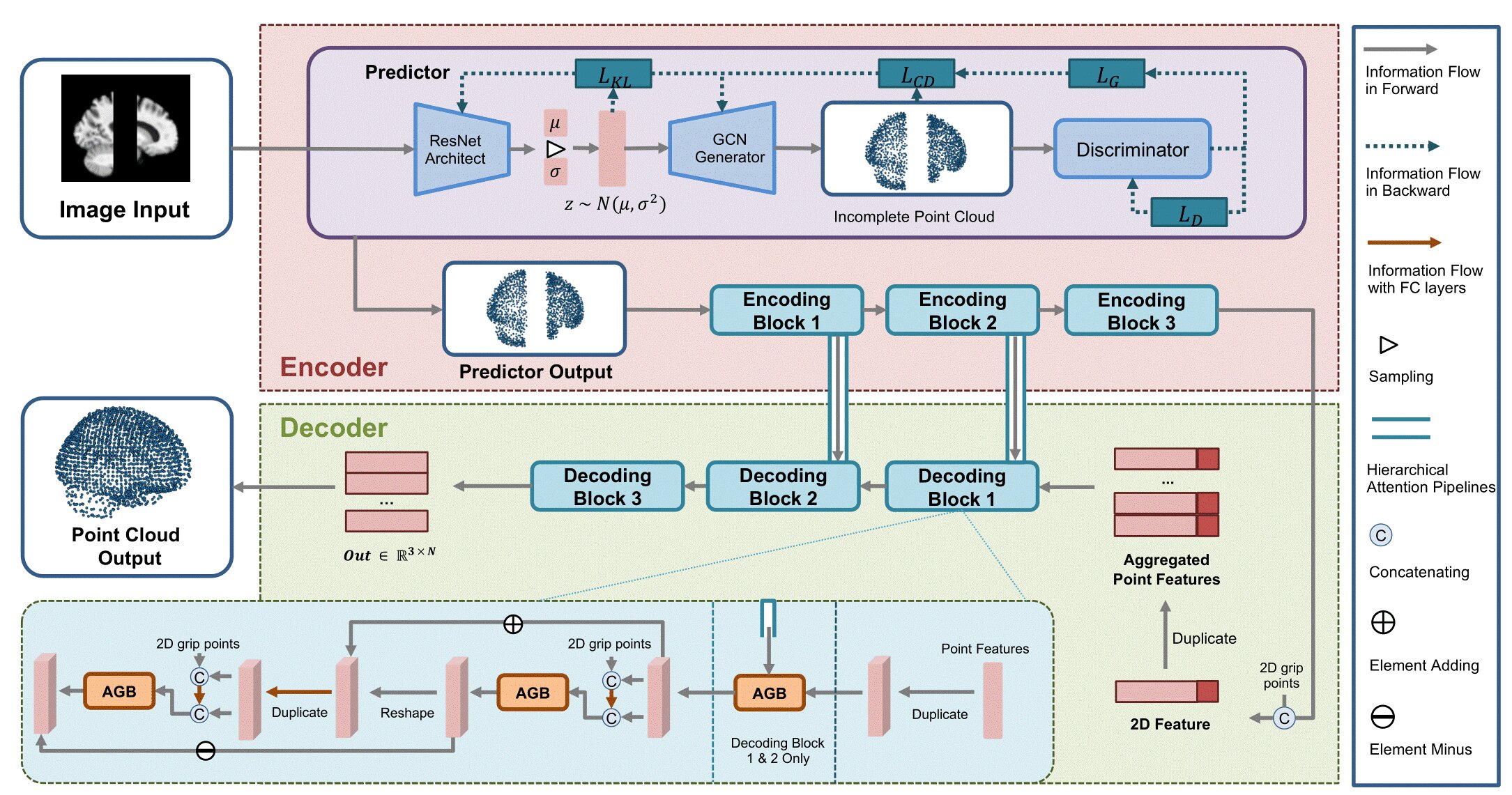
Minimally invasive surgery and automated robot-guided surgery are likely to be performed under extreme conditions, which require new demands on intraoperative information acquisition capabilities. Three-dimensional (3D) brain point cloud generation plays an essential role in overcoming the visual limitations of these surgeries.

One of the applications of generative AI is in the field of 3D brain point cloud generation. By using deeplearning algorithms, the 3D point cloud of the patient’s brain can be generated for reconstruction during minimally invasive surgery. However, some conventional existing point cloud reconstruction methods still have limitations when applied directly to real surgical scenarios.

Now, a research team led by Prof...

Read More

Robotic Proxy brings Remote Users to Life in Real Time

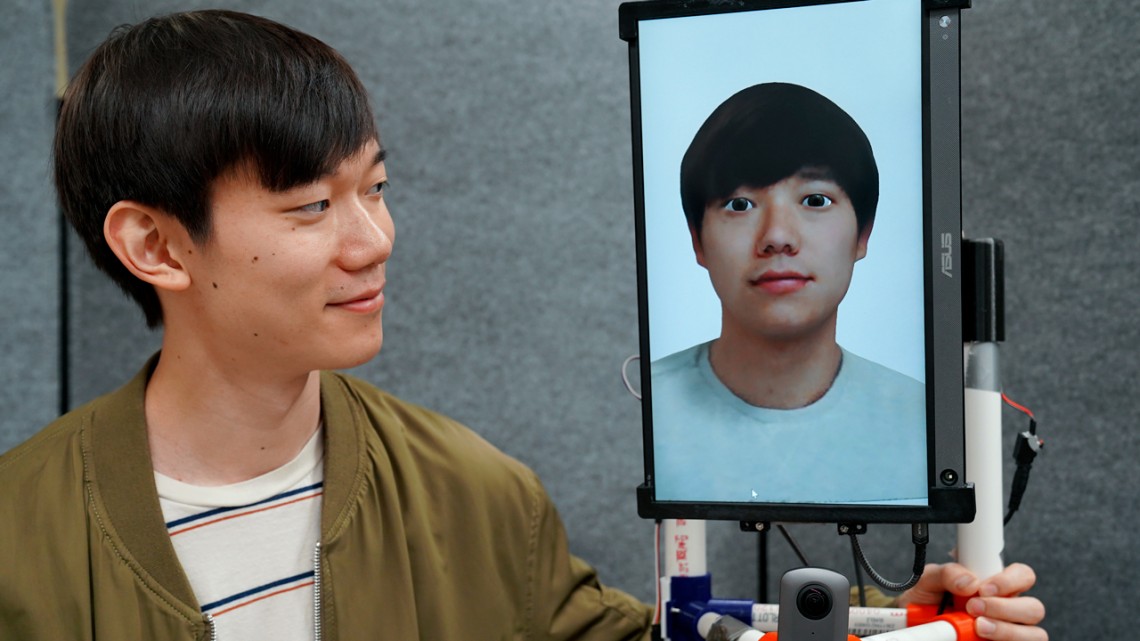
Mose Sakashita, a doctoral student in the field of information science, with the ReMotion robot.

Cornell University researchers have developed a robot, called ReMotion, that occupies physical space on a remote user’s behalf, automatically mirroring the user’s movements in real time and conveying key body language that is lost in standard virtual environments.

“Pointing gestures, the perception of another’s gaze, intuitively knowing where someone’s attention is — in remote settings, we lose these nonverbal, implicit cues that are very important for carrying out design activities,” said Mose Sakashita, a doctoral student of information science.

Sakashita is the lead author of “ReMotion: Supporting Remote Collaboration in Open Space with Automatic Robotic Embodiment,” which he prese...

Read More