



Omega fatty acids have long been recognized for their benefits: supporting cardiovascular health, reducing systemic inflammation, and promoting brain development and cognitive function. But scientists now warn of a long-unrecognized downside to these compounds when it comes to cancer and immunotherapy.
New preclinical experiments by medical investigators in the Vascular Biology and Therapeutic Program at Yale University School of Medicine show that omega fatty acids can blunt the cancer-killing capabilities of the immune system’s natural killer cells.
Their research is part of a growing body of evidence suggesting that well-known—and largely beneficial—fatty acids can circumvent the body’s defenses and promote cancer growth.
A unifying health trend with an unclear legacy
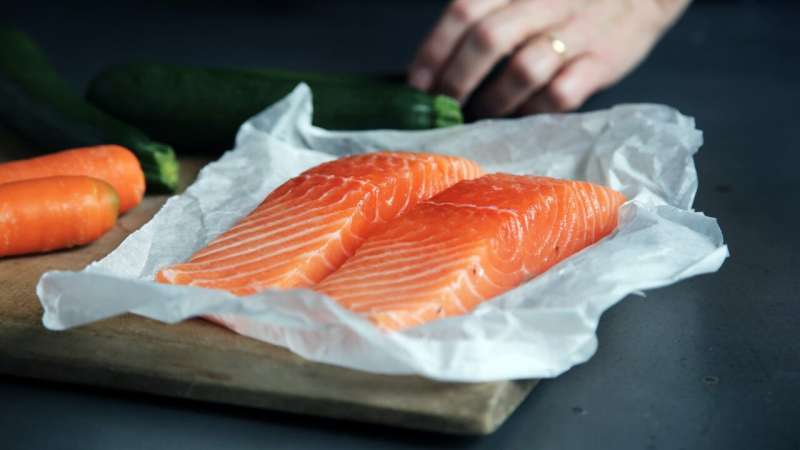
Omega fatty acids belong to a larger group known as polyunsaturated fatty acids, or PUFAs. These include omega-3 and omega-6 fatty acids, which come from dietary sources—mostly fish, nuts and vegetable oils.
They play many essential roles in the body, especially in maintaining cell membrane fluidity and supporting intracellular signaling. And while their cardiovascular benefits have been widely promoted in advertisements for fish oil and other over-the-counter supplements, how they influence cancer and tumor immunity has been far less clear.
“Given the widespread promotion of polyunsaturated fatty acids as beneficial dietary supplements, greater public awareness of their potential unintended effects is warranted,” writes Dr. Yi Luan, lead author of the Yale research published in the journal Science Signaling.
“PUFAs play a crucial role in tumor development by influencing not only tumor cells but also immune cells within the tumor microenvironment,” Luan continued. The team explored how these acids are transported and function within immune cells to regulate tumor growth.
Disarming the immune system’s first responders
Evidence uncovered at Yale and elsewhere suggests these compounds have a far more complex role in tumor biology than generally assumed, influencing both tumor cells and anticancer immune cells. The Yale team focused on how PUFAs shape the biology of natural killer cells, which play a central role in immune surveillance.
Luan and colleagues found that PUFAs restrain natural killer cell activity by acting through a transport protein called LDL receptor–related protein 5, or LRP5. They discovered that PUFA transport through LRP5 into the cells was essential to modulating their antitumor function.
Natural killer cells are crucial members of the innate immune system, serving as first responders that destroy virus-infected cells and early-stage cancer cells. Unlike cytotoxic T cells, which require previous exposure to a specific antigen, natural killer cells can destroy threats without prior activation or priming.
The Yale team found that PUFAs entering through LRP5 suppressed this antitumor function in colon cancer by inhibiting a key metabolic regulator within the cells. Selectively blocking LRP5 in natural killer cells—or feeding the animal models a PUFA-free diet—slowed tumor growth and significantly increased the effectiveness of immune checkpoint inhibitors, a form of cancer immunotherapy administered to lab mice.
The researchers also discovered that creating an LRP5 deficiency, or engineering an LRP5 receptor without its functional LDLa binding domain, enhanced the natural killer cells’ ability to kill tumors both in vivo and in cultured cells.
A growing consensus across cancer subtypes
The Yale research echoes a March 2025 study by researchers at Weill Cornell Medicine in New York City. That team found that linoleic acid—an omega-6 fatty acid present in seed oils like soybean and safflower oil, as well as animal products including pork and eggs—enhances tumor growth in a hard-to-treat breast cancer subtype known as triple-negative.
In the Weill Cornell study, researchers found that linoleic acid activates a major growth pathway in tumor cells by binding to a protein called FABP5. Comparing breast cancer subtypes, the team observed that activation of this pathway occurs in triple-negative tumor cells, where FABP5 is particularly abundant, but not in hormone-sensitive subtypes. In a mouse model of triple-negative breast cancer, a diet high in linoleic acid sharply increased tumor growth.
Taken together, the Yale and Weill Cornell studies demonstrate that PUFAs can exploit more than one signaling pathway to trigger cancer growth.
“This discovery helps clarify the relationship between dietary fats and cancer, and sheds light on how to define which patients might benefit the most from specific nutritional recommendations in a personalized manner,” said study senior author Dr. John Blenis, the Anna-Maria and Stephen Kellen Professor of Cancer Research in the Department of Pharmacology at Weill Cornell Medicine.
The future of precision dietary advice
Luan and colleagues conclude that because the loss of LRP5 enhanced natural killer cells’ ability to eliminate colon cancer and slow tumor growth in mice, a better understanding of human diets may eventually lead to targeted dietary advice for patients undergoing cancer therapy.
The Yale team is calling for further work to explore the mechanisms that shape LRP5 expression across different types of cancer, potentially revealing new therapeutic targets. Forging a path toward a precision medicine response is critical, Luan added. https://medicalxpress.com/news/2026-09-omega-paradox-healthy-fats-defenses.html



Recent Comments