To raise new questions, new possibilities, to regard old problems from a new angle, requires creative imagination and marks real advance in science.
~Albert Einstein
Read More
Old Newtonian physics claimed that things have an objective reality separate from our perception of them. Quantum physics, and particularly Heisenberg's Uncertainty Principle, reveal that, as our perception of an object changes, the object itself literally changes.
~Marianne Williamson
Read More
Research published Wednesday from University of California, Berkeley, sleep scientists suggests that deep sleep might help alleviate some of dementia’s most devastating outcomes. (Graphic by Neil Freese. Unsplash images courtesy Peyman Farmani, Nigel Tadyanehondo, Zoe Gayah Jonker and Yan Berthemy)
Deep sleep, also known as non-REM slow-wave sleep, can act as a ‘cognitive reserve factor’ that may increase resilience against brain protein beta-amyloid that is linked to memory loss caused by dementia.
Disrupted sleep has previously been associated with faster accumulation of beta-amyloid protein in the brain...
Sweat is more than just a sign of a good workout. It holds vital information about our health, providing clues to dehydration, fatigue, blood sugar levels and even serious conditions such as cystic fibrosis, diabetes and heart failure. Researchers at the University of Hawaii at Manoa College of Engineering have taken a giant leap forward in sweat analysis with an innovative 3D-printed wearable sweat sensor called the “sweatainer.”
Harnessing the power of additive manufacturing (3D-printing), the researchers have developed a new type of wearable sweat sensor that expands the capability of wearable sweat devices. The sweatainer is a small, wearable device similar in size to a child’s sticker that collects and analyzes sweat, offering a glimpse into the future of health monitoring...
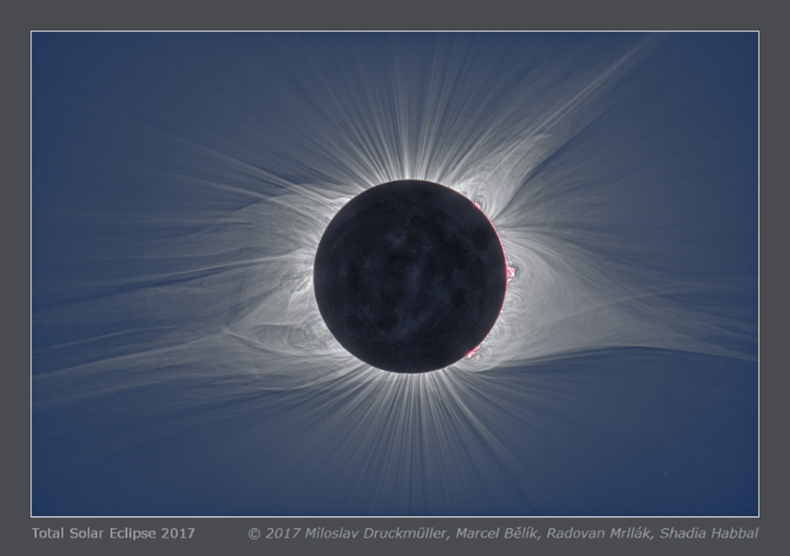
Make the most of these two teachable moments by planning ahead and spreading the word. This year and next, Americans will have the extraordinary opportunity to witness two solar eclipses as both will be visible throughout the continental U.S. On Oct. 14, 2023, the moon will obscure all but a small annulus of the sun, producing a “Ring of Fire” eclipse. On April 8, 2024, the eclipse will be total in a band stretching from Texas to Maine.
Both occurrences promise to be remarkable events and teachable moments. But preparation is essential.
In The Physics Teacher, co-published by AIP Publishing and the American Association of Physics Teachers, astronomer Douglas Duncan of the University of Colorado provides a practical playbook to help teachers, students, and the g...
Neuropathic pain – abnormal hypersensitivity to stimuli – is associated with impaired quality of life and is often poorly managed. Estimates suggest that 3 percent to 17 percent of adults suffer from neuropathic pain, including a quarter of people with diabetes and a third of people with HIV.
In a paper published in the journal Neuron, researchers report that a mechanism involving the enzyme Tiam1 in dorsal horn excitatory neurons of the spinal cord both initiates and maintains neuropathic pain. Moreover, they show that targeting spinal Tiam1 with anti-sense oligonucleotides injected into the cerebrospinal fluid effectively alleviated neuropathic pain hypersensitivity.
“Thus, our study has uncovered a pathophysiological mechanism that initiates, ...













Recent Comments