To raise new questions, new possibilities, to regard old problems from a new angle, requires creative imagination and marks real advance in science.
~Albert Einstein
Read More
Old Newtonian physics claimed that things have an objective reality separate from our perception of them. Quantum physics, and particularly Heisenberg's Uncertainty Principle, reveal that, as our perception of an object changes, the object itself literally changes.
~Marianne Williamson
Read More
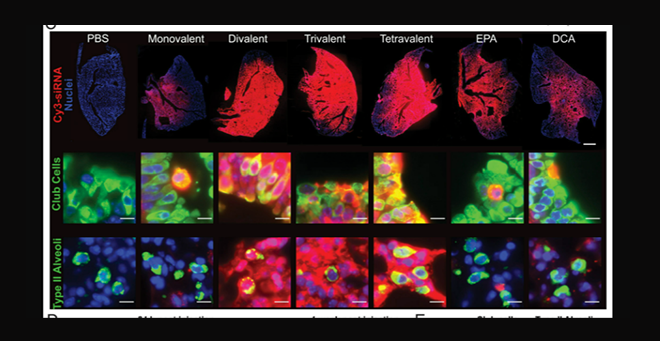
Hemostatic microneedle technology can be applied like a typical adhesive bandage to quickly stop bleeding. The biocompatible and biodegradable microneedle arrays (MNAs) on the patch increase its surface contact with blood to accelerate the clotting process and also increase the adhesive properties of the patch via mechanical interlocking to promote wound closure. Credit: Designed by Amir Sheikhi and Reihaneh Haghniaz/Executed by Natan Barros. All Rights Reserved.
A soldier suffers a serious gunshot wound on a remote battlefield or a machinist has a work accident and gets stuck in traffic on the way to the hospital. Secondary, uncontrolled bleeding from traumatic injury is the leading cause of death of Americans from ages one to 46.
Amir Sheikhi, assistant professor of chemical engin...
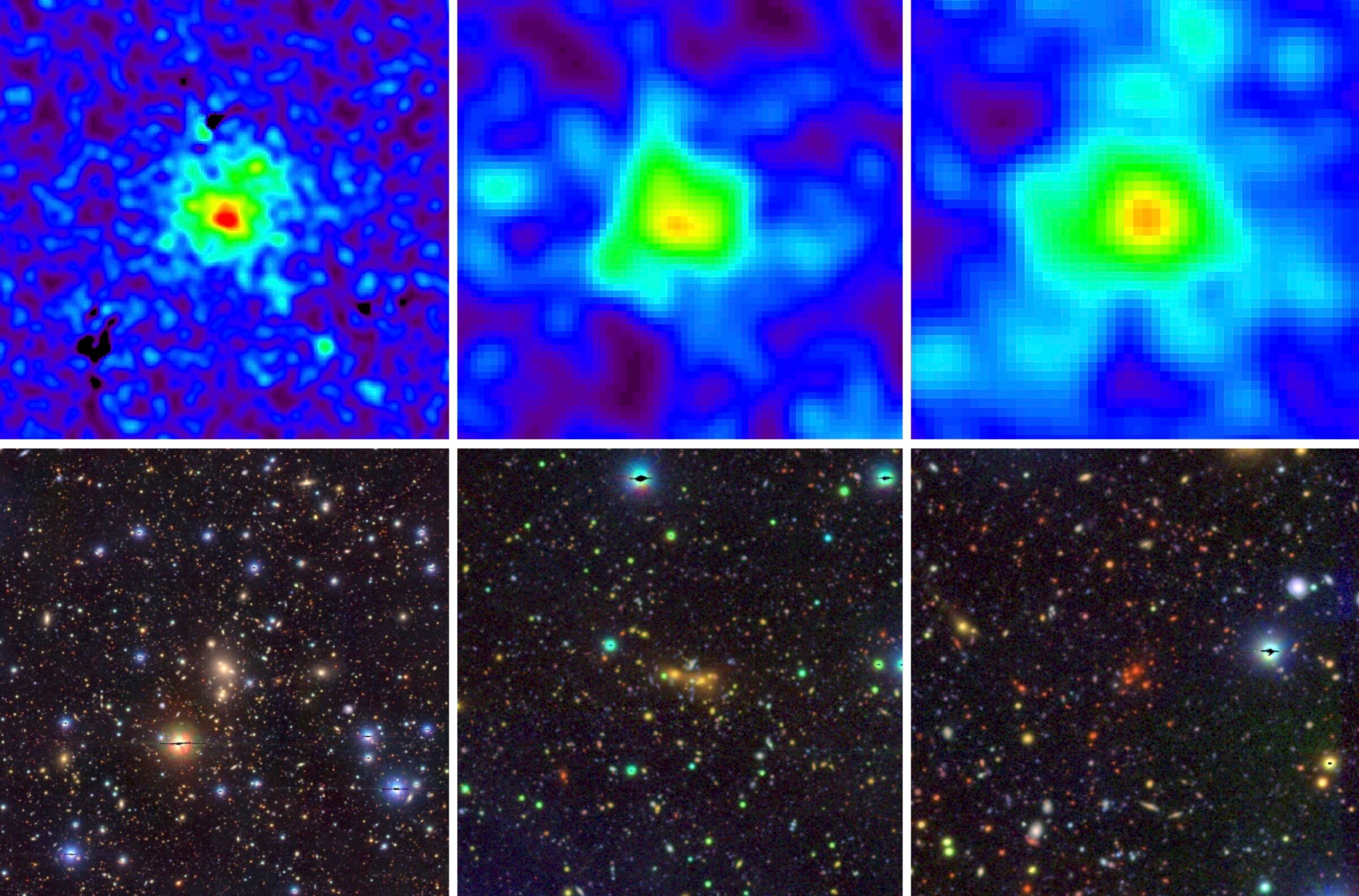
The HERA radio telescope consists of 350 dishes pointed upward to detect 21-centimeter emissions from the early universe. It is located in a radio-quiet region of the arid Karoo in South Africa. (Photo credit: Dara Storer, 2022)
Newest data from HERA improves search for cosmic dawn radiation, tests theories of galaxy formation. An array of 350 radio telescopes in the Karoo desert of South Africa is getting closer to detecting “cosmic dawn” – the era after the Big Bang when stars first ignited and galaxies began to bloom.
In a paper accepted for publication in The Astrophysical Journal, the Hydrogen Epoch of Reionization Array (HERA) team reports that it has doubled the sensitivity of the array, which was already the most sensitive radio telescope in the world dedicated to exploring ...
Schematic illustration of the spin transport demonstration of αNPD molecular thin film
Materials breakthrough in microfabrication could lead to a new generation of smaller, faster, energy-efficient electronics. A research group has succeeded in measuring spin transport in a thin film of specific molecules — a material well-known in organic light emitting diodes — at room temperature. They found that this thin molecular film has a spin diffusion length of approximately 62 nm, a length that could have practical applications in developing spintronics technology. In addition, while electricity has been used to control spin transport in the past, the thin molecular film used in this study is photoconductive, allowing spin transport control using visible light.
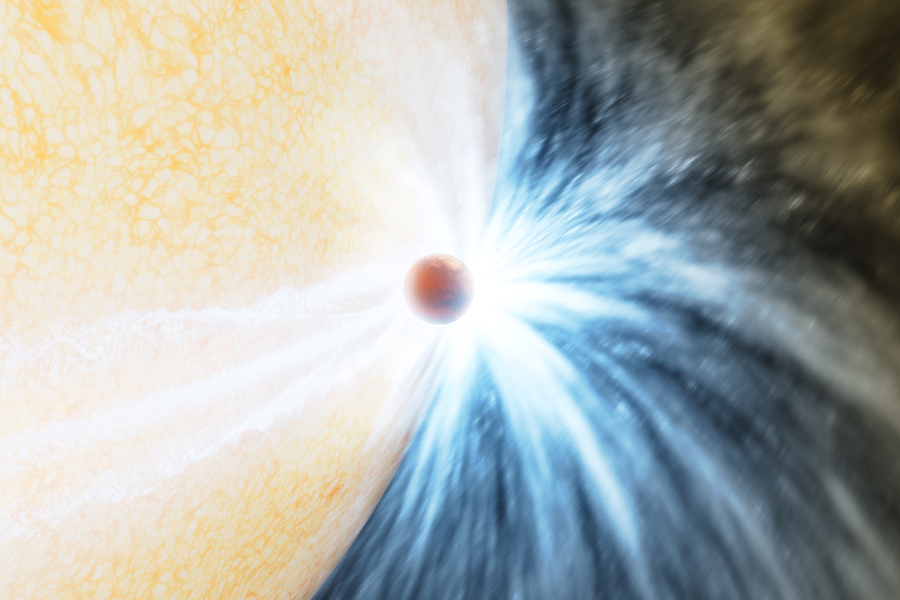
Curtin University-led research into the durability and age of an ancient asteroid made of rocky rubble and dust, revealed significant findings that could contribute to potentially saving the planet if one ever hurtled toward Earth.
The international team studied three tiny dust particles collected from the surface of ancient 500-metre-long rubble pile asteroid, Itokawa, returned to Earth by the Japanese Space Agency’s Hayabusa 1 probe.
The study’s results showed asteroid Itokawa, which is 2 million kilometres from Earth and around the size of Sydney Harbour Bridge, was hard to destroy and resistant to collision.
Lead author Professor Fred Jourdan, Director of the Western Australian Argon Isotope Facility, part of the John de Laeter Centre and the School of Earth and Plane...
Recent Comments