To raise new questions, new possibilities, to regard old problems from a new angle, requires creative imagination and marks real advance in science.
~Albert Einstein
Read More
Old Newtonian physics claimed that things have an objective reality separate from our perception of them. Quantum physics, and particularly Heisenberg's Uncertainty Principle, reveal that, as our perception of an object changes, the object itself literally changes.
~Marianne Williamson
Read More
With only two levels of superposition, the qubits used in today’s quantum communication technologies have limited storage space and low tolerance for interference. The Feng Lab’s hyperdimensional microlaser (above) generates qudits, photons with four simultaneous levels of information. The increase in dimension makes for robust quantum communication technology better suited for real-world applications.
Doubling the quantum information space of commercial technologies, this new chip is better suited for real-world application. Researchers at Penn Engineering have created a chip that outstrips the security and robustness of existing quantum communications hardware. Their technology communicates in “qudits,” doubling the quantum information space of any previous on-chip laser.
Credit: Melissa Weiss/Center for Astrophysics | Harvard & Smithsonian
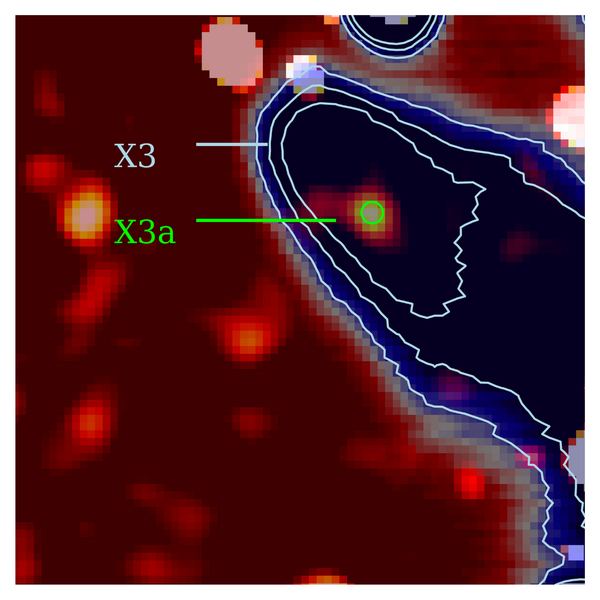
The JWST just scored another first: a detailed molecular and chemical portrait of a distant world’s skies. New observations of WASP-39 b reveal a never-before-seen molecule in the atmosphere of a planet – sulfur dioxide – among other details.
The telescope’s array of highly sensitive instruments was trained on the atmosphere of a “hot Saturn” – a planet about as massive as Saturn orbiting a star some 700 light-years away – known as WASP-39 b. While JWST and other space telescopes, including Hubble and Spitzer, previously have revealed isolated ingredients of this broiling planet’s atmosphere, the new readings provide a full menu of atoms, molecules, and even signs of active chemistry and clouds.
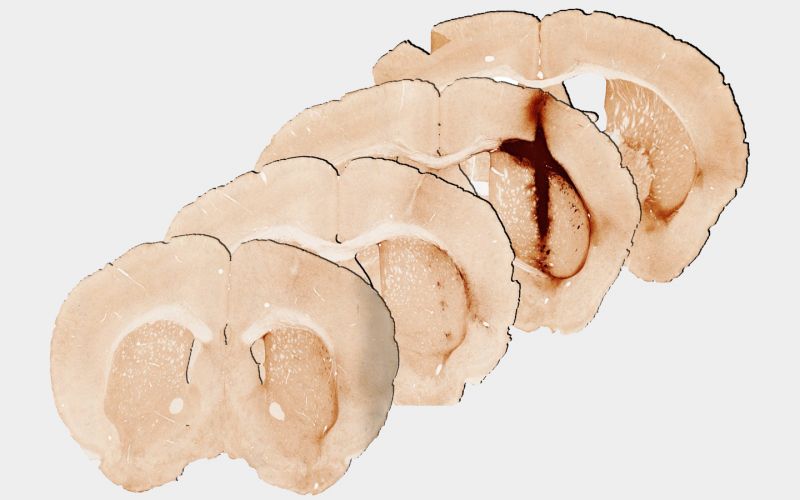
A new study found that anti-hyperglycemic medications used to treat Type 2 diabetes resulted in an increased risk of multiple sclerosis for people older than 45, particularly among women.
A new University of Arizona Health Sciences study found that people older than 45yo whose Type 2 diabetes was treated with anti-hyperglycemic medications had an increased risk of multiple sclerosis, particularly among women, while anti-hyperglycemic exposure in people younger than 45 reduced that risk.
“Our findings reinforce the need for a precision medicine approach to preventing MS in these vulnerable populations,” said lead researcher Kathleen Rodgers, PhD, associate director of translational neuroscience at the Center for Innovation in Brain Science.
Magnetic fields created by skyrmions in two-dimensional sheet of material composed of iron, germanium and tellurium. (Image by Argonne National Laboratory.)
Researchers have discovered new properties of tiny magnetic whirlpools called skyrmions. Their pivotal discovery could lead to a new generation of microelectronics for memory storage with vastly improved energy efficiency in high performance computers.
Magnets generate invisible fields that attract certain materials. A common example is fridge magnets. Far more important to our everyday lives, magnets also can store data in computers. Exploiting the direction of the magnetic field (say, up or down), microscopic bar magnets each can store one bit of memory as a zero or a one — the language of computers.
Recent Comments