







Specific Immune Response to Epstein-Barr Virus discovered

Copyright (c) 2016 Kateryna Kon/Shutterstock

Medical science has not yet been able to explain why the Epstein-Barr virus triggers infectious mononucleosis (IM) in some people with initial infections and not in others. But now, a research team led by Elisabeth Puchhammer-Stöckl, head of the Center for Virology at MedUni Vienna, has identified a specific immune response to the virus as the cause, and as a potential target for the development of vaccines. The findings were recently published in the American Society of Hematology’s journal Blood.

Proliferation of the Epstein-Barr virus (EBV) in humans is normally combated by T cells as part of an antiviral immune response. By means of this important mechanism, certain EBV components (peptides) are presented to the T cells by a specific1LA-E molecules on EBV-infected cells.

A ...

Read More
Approaching the Terahertz Regime

(Left) A chaotic greyscale rectangle. (Right) Isometric view of colored layers sandwiched together.
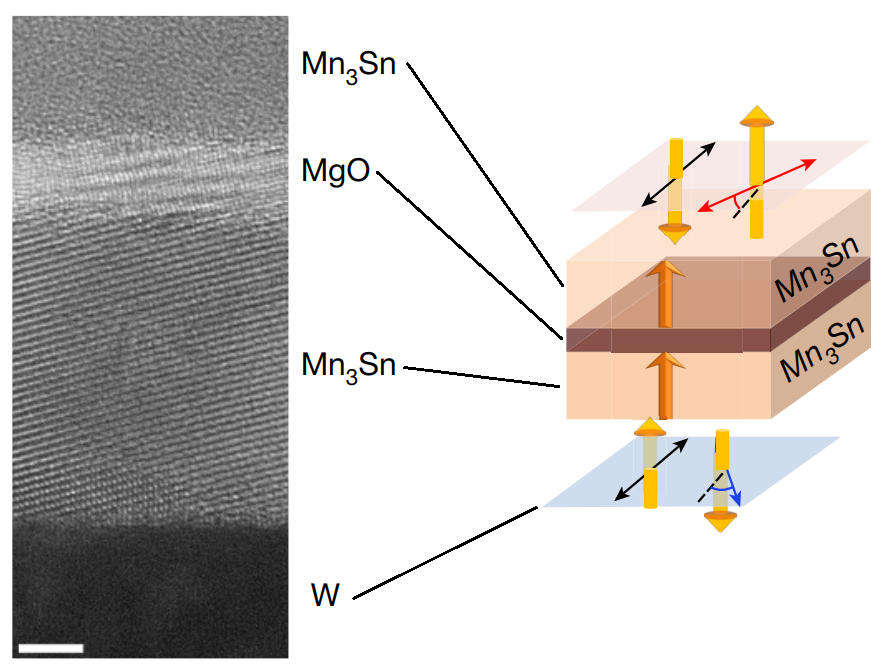
Antiferromagnetic tunneling junction. High-resolution transmission electron microscopy image of the antiferromagnetic junction showing layers of different materials (left). Diagram showing the materials’ magnetic properties (right). ©2023 Nakatsuji et al. CC-BY

Room temperature quantum magnets switch states trillions of times per second. A class of nonvolatile memory devices, called MRAM, based on quantum magnetic materials, can offer a thousandfold performance beyond current state-of-the-art memory devices. The materials known as antiferromagnets were previously demonstrated to store stable memory states, but were difficult to read from. This new study paves an efficient way for reading the memory states, with the potential to do so incredibly quickly too.

You can probably blink...

Read More

Tumultuous Migration on the Edge of the Hot Neptune Desert

Did hot Neptunes ever exist? While astronomers observe gas giants and small rocky planets close to their stars, the SPICE DUNE project is investigating the ‘‘desert’’ of Neptune-sized planets. Â© Elsa Bersier – CFPArts / ESBDi Genève

All kinds of exoplanets orbit very close to their star. Some look like the Earth, others like Jupiter. Very few, however, are similar to Neptune. Why this anomaly in the distribution of exoplanets? Researchers from the University of Geneva (UNIGE) and the National Centre of Competence in Research (NCCR) PlanetS have observed a sample of planets located at the edge of this Hot Neptune Desert to understand its creation...

Read More

Harnessing the Healing Power within our Cells

A close-up of several human cells
E. coli bacteria. Image: Adobe

University of Queensland researchers have identified a pathway in cells that could be used to reprogram the body’s immune system to fight back against both chronic inflammatory and infectious diseases.

Dr. Kaustav Das Gupta and Professor Matt Sweet from UQ’s Institute for Molecular Bioscience discovered that a molecule derived from glucose in immune cells can both stop bacteria growing and dampen inflammatory responses. Dr. Das Gupta said that the finding is a critical step towards future therapeutics that train immune cells.

The research was published in Proceedings of the National Academy of Sciences (PNAS).

“The effects of this molecule called ribulose-5-phosphate on bacteria are striking—it can cooperate with other immune factors to stop dise...

Read More