To raise new questions, new possibilities, to regard old problems from a new angle, requires creative imagination and marks real advance in science.
~Albert Einstein
Read More
Old Newtonian physics claimed that things have an objective reality separate from our perception of them. Quantum physics, and particularly Heisenberg's Uncertainty Principle, reveal that, as our perception of an object changes, the object itself literally changes.
~Marianne Williamson
Read More
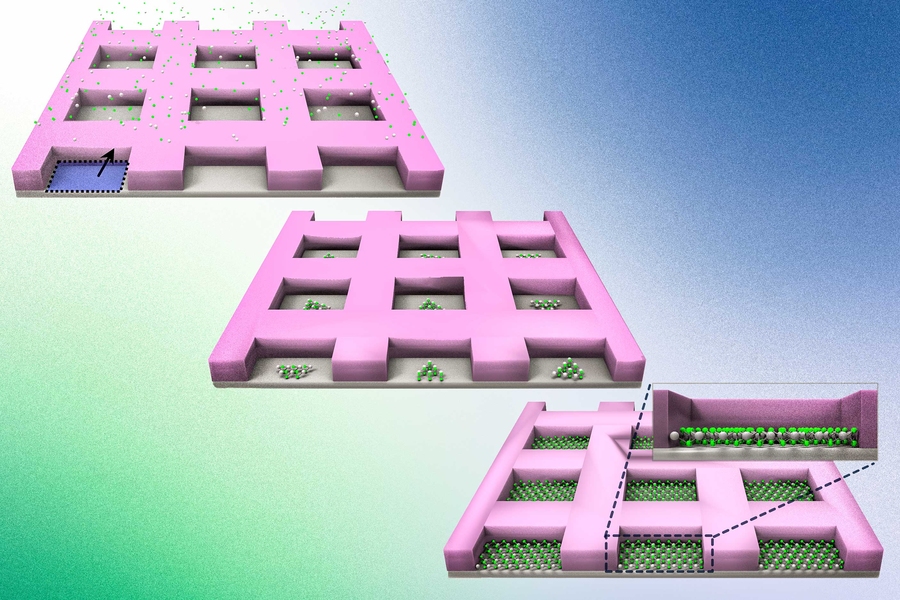
Caption:By depositing atoms on a wafer coated in a “mask” (top left), MIT engineers can corral the atoms in the mask’s individual pockets (center middle), and encourage the atoms to grow into perfect, 2D, single-crystalline layers (bottom right). Credits:Courtesy of the researchers. Edited by MIT News.
Their technique could allow chip manufacturers to produce next generation transistors based on materials other than silicon. Engineers fabricated 2D materials that could lead to next-generation transistors and electronic films.
True to Moore’s Law, the number of transistors on a microchip has doubled every year since the 1960s...
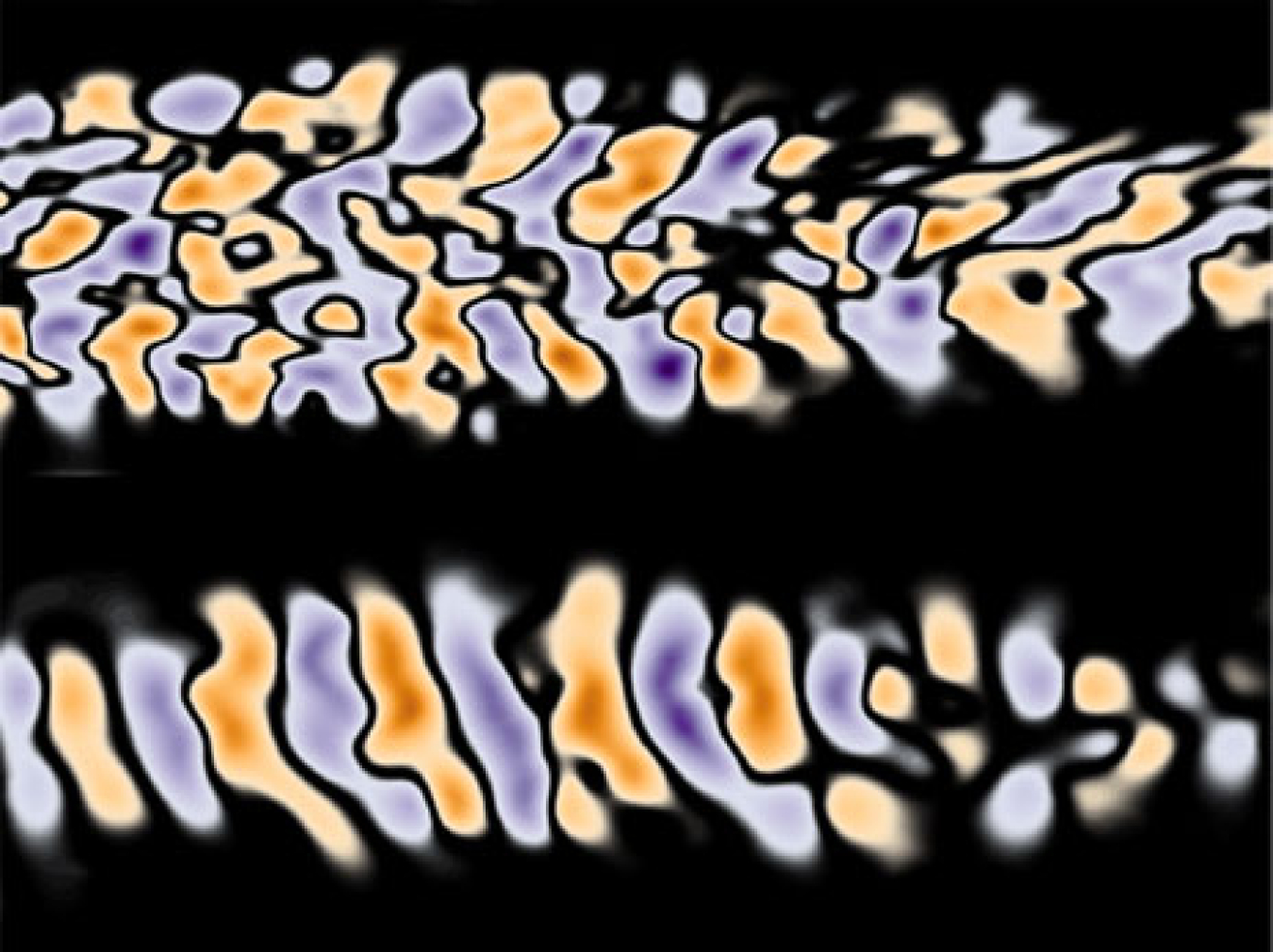
Contours of magnetic fields that emerge a result of self-organization of microscopic currents resulting from the Weibel instability in a carbon dioxide laser-produced plasma probed by an ultrashort relativistic electron beam. Image courtesy of Chaojie Zhang, University of California Los Angeles
A novel experiment sheds new light on a possible mechanism that may seed magnetic fields for the galactic dynamo. Recent research shows that magnetic fields can spontaneously emerge in a plasma if the plasma has a temperature anisotropy. This mechanism is known as the Weibel instability. This new research is the first to unambiguously observe the Weibel instability in the laboratory...
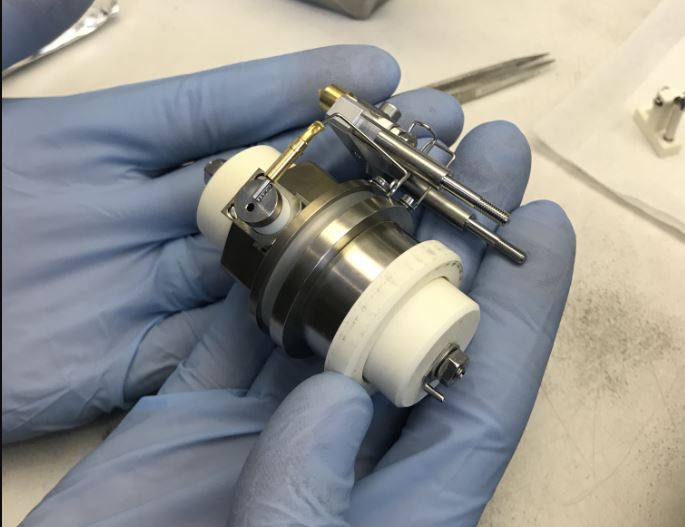
Photo of the Orbitrap mass analyzer from the prototype instrument. Photo courtesy of Lori Willhite and Ricardo Arevalo.
Mini-analyzer may revolutionize how astrobiology discoveries are made on faraway moons and planets. As space missions delve deeper into the outer solar system, the need for more compact, resource-conserving and accurate analytical tools has become increasingly critical — especially as the hunt for extraterrestrial life and habitable planets or moons continues.
A University of Maryland-led team developed a new instrument specifically tailored to the needs of NASA space missions...
Modified CRISPR-Based Enzymes Improve the Prospect of Inserting Entire Genes into the Genome to Overcome Diverse Disease-Causing Mutations Noah Brownnbrown9@mgh.harvard.edu617-643-3907
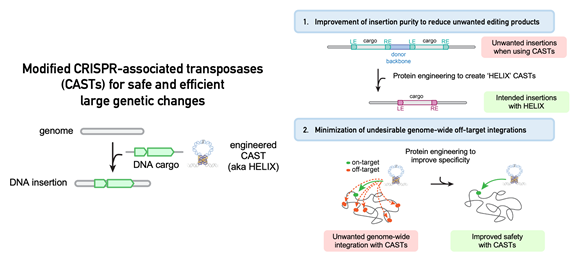
Many genetic diseases are caused by diverse mutations spread across an entire gene, and designing genome editing approaches for each patient’s mutation would be impractical and costly.
Investigators at Massachusetts General Hospital (MGH) recently developed an optimized method that improves the accuracy of inserting large DNA segments into a genome.
This approach could be used to insert a whole normal or “wild-type” replacement gene, which could act as a blanket therapy for a disease irrespective of a patient’s particular mutation.
The work involves the optimization of a new class of technologies...











Recent Comments