OHSU Scientists Identify Molecule that could help Treat Parkinson’s

Locomotion activates PKA through dopamine and adenosine in striatal neurons  | Nature
: In vivo PKA activity imaging reveals cell-type-specific modulation of PKA by dopamine.

Discovery could immediately suggest new avenues for drug development. Researchers at Oregon Health & Science University have discovered that the neurotransmitter adenosine effectively acts as a brake to dopamine, another well-known neurotransmitter involved in motor control.

Scientists found that adenosine operates in a kind of push-pull dynamic with dopamine in the brain; the discovery published today in the journal Nature.

“There are two neuronal circuits: one that helps promote action and the other that inhibits action,” said senior author Haining Zhong, Ph.D., scientist with the OHSU Vollum Institute...

Read More

New Hope for Patients with Severe Bone Loss

FmocFF/hyaluronic acid (HA) composite hydrogel formation and structural characterization. (a) Molecular structure of the FmocFF peptide. (b) Molecular structure of HA. (c) Inverted vials of FmocFF (left), FmocFF/HA composite hydrogel (middle) and HA (right). (d) Transmitting electron microscopy micrograph of the FmocFF/HA composite hydrogel. (e) Scanning electron microscopy micrograph of the FmocFF/HA composite hydrogel. (f) The FmocFF/HA composite hydrogel was formed in a 9 mm diameter × 2 mm depth silicone mould. (g) The FmocFF/HA composite hydrogel is injected through a 27-gauge needle. [Colour figure can be viewed at wileyonlinelibrary.com

Researchers induced bone regeneration with a special hydrogel that mimics the bone’s natural environment...

Read More

Red-Supergiant Supernova: Secrets of an Earlier Universe

Four images of supernova exploding
Panels A-D (clockwise from upper left) show several different stages of the supernova: the location of the host galaxy after the supernova faded, the three images of the host galaxy and the supernova at different phases in its evolution, the three different faces of the evolving supernova, and the different colors of the cooling supernova. Photo credit: Wenlei Chen, NASA

Detailed telescope images help scientists learn more about the Universe two billion years after the Big Bang. An international research team led by the University of Minnesota Twin Cities has measured the size of a star dating back 2 billion years after the Big Bang, or more than 11 billion years ago...

Read More

Researchers develop Superfast New Method to Manufacture High-Performance Thermoelectric devices

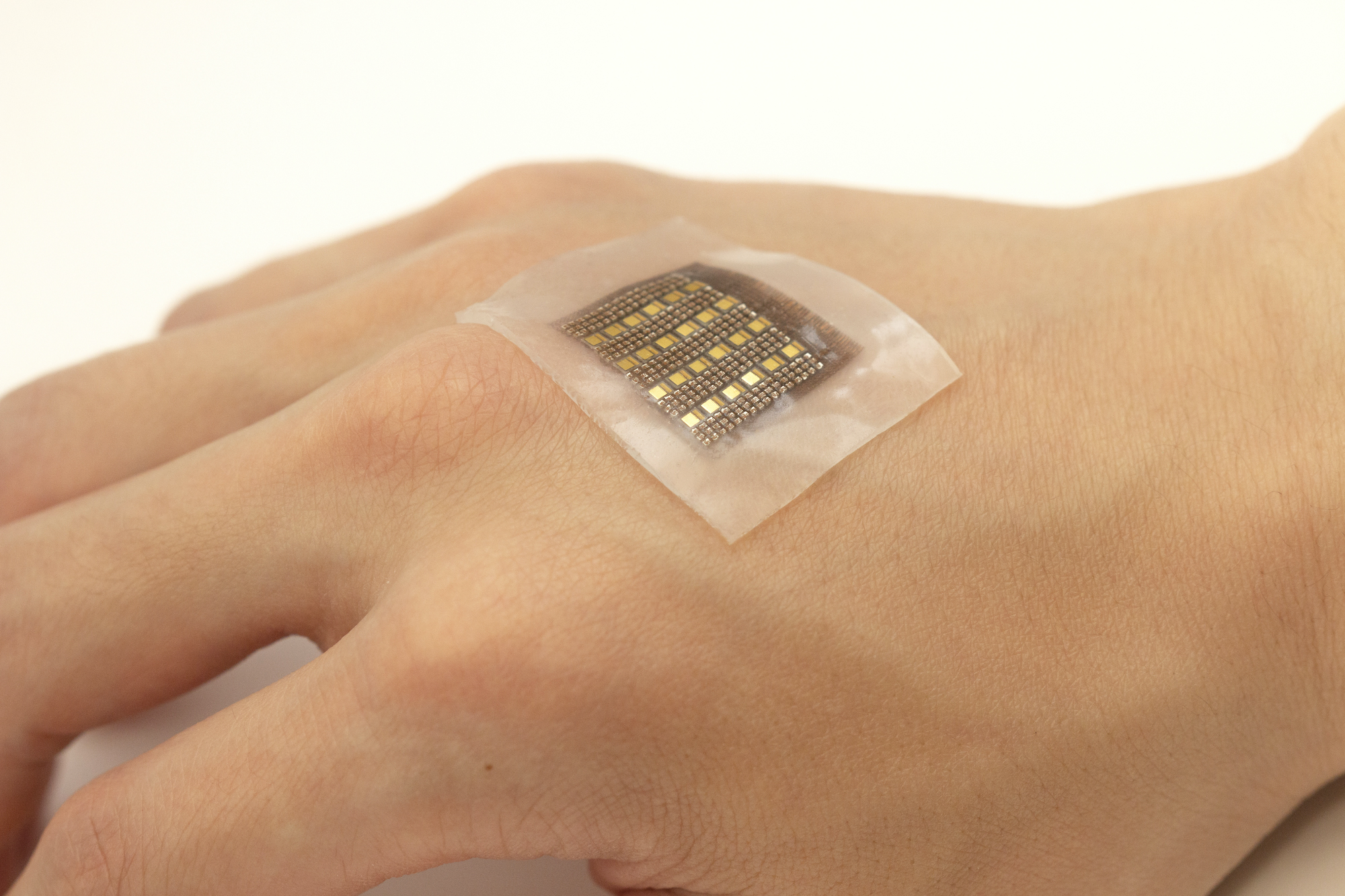
high-performance thermoelectric devices for energy harvesting and cooling
High-performance thermoelectric devices for energy harvesting and cooling

Yanliang Zhang, associate professor of aerospace and mechanical engineering at the University of Notre Dame, and collaborators Alexander Dowling and Tengfei Luo have developed a machine-learning assisted superfast new way to create high-performance, energy-saving thermoelectric devices.

The novel process uses intense pulsed light to sinter thermoelectric material in less than a second (conventional sintering in thermal ovens can take hours). The team sped up this method of turning nanoparticle inks into flexible devices by using machine learning to determine the optimum conditions for the ultrafast but complex sintering process.

The achievement was just published in the journal Energy and Environmental Scie...

Read More