To raise new questions, new possibilities, to regard old problems from a new angle, requires creative imagination and marks real advance in science.
~Albert Einstein
Read More
Old Newtonian physics claimed that things have an objective reality separate from our perception of them. Quantum physics, and particularly Heisenberg's Uncertainty Principle, reveal that, as our perception of an object changes, the object itself literally changes.
~Marianne Williamson
Read More
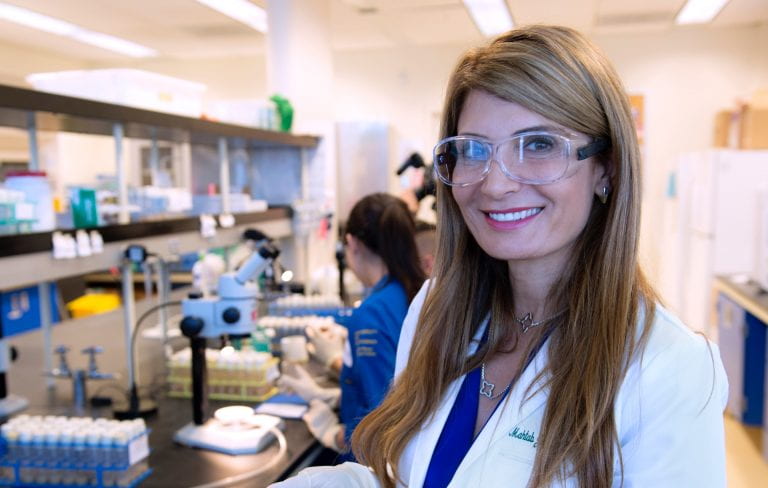
“Characterized by insulin resistance, type 2 diabetes is the most prevalent endocrine disease in the world today, responsible for more than $200 billions of healthcare costs annually in the U.S. alone,” says corresponding author Mahtab Jafari, UCI professor of pharmaceutical sciences. “Our findings show Rhodiola rosea might be beneficial for treating this disease and is a good candidate for further investigation.” Steve Zylius / UCI
Botanical extract shows promise as an alternative to drug therapy. A team of researchers led by the University of California, Irvine has discovered that treatment with an extract from the roots of the Rhodiola rosea plant might be effective for helping manage type 2 diabetes, showing promise as a safe and effective non-pharmaceutical alternative.
A schematic diagram of the method for determining the relationship between the morphology and piezoelectric performance of fiber components
A research team led by Lim Sang-kyoo, senior researcher of the Division of Energy Technology at DGIST (President Kuk Yang) developed a piezoelectric polymer/ceramic composite fiber with a cross-sectional form that is uniformly controlled to allow the use of energy harvesting technologies that can recycle energy wasted or consumed in everyday life.
Piezoelectric fiber can produce electrical energy through the piezoelectric effect of the material and drive wearable electronic devices through the movement of the wearer...
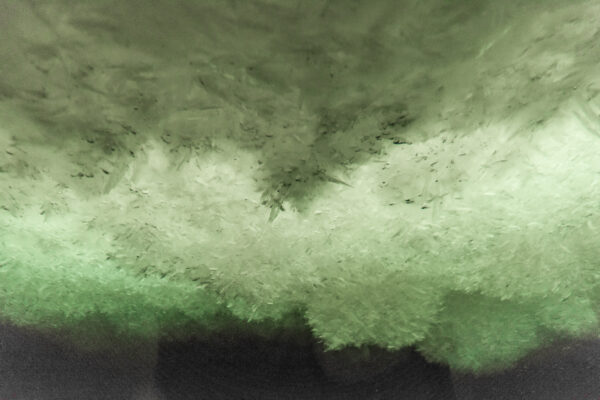
Below Europa’s thick icy crust is a massive, global ocean where the snow floats upwards onto inverted ice peaks and submerged ravines. The bizarre underwater snow is known to occur below ice shelves on Earth, but a new study shows that the same is likely true for Jupiter’s moon, where it may play a role in building its ice shell.
The underwater snow is much purer than other kinds of ice, which means Europa’s ice shell could be much less salty than previously thought. That’s important for mission scientists preparing NASA’s Europa Clipper spacecraft, which will use radar to peek beneath the ice shell to see if Europa’s ocean could be hospitable to life...
They saw signs of fatigue, including reduced pupil dilation, only in the group doing hard work. Image is in the public domain
It’s no surprise that hard physical labor wears you out, but what about hard mental labor? Sitting around thinking hard for hours makes one feel worn out, too. Now, researchers have new evidence to explain why this is, and, based on their findings, the reason you feel mentally exhausted (as opposed to drowsy) from intense thinking isn’t all in your head.
Their studies, reported in Current Biology on August 11, show that when intense cognitive work is prolonged for several hours, it causes potentially toxic byproducts to build up in the part of the brain known as the prefrontal cortex...













Recent Comments