‘Ears’ for Rover Perseverance’s Exploration of Mars

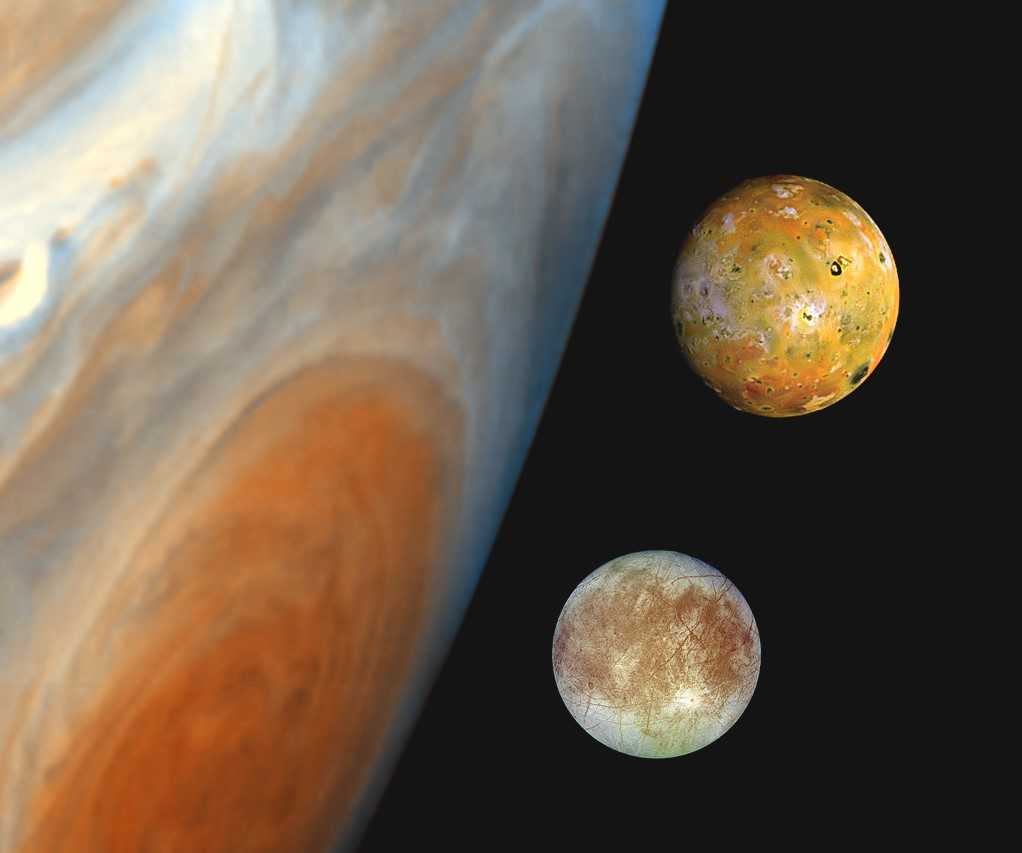
Courtesy of NASA/Southwest Research Institute/JPL-Caltech/Malin Space Science Systems/Kevin M. Gill/Italian Space Agency/Italian National Institute for Astrophysics/Björn Jónsson/ULiège/Bertrand Bonfond/Vincent Hue NASA’s Juno spacecraft flew through the intense beam of electrons traveling from Ganymede, Jupiter’s largest moon, to its auroral footprint on the gas giant. SwRI scientists used the resulting data to connect the particle population traveling along the beam with associated auroral emissions to unveil the mysterious processes creating the shimmering lights.

For two decades, Roger Wiens has built instruments to give humans eyes and a nose on Mars — and now he’s helping add ears as well...

Read More

Making a ‘Sandwich’ out of Magnets and Topological Insulators, Potential for Lossless Electronics

When two ferromagnets are placed on the top and bottom surfaces of a topological insulator, a gap is opened in the topological surface state, whilst the edge allows electrons to flow without resistance.

A Monash University-led research team has discovered that a structure comprising an ultra-thin topological insulator sandwiched between two 2D ferromagnetic insulators becomes a large-bandgap quantum anomalous Hall insulator.

Such a heterostructure provides an avenue towards viable ultralow energy future electronics, or even topological photovoltaics.

Topological Insulator: The Filling in the Sandwich

In the researchers’ new heterostructure, a ferromagnetic material forms the ‘bread’ of the sandwich, while a topological insulator (ie, a material displaying nontrivial topology) ...

Read More

Hubble finds a Protoplanet that could Upend Planet Formation Models

Researchers were able to directly image newly forming exoplanet AB Aurigae b over a 13-year span using Hubble’s Space Telescope Imaging Spectrograph (STIS) and its Near Infrared Camera and Multi-Object Spectrograph (NICMOS). In the top right, Hubble’s NICMOS image captured in 2007 shows AB Aurigae b in a due south position compared to its host star, which is covered by the instrument’s coronagraph. The image captured in 2021 by STIS shows the protoplanet has moved in a counterclockwise motion over time.
Credits: Science: NASA, ESA, Thayne Currie (Subaru Telescope, Eureka Scientific Inc.); Image Processing: Thayne Currie (Subaru Telescope, Eureka Scientific Inc.), Alyssa Pagan (STScI)

NASA’s Hubble Space Telescope has directly photographed evidence of a Jupiter-like protoplanet for...

Read More

Loss of Neurons, Not Lack of Sleep, makes Alzheimer’s Patients Drowsy

Neurons that promote wakefulness in the brain of an Alzheimer’s patient (green). There are far fewer functioning neurons that would be seen in a healthy brain, indicating that the awake system is weakened in this patient. Image by Grinberg Lab

Reviving ‘awake neurons’ could be the solution to their sleepiness. The lethargy that many Alzheimer’s patients experience is caused not by a lack of sleep, but rather by the degeneration of a type of neuron that keeps us awake, according to a study that also confirms the tau protein is behind that neurodegeneration.

The study’s findings contradict the common notion that Alzheimer’s patients sleep during the day to make up for a bad night of sleep and point toward potential therapies to help these patients feel more awake.

The data came fro...

Read More