How Fat Cells in the Skin help Fight Acne

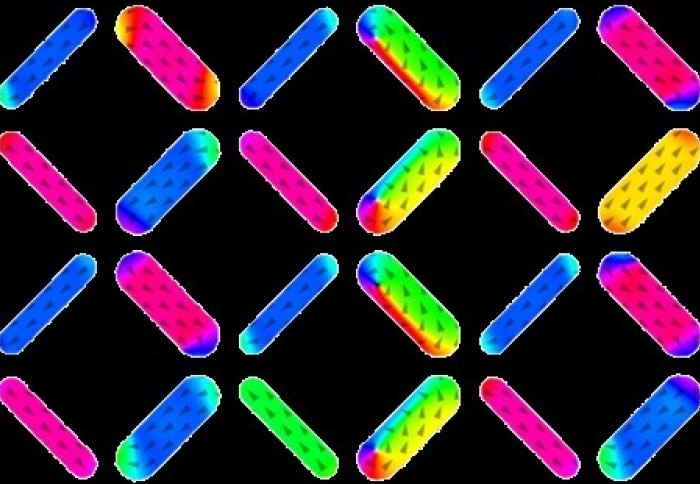
Microscopic image of an inflamed pimple with cathelicidin stained red, fat cells stained green and the nuclei of every cell stained blue. Because cathelicidin is produced from fat cells, their staining merges together.

Researchers have discovered a specific antimicrobial skin cell and the role it plays in acne development, which could result in more targeted treatment options. Acne is among the most common skin diseases in the United States, according to the American Academy of Dermatology Association, affecting up to 50 million Americans each year. It is also among the least studied.

It’s known that hair follicles assist in the development of a pimple, but new research suggests the skin cells outside of these hair follicles play a larger role...

Read More

Breakthrough in Converting Carbon Dioxide into Fuel using Solar Energy

Tönu Pullerits and Kaibo Zheng by the laser spectroscopy setup used in the study. (PHOTO: PAVEL CHABERA)

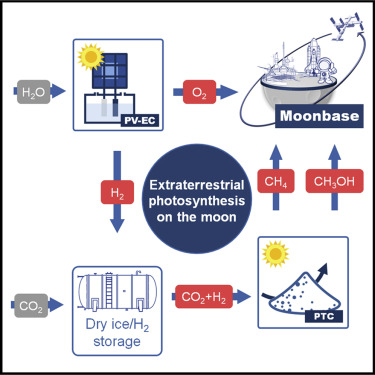
A research team led by Lund University in Sweden has shown how solar power can convert carbon dioxide into fuel, by using advanced materials and ultra-fast laser spectroscopy. The breakthrough could be an important piece of the puzzle in reducing the levels of greenhouse gases in the atmosphere in the future. The study is published in Nature Communications.

The sunlight that hits Earth during one hour corresponds roughly to humanity’s total energy consumption for an entire year. Our global carbon dioxide emissions are also increasing. Using the sun’s energy to capture greenhouse gases and converting it into fuel or another useful chemical, is a research focus for many today...

Read More

Psyche, the Iron Giant of Asteroids, may be Less Iron than researchers thought

The asteroid 16 Psyche, which NASA intends to visit with a spacecraft in 2026, may be less heavy metal and more hard rock than scientists have surmised, according to a new study by researchers from Brown and Purdue universities.

Psyche, which orbits the sun in the asteroid belt between Mars and Jupiter, is the largest of the M-type asteroids, which are composed chiefly of iron and nickel as opposed to the silicate rocks that make up most other asteroids. But when viewed from Earth, Psyche sends mixed signals about its composition.

The light it reflects tells scientists that the surface is indeed mostly metal...

Read More

Strong Magnets put New Twist on Phonons

Rice University postdoctoral researcher Andrey Baydin prepares to run an experiment at RAMBO, the Rice Advanced Magnet with Broadband Optics, a tabletop spectrometer that allows materials to be cooled and exposed to high magnetic fields. The instrument helped uncover a phenomenon by which nonmagnetic phonons can be manipulated by a magnetic field. Photo by Jeff Fitlow

Rice lab’s RAMBO reveals unexpected influence on compound’s crystal lattice.
Phonons are collective atomic vibrations, or quasiparticles, that act as the main heat carriers in a crystal lattice. Under certain circumstances, their properties can be modified by electric fields or light. But until now, nobody noticed they can respond to magnetic fields as well.

That may be because it takes a powerful magnet.

Rice Un...

Read More