RIT Scientists confirm a Highly Eccentric Black Hole Merger for the First Time

Artist’s impression of binary black holes about to collide. Mark Myers, ARC Centre of Excellence for Gravitational Wave Discovery (OzGrav)

For the first time, scientists believe they have detected a merger of two black holes with eccentric orbits. According to a paper published in Nature Astronomy by researchers from Rochester Institute of Technology’s Center for Computational Relativity and Gravitation and the University of Florida, this can help explain how some of the black hole mergers detected by LIGO Scientific Collaboration and the Virgo Collaboration are much heavier than previously thought possible.

Eccentric orbits are a sign that black holes could be repeatedly gobbling up others during chance encounters in areas densely populated with black holes such as galactic nucle...

Read More

Scientists achieve key elements for Fault-Tolerant Quantum Computation in Silicon Spin Qubits

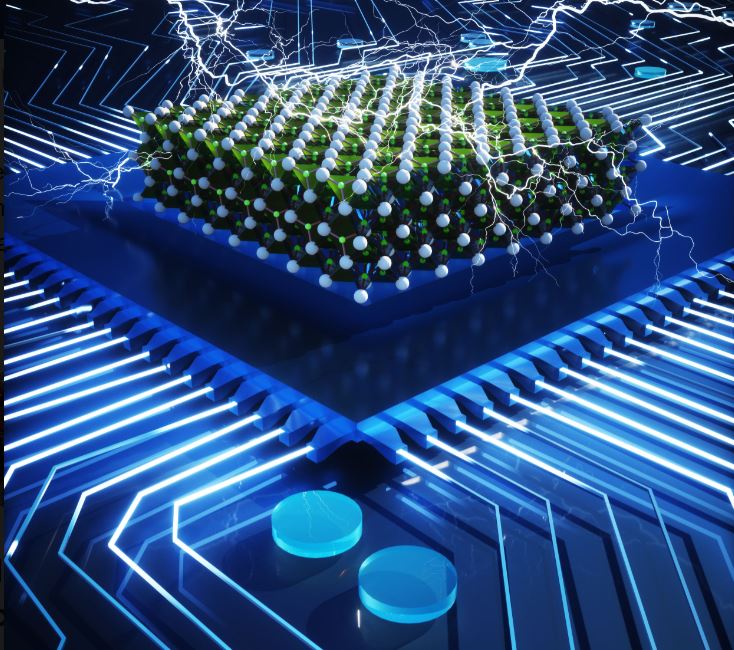
The silicon quantum computer chip used in this study

Researchers from RIKEN and QuTech — a collaboration between TU Delft and the Netherlands Organisation for Applied Scientific Research (TNO) — have achieved a key milestone toward the development of a fault-tolerant quantum computer. They were able to demonstrate a two-qubit gate fidelity of 99.5 percent — higher than the 99 percent considered to be the threshold for building fault-tolerant computers — using electron spin qubits in silicon, which are promising for large-scale quantum computers as the nanofabrication technology for building them already exists. This study was published in Nature.

The world is currently in a race to develop large-scale quantum computers that could vastly outperform classical computers in certain area...

Read More

There are 40 billion Billions of Black Holes in the Universe

How many black holes are out there in the Universe? This is one of the most relevant and pressing questions in modern astrophysics and cosmology. The intriguing issue has recently been addressed by the SISSA Ph.D. student Alex Sicilia, supervised by Prof. Andrea Lapi and Dr. Lumen Boco, together with other collaborators from SISSA and from other national and international institutions. In a first paper of a series just published in The Astrophysical Journal, the authors have investigated the demographics of stellar mass black holes, which are black holes with masses between a few to some hundred solar masses, that originated at the end of the life of massive stars...

Read More

Magnesium is essential for the Immune System, including in the Fight Against Cancer

Immunofluorescence microscopy: T cells (blue) attack cancer cells (gray) by binding to them via their surface protein LFA-1. LFA-1 needs magnesium to adopt an active, elongated form (active LFA-1 in red). (Image: J. Lötscher et al., Cell, 2022)

The level of magnesium in the blood is an important factor in the immune system’s ability to tackle pathogens and cancer cells. Writing in the journal Cell, researchers from the University of Basel and University Hospital Basel have reported that T cells need a sufficient quantity of magnesium in order to operate efficiently. Their findings may have important implications for cancer patients.

Magnesium deficiency is associated with a variety of diseases, such as infections and cancer...

Read More