Look up and watch Asteroid 1994 PC1 fly Past Earth this week

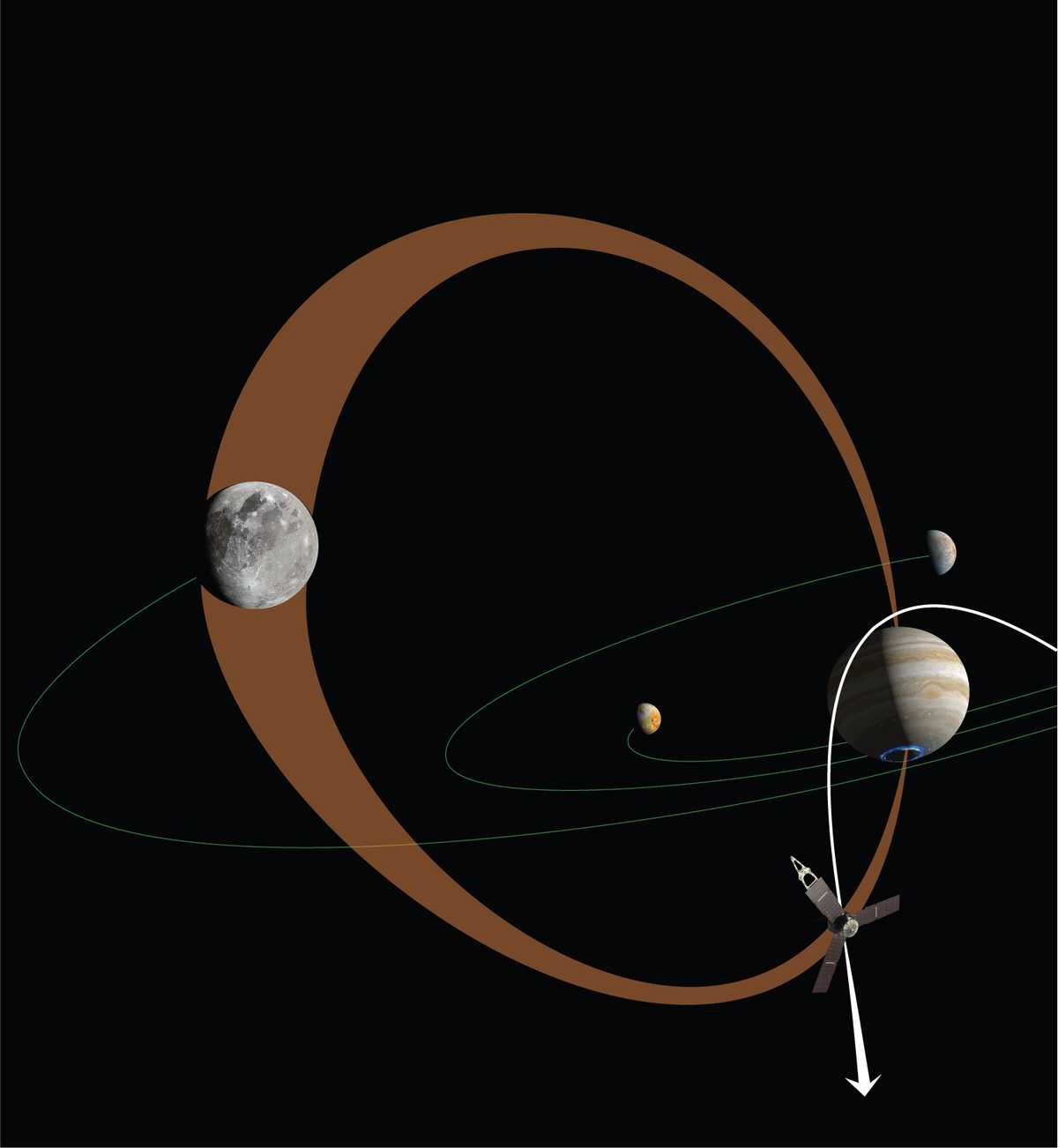
The orbit of asteroid 1994 PC1. Credit: NASA/JPL.

In a slow moving universe, asteroids give us a rare chance to see things moving in real time. On the evening of Tuesday, January 18, 1.1-kilometer asteroid (7482) 1994 PC1 passed 1.23 million miles (1.98 million kilometers) from the Earth. This is about five times the distance from the Earth to the moon, and just a shade over the distance to the anti-sunward Earth-sun Lagrange 2 point, soon to be the home of the James Webb Space Telescope.

Fortunately, both the Earth and said space telescope are safe from the asteroid on this pass, and will remain so for centuries in to the foreseeable future. The asteroid was discovered on the night of August 9, 1994 by astronomer Robert McNaught observing from the Siding Spring Observatory...

Read More

Scientists uncover ‘Resistance Gene’ in deadly E. coli

An artist’s impression of E. coli, which infects over 150 million people worldwide.

Scientists have pinpointed a gene that helps deadly E. coli bacteria evade antibiotics, potentially leading to better treatments for millions of people worldwide.

The University of Queensland-led study found a particular form of the bacteria — E. coli ST131 — had a previously unnoticed gene that made it highly resistant to commonly prescribed antibiotics.

Professor Mark Schembri, from UQ’s School of Chemistry and Molecular Biosciences, said this ‘resistance gene’ can spread incredibly quickly.

“Unlike gene transfer in humans, where sex is required to transfer genes, bacteria have genetic structures in their cells — called plasmids — that are traded quickly and easily between each other,” Profes...

Read More

Bone Growth Inspired ‘Microrobots’ that can Create their own Bone

When voltage is applied, the material (left) will slowly bend towards the chicken bone (white). If the liquid contains the minerals needed for bone development, the material will, in the space of a few days, begin to build artificial bone that attaches itself to the chicken bone. Olov Planthaber

Inspired by the growth of bones in the skeleton, researchers at the universities of Linköping in Sweden and Okayama in Japan have developed a combination of materials that can morph into various shapes before hardening. The material is initially soft, but later hardens through a bone development process that uses the same materials found in the skeleton.

When we are born, we have gaps in our skulls that are covered by pieces of soft connective tissue called fontanelles...

Read More

Globular Cluster Messier 14 and its Peculiar Multiple Stellar Populations Investigated by Hubble

Messier 14 globular cluster. Credit: NOIRLAB/NSF/AURA.

Using the Hubble Space Telescope (HST), astronomers have observed the globular cluster Messier 14 and its peculiar multiple stellar populations. Results of the observational campaign, published January 7 on arXiv.org, deliver important insight into the nature of this cluster.

Globular clusters (GCs) are collections of tightly bound stars orbiting galaxies. Astronomers perceive them as natural laboratories enabling studies on the evolution of stars and galaxies. In particular, globular clusters could help researchers better understand the formation history and evolution of early type galaxies, as the origin of GCs seems to be closely linked to periods of intense star formation.

At a distance of about 30,300 light years away fr...

Read More