Super-bright Stellar Explosion is likely a Dying Star giving Birth to a Black Hole or Neutron Star

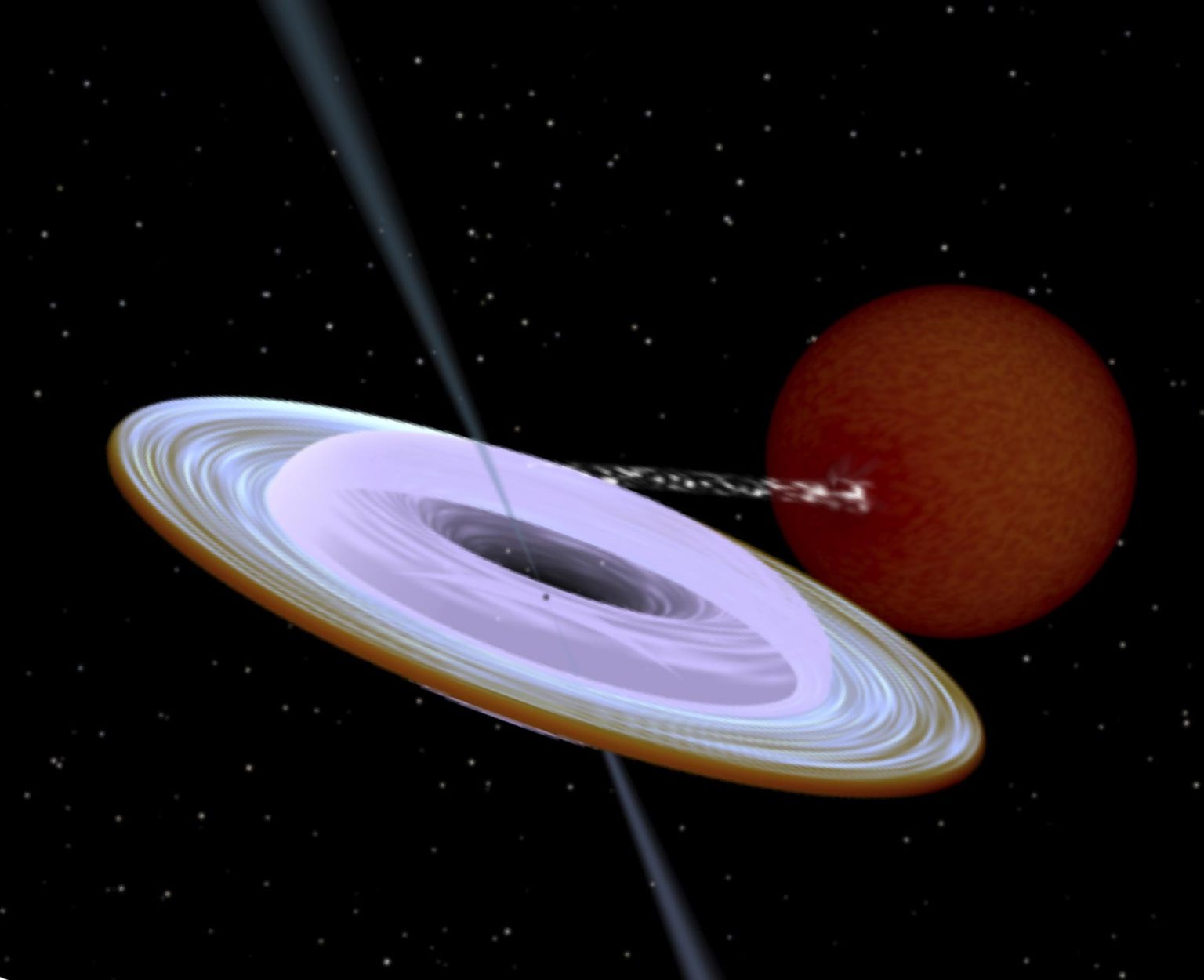
Caption:An artist’s impression of the mysterious burst AT2018cow.
Credits:Credit: National Astronomical Observatory of Japan

The discovery, based on an usual event dubbed ‘the Cow,’ may offer astronomers a new way to spot infant compact objects. A powerful cosmic burst dubbed AT2018cow, or ‘the Cow,’ was much faster and brighter than any stellar explosion astronomers had seen. They have now determined it was likely a product of a dying star that, in collapsing, gave birth to a compact object in the form of a black hole or neutron star.

In June of 2018, telescopes around the world picked up a brilliant blue flash from the spiral arm of a galaxy 200 million light years away...

Read More

Key step toward Personalized Medicine: Modeling Biological Systems

Brian D. Wood

A new study by the Oregon State University College of Engineering shows that machine learning techniques can offer powerful new tools for advancing personalized medicine, care that optimizes outcomes for individual patients based on unique aspects of their biology and disease features.

The research with machine learning, a branch of artificial intelligence in which computer systems use algorithms and statistical models to look for trends in data, tackles long-unsolvable problems in biological systems at the cellular level, said Oregon State’s Brian D. Wood, who conducted the study with then OSU Ph.D. student Ehsan Taghizadeh and Helen M. Byrne of the University of Oxford.

“Those systems tend to have high complexity — first because of the vast number of individual ce...

Read More

How Plasma Swirling around Black Holes can produce Heat and Light

Researchers at the U.S. Department of Energy’s (DOE) Princeton Plasma Physics Laboratory (PPPL) have uncovered a process in the swirling masses of plasma surrounding black holes and neutron stars that can cause previously unexplained emissions of light and heat. The process, known as magnetic reconnection, also jettisons huge plumes of plasma billions of miles in length. These findings can increase basic understanding of fundamental astrophysical processes throughout the universe.

Plasma, known as the fourth state of matter, comprises free-floating electrons and atomic nuclei, or ions, and makes up 99 percent of the visible universe...

Read More

Common Drugs Affect our Gut Microbiome Differently, with Good and Bad Impacts on health

(Photo: Colourbox)

Now a European research team consisting of scientists from France, Germany and Denmark has shown the different ways that common medicines apparently affect gut bacteria. The work is published in the journal Nature.

“It has already been substantiated in various clinical trials that different kinds of food can both positively and negatively regulate the gut’s ‘chemical factory’...

Read More