3D Laser Nanoprinters become Compact

Electron microscopic reconstruction of a 3D nanostructure printed with the 2-step absorption process (left) and light microscopy (right). (Photo: Professor Rasmus Schröder, University of Heidelberg, Vincent Hahn, KIT)

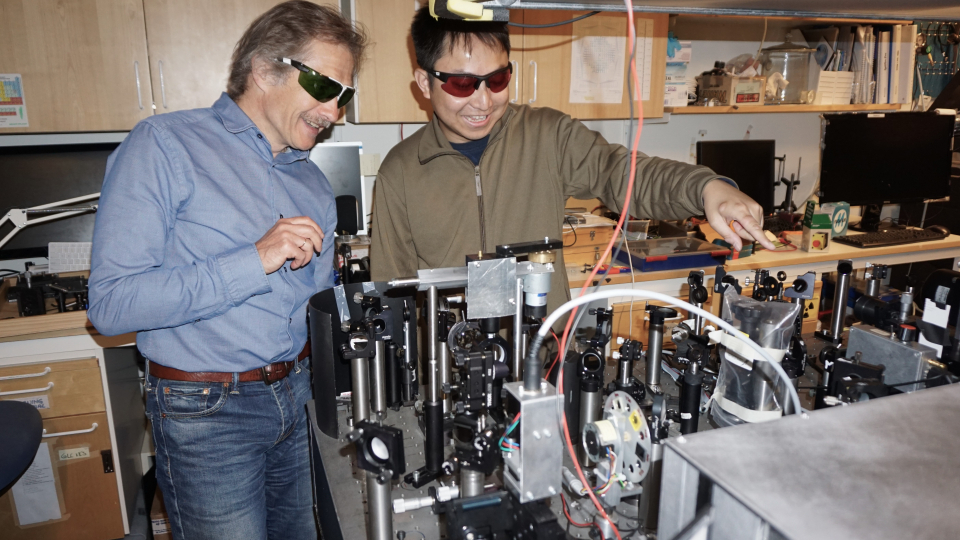
Lasers in conventional laser printers for paper printouts are very small. 3D laser printers for 3-dimensional microstructures and nanostructures, by contrast, have required big and expensive laser systems so far. Researchers of Karlsruhe Institute of Technology (KIT) and the Heidelberg University now use another process for this purpose. Two-step absorption works with inexpensive and small, blue laser diodes. As a result, much smaller printers can be used. Work is reported in Nature Photonics.

Presently, laser printing is the method of choice for additive manufacture ...

Read More

Astronomers discover strangely Massive Black Hole in Milky Way Satellite Galaxy

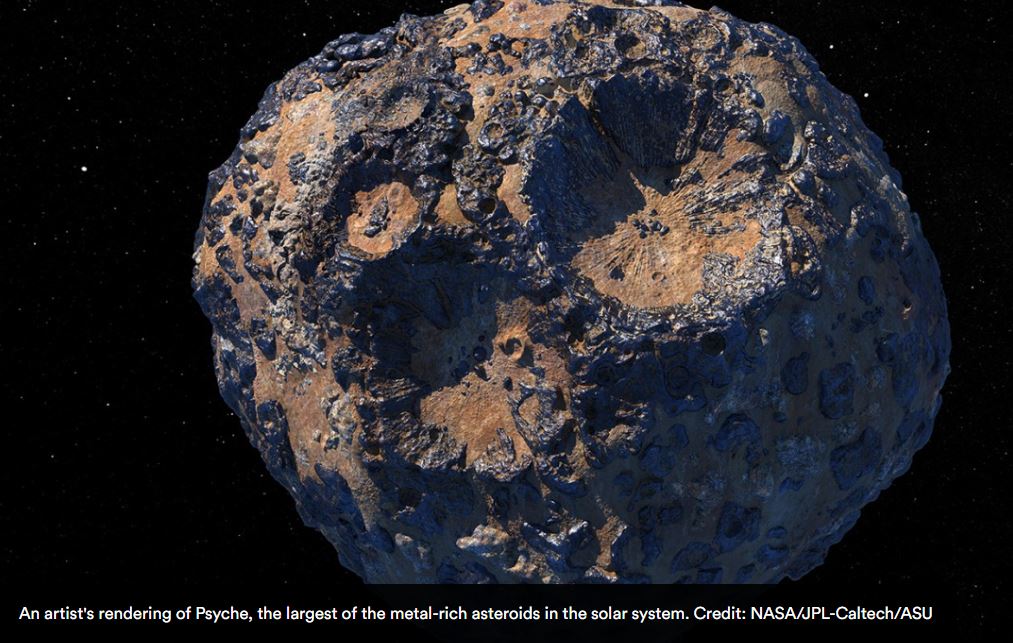
Astronomers at The University of Texas at Austin’s McDonald Observatory have discovered an unusually massive black hole at the heart of one of the Milky Way’s dwarf satellite galaxies, called Leo I. Almost as massive as the black hole in our own galaxy, the finding could redefine our understanding of how all galaxies — the building blocks of the universe — evolve. The work is published in a recent issue of The Astrophysical Journal.

The team decided to study Leo I because of its peculiarity. Unlike most dwarf galaxies orbiting the Milky Way, Leo I does not contain much dark matter. Researchers measured Leo I’s dark matter profile — that is, how the density of dark matter changes from the outer edges of the galaxy all the way into its center...

Read More

Scientists discover Potential Cause of Alzheimer’s Disease

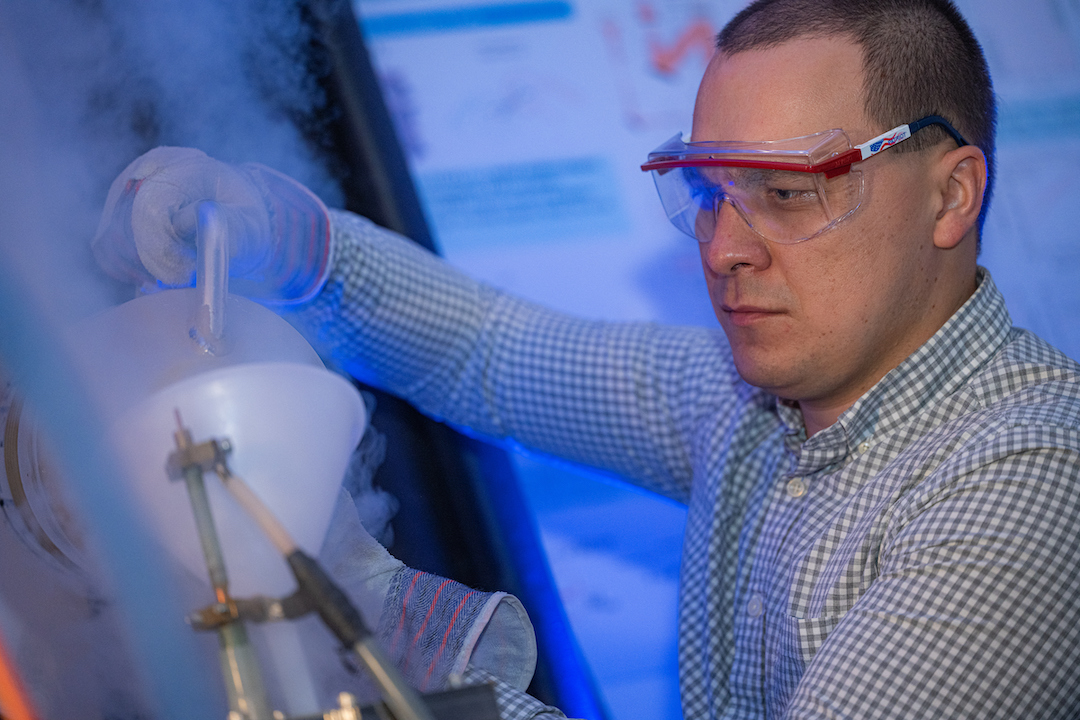
Existing drugs may offer effective treatment. Prevailing theories posit plaques in the brain cause Alzheimer’s disease. New UC Riverside research points to cells’ slowing ability to clean themselves as the likely cause of unhealthy brain buildup.

Along with signs of dementia, doctors make a definitive Alzheimer’s diagnosis if they find a combination of two things in the brain: amyloid plaques and neurofibrillary tangles. The plaques are a buildup of amyloid peptides, and the tangles are mostly made of a protein called tau.

“Roughly 20% of people have the plaques, but no signs of dementia,” said UCR Chemistry Professor Ryan Julian. “This makes it seem as though the plaques themselves are not the cause.”

For this reason, Julian and his colleagues investigated understudied aspec...

Read More

Efficient Organic Solar Cells Processed from Green Solvents

Rui Zhang with the new solar cell. Olov Planthaber

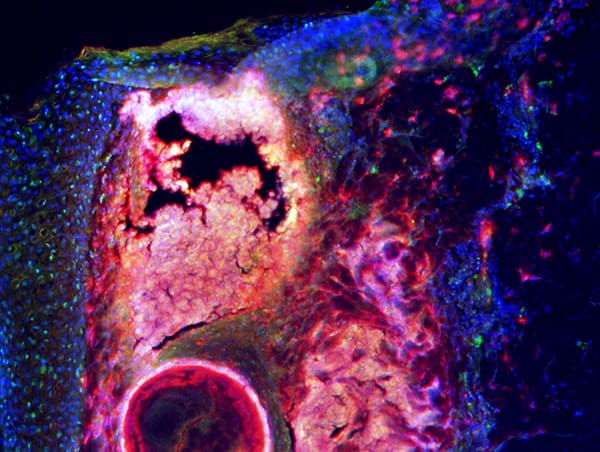
A small guest molecule in the right place makes it possible to produce energy-efficient organic solar cells using eco-friendly solvents. A record efficiency over 17% is demonstrated. In addition, solar cells with larger areas can be produced. “This is a major step towards large-scale industrial manufacture of efficient and stable organic solar cells,” says Feng Gao, professor in the Department of Physics, Chemistry and Biology (IFM) at Linköping University. The result has been published in Nature Energy.

Developments in organic solar cells are rapid, and the maximum energy efficiency achieved by solar cells produced in the laboratory is currently over 18%...

Read More