
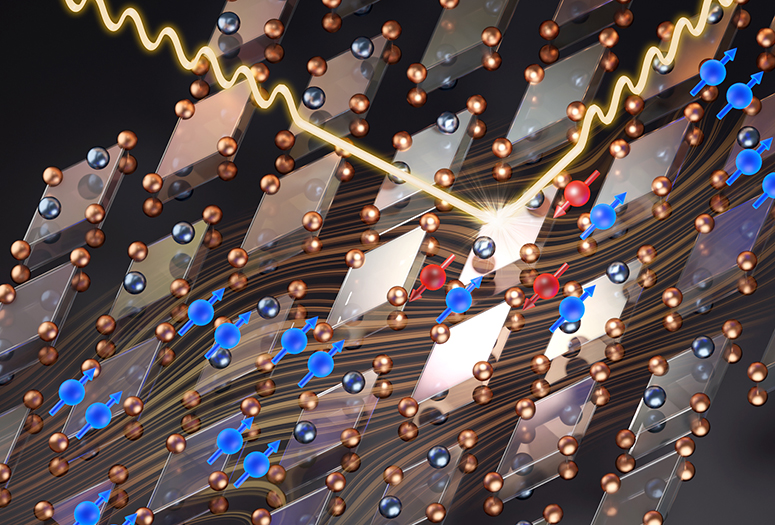
Puzzling result forces physicists to rethink ‘spin-triplet’ superconductivity...
Read More

Until we recognize the essential role of biology, our attempts to truly unify the universe will remain a train to nowhere. ~Robert Lanza Read More
Good health is not something we can buy. However, it can be an extremely valuable savings account. ~Anne Wilson Schaef Read More

The only way forward, if we are going to improve the quality of the environment, is to get everybody involved. ~Richard Rogers Read More

To raise new questions, new possibilities, to regard old problems from a new angle, requires creative imagination and marks real advance in science. ~Albert Einstein Read More
Old Newtonian physics claimed that things have an objective reality separate from our perception of them. Quantum physics, and particularly Heisenberg's Uncertainty Principle, reveal that, as our perception of an object changes, the object itself literally changes. ~Marianne Williamson Read More
Astronomy compels the soul to look upwards and leads us from this world to another. ~ Read More
January 1, 2022,
 Physics, Technology/Electronics
Puzzling result forces physicists to rethink ‘spin-triplet’ superconductivity...
Read More
December 31, 2021,
Health/Medical, Biology/Biotechnology

Monitoring surgical wounds after an operation is an important step to prevent infection, wound separation and other complications. However, when the surgical site is deep in the body, monitoring is normally limited to clinical observations or costly radiological investigations that often fail to detect complications before they become life-threatening.
Hard bioelectronic sensors can be implanted in the body for continuous monitoring, but may not integrate well with sensitive wound tissue...
Read More
December 31, 2021,
Astronomy/Space

Using the Five-hundred-meter Aperture Spherical radio Telescope (FAST), a research team led by Dr. Wang Shuangqiang from the Xinjiang Astronomical Observatory (XAO) of the Chinese Academy of Sciences discovered plasma lensing phenomenon in a black widow pulsar PSR J1720-0533.
Black widow pulsar systems have a low-mass companion star in a compact orbit with a millisecond pulsar...
Read More
December 31, 2021,
Health/Medical, Biology/Biotechnology
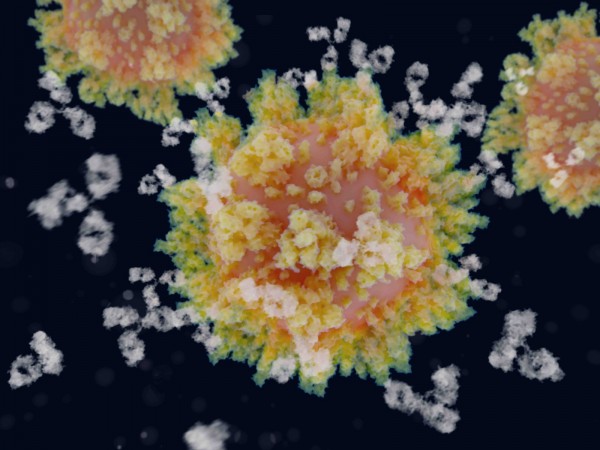
Infection with the virus that causes COVID-19 can trigger an immune response that lasts well beyond the initial infection and recovery—even among people who had mild symptoms or no symptoms at all, according to Cedars-Sinai investigators. The findings are published in the Journal of Translational Medicine.
When people are infected with a virus or other pathogen, their bodies unleash proteins called antibodies that detect foreign substances and keep them from invading cells. In some cases, however, people produce autoantibodies that can attack the body’s own organs and tissues over time.
The Cedars-Sinai investigators found that people w...
Read More
Recent Comments