Strange Radio Waves emerge from the direction of the Galactic Center

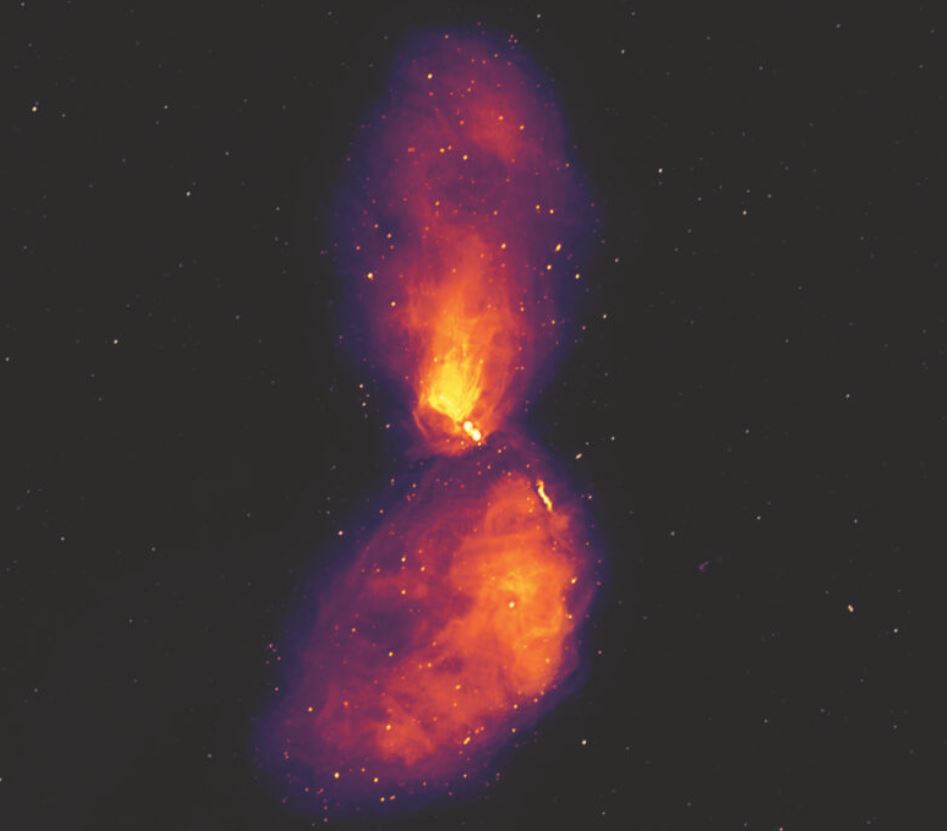
Artist's impression of ASKAP J173608.2-321635 by Sebastian Zentilomo
Artist’s impression of ASKAP J173608.2-321635 by Sebastian Zentilomo

A variable signal aligned to the heart of the Milky Way is tantalising scientists. Astronomers have discovered unusual signals coming from the direction of the Milky Way’s centre. The radio waves fit no currently understood pattern of variable radio source and could suggest a new class of stellar object.

“The strangest property of this new signal is that it is has a very high polarisation. This means its light oscillates in only one direction, but that direction rotates with time,” said Ziteng Wang, lead author of the new study and a PhD student in the School of Physics at the University of Sydney.

“The brightness of the object also varies dramatically, by a factor of 100, and the signal switches on and off appa...

Read More

Nature of unknown Gamma-ray Sources revealed

LAMOST observations reveal nature of unknown gamma-ray sources
Fig. 1 Artistic representation of an active galaxy jet. Credit: M. Kornmesser/ESO

An international team of astronomers has unveiled the nature of hundreds of gamma-ray emitting sources, discovering that most of them belong to the class of active galaxies known as blazars.

Their recent study was published in The Astronomical Journal.

One of the most intriguing challenges in modern gamma-ray astronomy is searching for low-energy counterparts of unidentified gamma-ray sources. Unidentified sources constitute about 1/3 of all celestial objects detected by the Fermi satellite to date, the most recent gamma-ray mission with unprecedented capabilities for observing the high energy sky.

Since the largest population of known gamma-ray sources are blazars, astronomers believe they can a...

Read More

Stem Cell Population identified that is Key for Bone Regeneration

image picture
Image by Praisaeng/Shutterstock

Researchers from the University of Tsukuba, in collaboration with the University of Bonn, Germany, identify a subpopulation of mesenchymal stem cells with enhanced fracture healing and differentiation abilities

Mesenchymal stem cells (MSCs) are thought to have great potential in the field of regenerative medicine, which has the aim of restoring damaged tissues. However, not much was known about in vivo plasticity of them — until now. Researchers have identified a subpopulation of MSCs that promote the healing of bone fractures and show an enhanced ability to differentiate into various cell types.

MSCs are found in bone marrow, and are “multipotent,” meaning that they can both renew themselves and develop into a variety of specialized cell types, such a...

Read More

Resurrecting Quasicrystals: Findings make an Exotic Material Commercially Viable

An X-ray tomography visualization shows a top-down view of two quasicrystals as they start to meld together during cooling. Image credit: Shahani Group, University of Michigan

Self-healing phenomenon could reduce defects that rendered quasicrystals impractical. A class of materials that once looked as if it might revolutionize everything from solar cells to frying pans — but fell out of favor in the early 2000s — could be poised for commercial resurrection, findings from a University of Michigan-led research team suggest.

Published in Nature Communications, the study demonstrates a way to make much larger quasicrystals than were possible before, without the defects that plagued past manufacturers and led quasicrystals to be dismissed as an intellectual curiosity.

“One reason why ...

Read More