Researchers Develop New Tool for Analyzing Large Superconducting Circuits

Method could help push forward the field of quantum computing. The next generation of computing and information processing lies in the intriguing world of quantum mechanics. Quantum computers are expected to be capable of solving large, extremely complex problems that are beyond the capacity of today’s most powerful supercomputers.

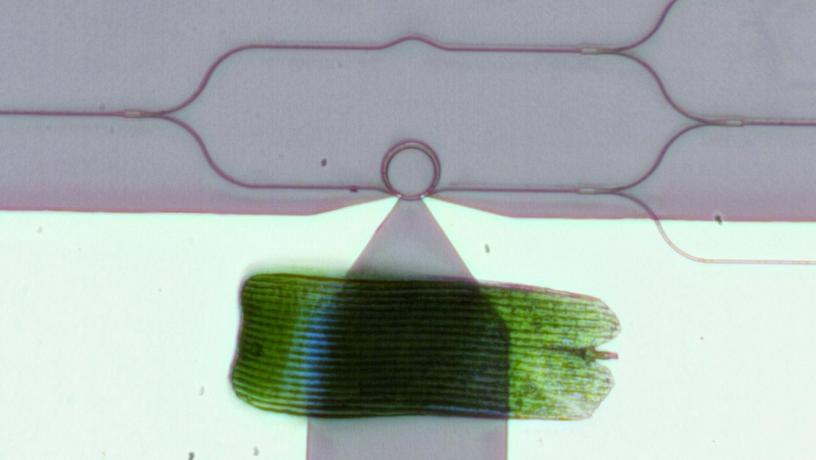
New research tools are needed to advance the field and fully develop quantum computers. Now Northwestern University researchers have developed and tested a theoretical tool for analyzing large superconducting circuits. These circuits use superconducting quantum bits, or qubits, the smallest units of a quantum computer, to store information.

Circuit size is important since protection from detrimental noise tends to come at the cost of increased circu...

Read More

Astronomers Spot the Same Supernova Three Times—and Predict a Fourth Sighting in 16 years

Now you see them, now you don’t. Three views of the same supernova appear in the 2016 image on the left, taken by the Hubble Space Telescope. But they’re gone in the 2019 image. The distant supernova, named Requiem, is embedded in the giant galaxy cluster MACS J0138. The cluster is so massive that its powerful gravity bends and magnifies the light from the supernova, located in a galaxy far behind it. Called gravitational lensing, this phenomenon also splits the supernova’s light into multiple mirror images, highlighted by the white circles in the 2016 image. The multiply imaged supernova disappears in the 2019 image of the same cluster, at right. The snapshot, taken in 2019, helped astronomers confirm the object’s pedigree. Supernovae explode and fade away over time...
Read More

Free Radicals Linked to Heart Damage caused by Cancer


Photo: Shutterstock.com

In fruit flies, antioxidants reverse tumor-related cardiac dysfunction. A new study in animal models shows that the presence of a cancer tumor alone can lead to cardiac damage, and suggests the culprits are molecules are free radicals interacting with specific cells in the heart.

Tumors in mice and fruit flies led to varying degrees of cardiac dysfunction – particularly a decrease in the heart’s blood-pumping capabilities.

Adding specific types of antioxidants to food consumed by fruit flies with tumors reversed the damage to their hearts – a finding suggesting that harm caused by free radicals was the likely link between cancer and cardiac dysfunction.

“Cancer becomes a systemic disease...

Read More

A Spoonful of Sugar opens a Path to Longer Lasting Lithium Sulfur Batteries

Melbourne to Sydney on one charge: the new lithium-sulfur battery technology could store two to five times more energy. The Monash Energy Institute team (L-R): Mahdokht Shaibani, Mainak Majumder, Matthew Hill, Yingyi Huang

Simply by adding sugar, researchers from the Monash Energy Institute have created a longer-lasting, lighter, more sustainable rival to the lithium-ion batteries that are essential for aviation, electric vehicles and submarines.

The Monash team, assisted by CSIRO, report in today’s edition of Nature Communications that using a glucose-based additive on the positive electrode they have managed to stabilise lithium-sulfur battery technology, long touted as the basis for the next generation of batteries.

“In less than a decade, this technology could lead to vehicle...

Read More