Drug cocktail reduces aging-associated disc degeneration

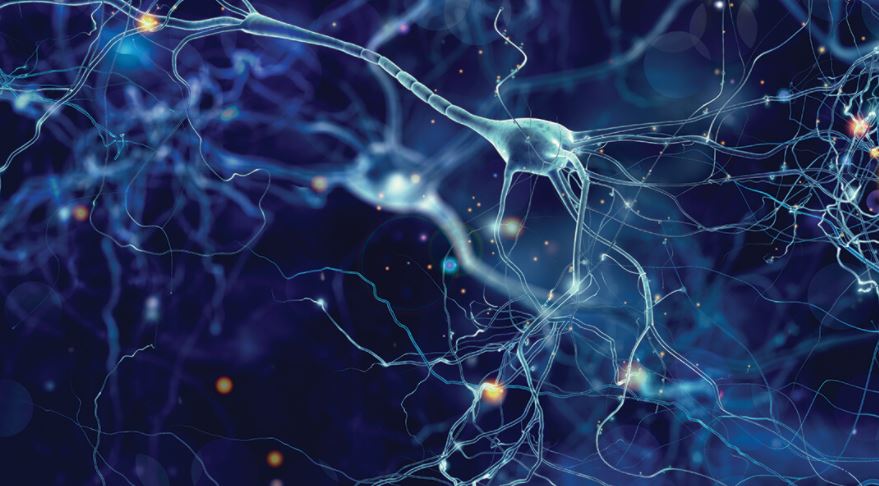
Therapies that target aging cells early pave the way to easing back pain. Chronic back pain affects upwards of 15 million adults in the US, racking up billions in healthcare costs and lost work days. Degeneration of the discs that cushion and support vertebrae, a common occurrence of aging, is a major contributor to low back pain. Although a widespread condition, few treatments are available. Now Jefferson’s Makarand Risbud, PhD, James J. Maguire Jr. Professor of Spine Research in orthopedic surgery, division director of orthopedic research and co-director of the cell biology and regenerative medicine graduate program, and colleagues have shown that treating mice with a drug cocktail that removes aging cells reduces disc degeneration...

Read More

Researchers realize Gallium Nitride-based Complementary Logic Integrated Circuits

Researchers realize Gallium nitride (GaN)-based complementary logic integrated circuits
(a) Schematic view of the device structure of the GaN complementary logic inverter developed at HKUST; (b) corresponding circuit diagram; (c) perspective view of a true-color photo of the 15-stage GaN complementary ring oscillator fabricated in HKUST. (d) Cross-coupled plot of voltage transfer curves at different temperatures, and (e) static power dissipation with respect to different supply voltage and input voltage of the reported inverter. The inverter is very stable up to 200 °C with substantially large noise margins. (f) Oscillating waveform and the corresponding power spectrum of the reported ring oscillator. Credit: Zheng et al. (Springer Nature).

Most integrated circuits (ICs) and electronic components developed to date are based on silicon metal-oxide-semiconductor (CMOS) tec...

Read More

Astronomers explain Origin of elusive Ultradiffuse Galaxies: How very faint Dwarf Galaxies are Born

On the left, one of the ultra-diffuse galaxies that was analyzed in the simulation. On the right, the image of the DF2 galaxy, which is almost transparent. (ESA/Hubble)

As their name suggests, ultradiffuse galaxies, or UDGs, are dwarf galaxies whose stars are spread out over a vast region, resulting in extremely low surface brightness, making them very difficult to detect. Several questions about UDGs remain unanswered: How did these dwarfs end up so extended? Are their dark matter halos – the halos of invisible matter surrounding the galaxies – special?

Now an international team of astronomers, co-led by Laura Sales, an astronomer at the University of California, Riverside, reports in Nature Astronomythat it has used sophisticated simulations to detect a few “quenched” UDGs in low-...

Read More

Novel Mechanism Links Genetic Defect in IBD Patients to Gut Leakiness

A team of researchers led by a biomedical scientist at the University of California, Riverside, has identified a novel mechanism by which loss-of-function mutations in the gene PTPN2, found in many patients with inflammatory bowel disease, or IBD, affect how intestinal epithelial cells maintain a barrier.

The intestinal epithelium, a single layer of cells, plays a critical role in human health by providing a barrier while also allowing nutrient and water absorption. Intestinal epithelial cells are needed for regulating immune function, communicating with the intestinal microbiota, and protecting the gut from pathogen infection – all of which critically depend on an intact epithelial barrier.

Affecting roughly 3 million Americans, IBD is a set of chronic intestinal diseases in wh...

Read More