

Astronomers Team up to Create New Method to Understand Galaxy Evolution

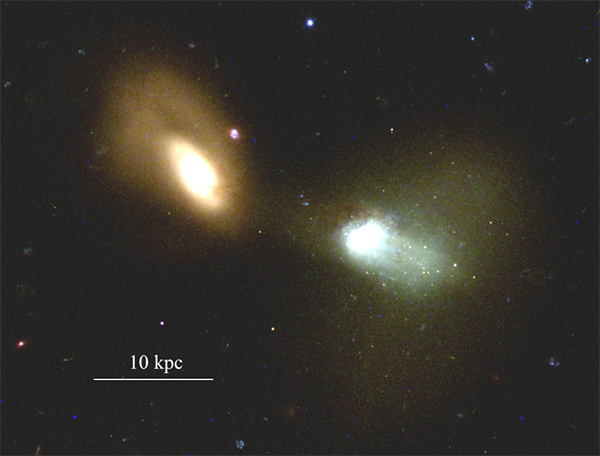
S12, a post-starburst galaxy located nearly 500 million light-years away, is on the right. It looks like a jellyfish with a host of stars streaming out of the galaxy on one side.

A husband-and-wife team of astronomers established the star formation history of a post-starburst galaxy using its cluster population. A husband-and-wife team of astronomers at The University of Toledo joined forces for the first time in their scientific careers during the pandemic to develop a new method to look back in time and change the way we understand the history of galaxies.

Until now forging parallel but separate careers while juggling home life and carpooling to cross country meets, Dr. Rupali Chandar, professor of astronomy, and Dr. J.D...

Read More
New approach provides Potential Vaccine and Treatment for Alzheimer’s

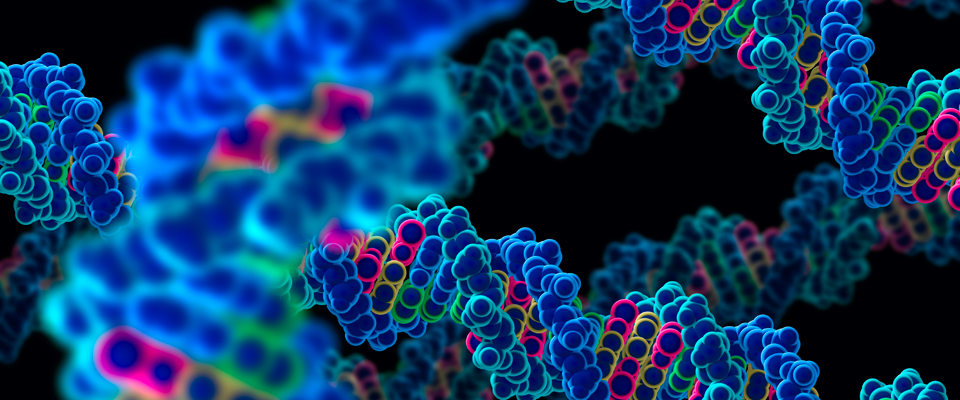
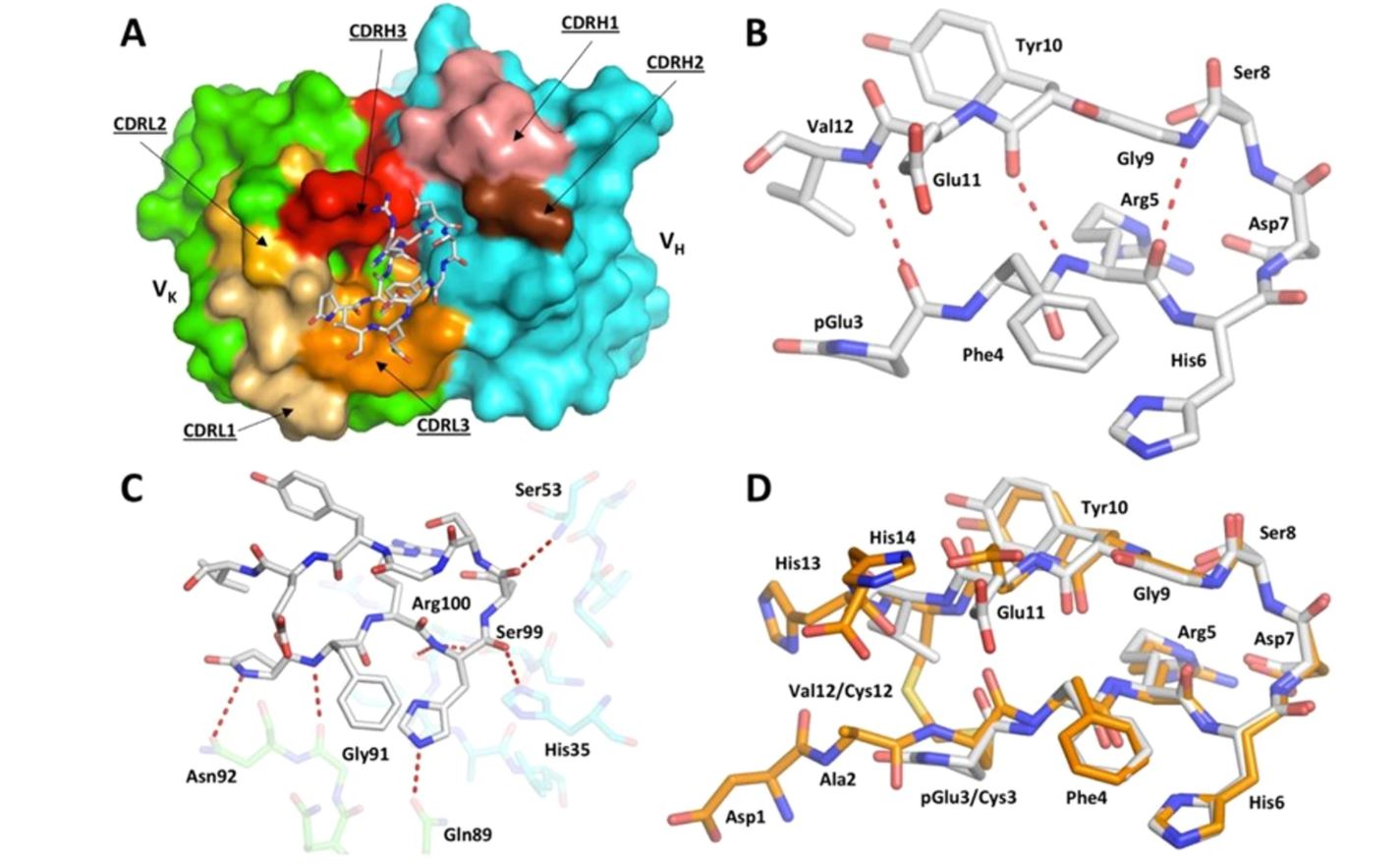
A A surface representation of the TAP01 antibody paratope, with the VH and VK domains coloured cyan and green respectively, and the individual complementary determining regions (CDR) highlighted. The conformation and location of the bound AβpE3-14 peptide is shown as a white sticks representation of its covalent structure. B The striking pseudo β-hairpin conformation of the TAP01 bound pE3-14 peptide, which is shown as a covalent sticks representation with stabilising intramolecular hydrogen bonds highlighted. C A detailed view of the TAP01-AβpE3-14 interface, with the bound peptide and interacting antibody residues shown as covalent sticks. TAP01 residues are shown in cyan and green for the VH and VK domains, respectively...
Read More

A Nanoantenna for Long-Distance, Ultra-Secure Communication

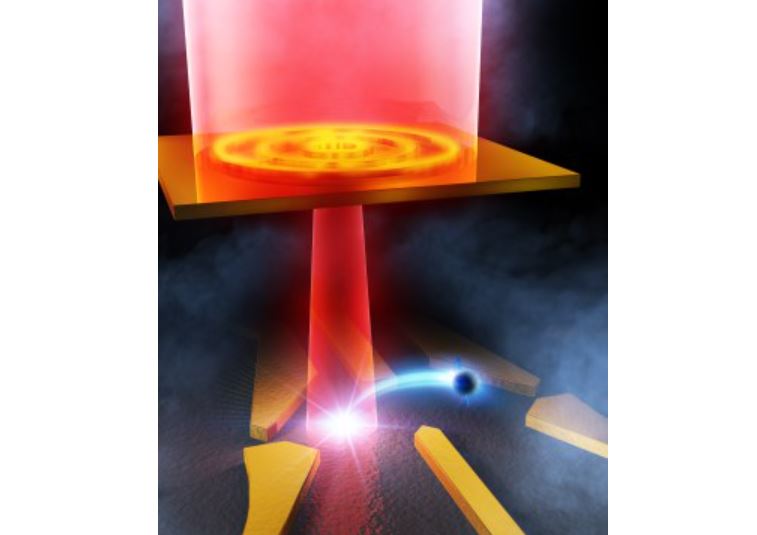
 Conceptual illustration of efficient illumination of photons to semiconductor lateral quantum dots, by using a surface plasmon antenna and excitation of electrons in the quantum dots. (credit: copyright @ 2021 Oiwa lab. All Rights Reserved)

Researchers have improved the transfer efficiency between quantum information carriers, in a manner that’s based on well-established nanoscience and is compatible with upcoming advanced communication technologies.

Information storage and transfer in the manner of simple ones and zeros — as in today’s classical computer technologies — is insufficient for quantum technologies under development. Now, researchers from Japan have fabricated a nanoantenna that will help bring quantum information networks closer to practical use.

In a study recently...

Read More

Carbon Dioxide Cold Traps on the Moon are Confirmed for the First Time

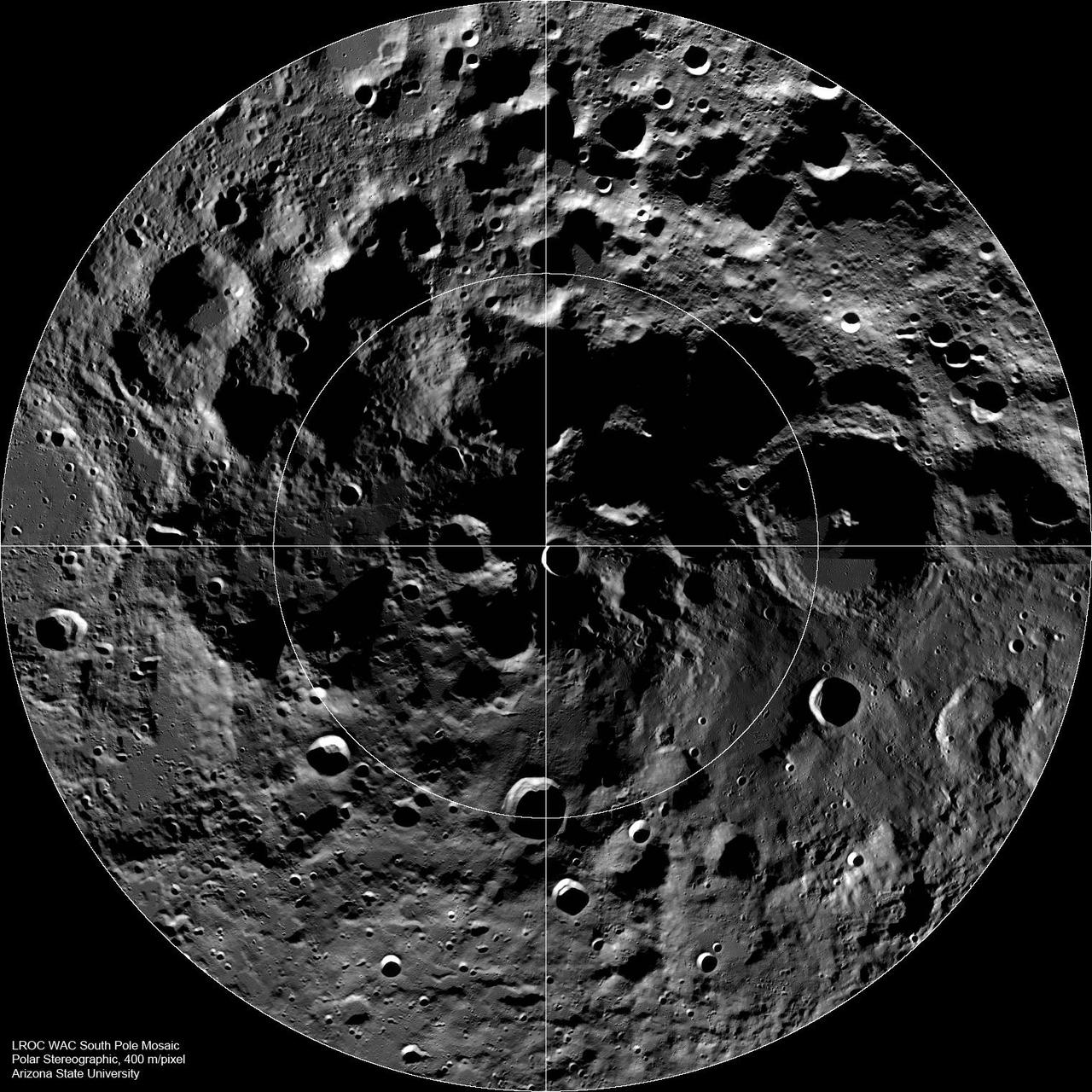
A view of the lunar south pole, where newly confirmed carbon dioxide cold traps are located, according to new research in Geophysical Research Letters. Future missions on the Moon may target this region to find out more about the resources that may exist there.
Credit: NASA/GSFC/Arizona State University

The traps likely contain solid carbon dioxide that could be used to sustain robot or human presence on the moon. After decades of uncertainty, researchers have confirmed the existence of lunar carbon dioxide cold traps that could potentially contain solid carbon dioxide. The discovery will likely have a major influence in shaping future lunar missions and could impact the feasibility of a sustained robot or human presence on the moon.

In the permanently shadowed regions at the poles o...

Read More