To raise new questions, new possibilities, to regard old problems from a new angle, requires creative imagination and marks real advance in science.
~Albert Einstein
Read More
Old Newtonian physics claimed that things have an objective reality separate from our perception of them. Quantum physics, and particularly Heisenberg's Uncertainty Principle, reveal that, as our perception of an object changes, the object itself literally changes.
~Marianne Williamson
Read More
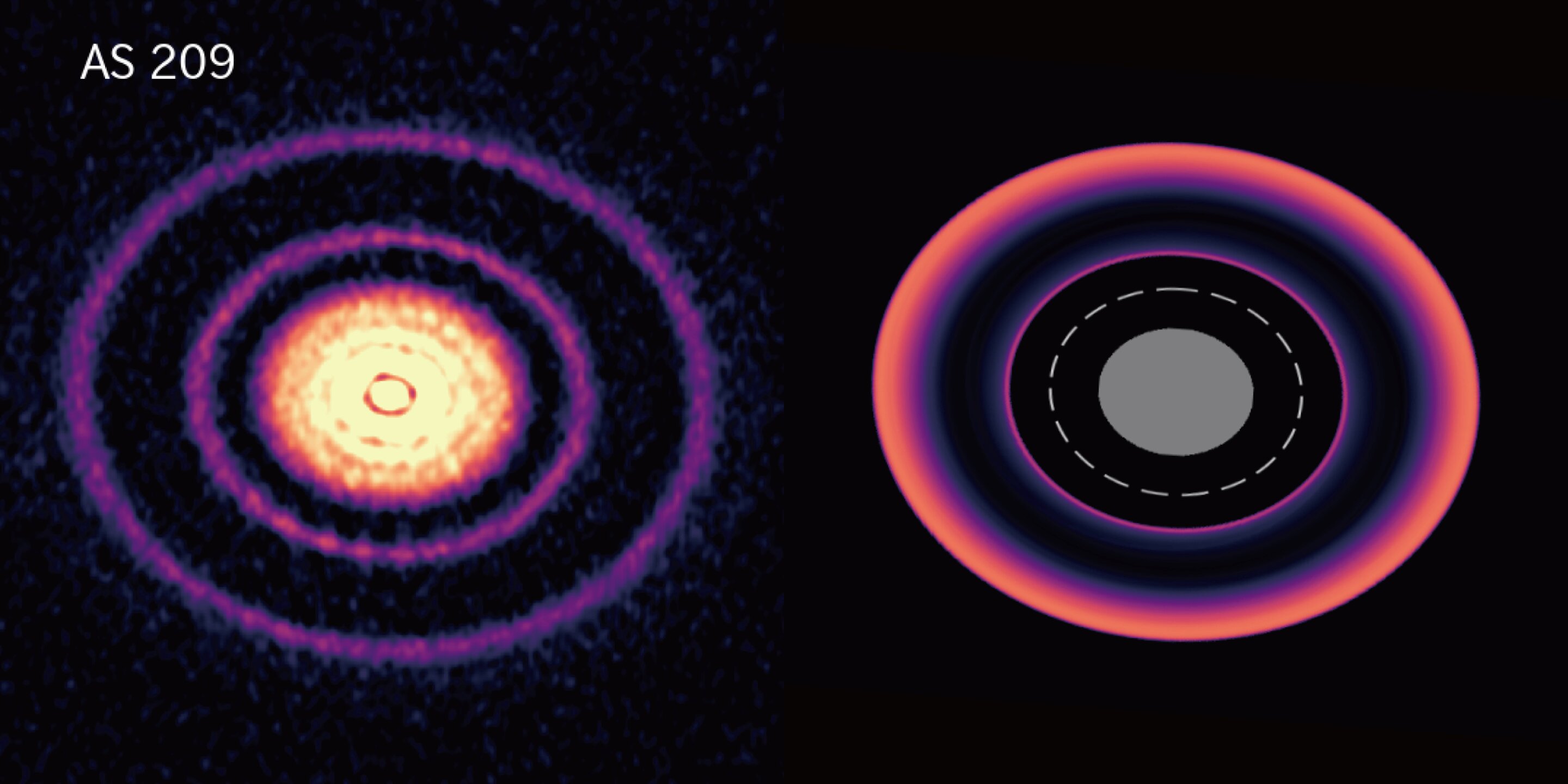
A protoplanetary disk as observed by ALMA (left), and a protoplanetary disk during planetary migration, as obtained from the ATERUI II simulation (right). The dashed line in the simulation represents the orbit of a planet, and the gray area indicates a region not covered by the computational domain of the simulation. Credit: Kazuhiro Kanagawa, ALMA(ESO/NAOJ/NRAO)
Forming planets are one possible explanation for the rings and gaps observed in disks of gas and dust around young stars. But this theory has trouble explaining why it is rare to find planets associated with rings. New supercomputer simulations show that after creating a ring, a planet can move away and leave the ring behind...
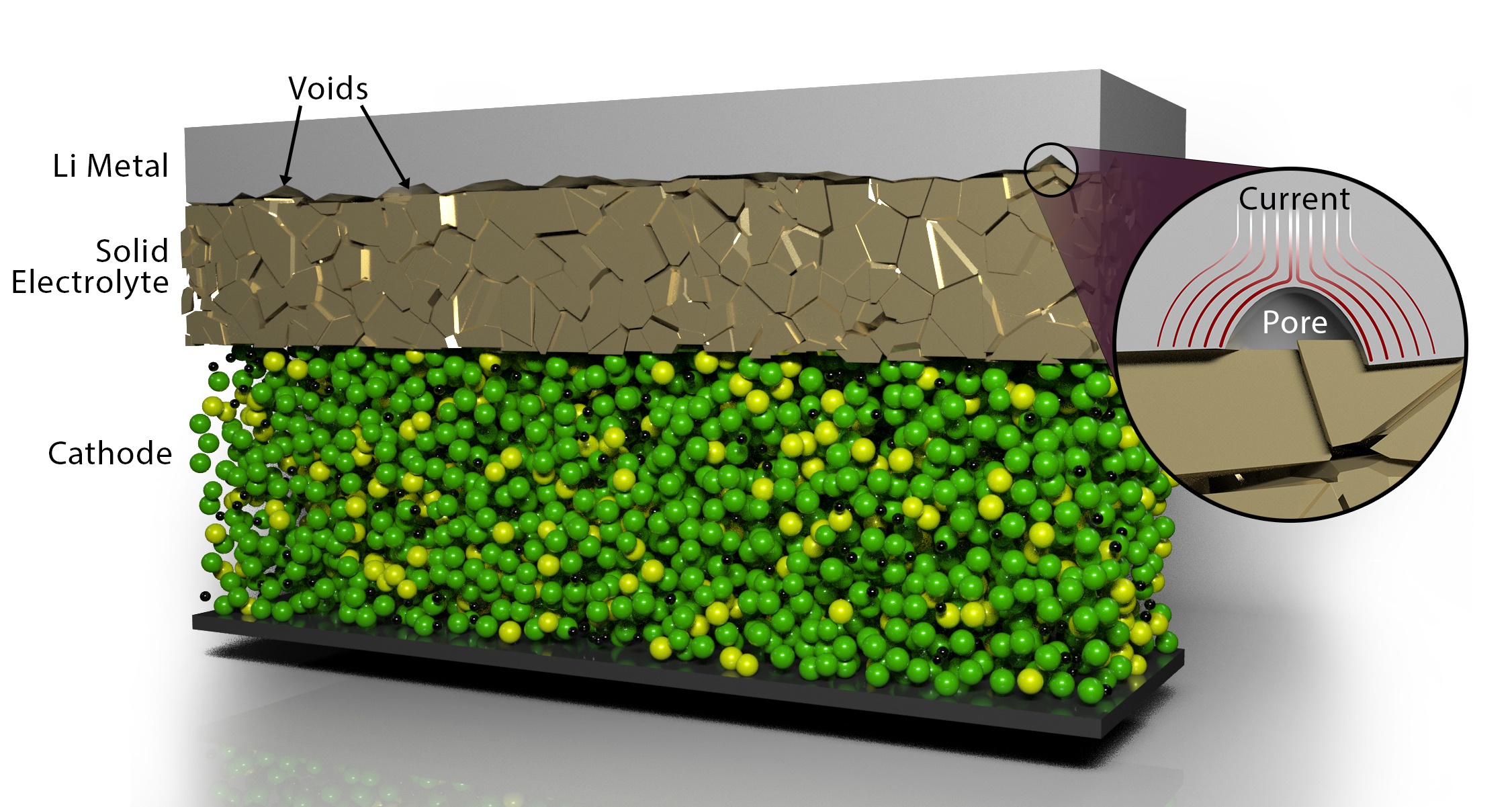
Scientists at the Department of Energy’s Oak Ridge National Laboratory have developed a scalable, low-cost method to improve the joining of materials in solid-state batteries, resolving one of the big challenges in the commercial development of safe, long-lived energy storage systems.
Solid-state batteries incorporate a safer, fast-charging architecture featuring a solid-state electrolyte versus the liquid electrolytes in today’s lithium-ion batteries...
An artist’s impression of Earth quasi-satellite Kamo`oalewa near the Earth-moon system. Using the Large Binocular Telescope, astronomers have shown that it might be a lost fragment of the moon.Addy Graham/University of Arizona
A near-Earth asteroid named Kamo`oalewa could be a fragment of our moon, according to a new paper published in Nature Communications Earth and Environment by a team of astronomers led by the University of Arizona.
Kamooalewa is a quasi-satellite -- a subcategory of near-Earth asteroids that orbit the sun but remain relatively close to Earth. Little is known about these objects because they are faint and difficult to observe. Kamooalewa was discovered by the PanSTARRS telescope in Hawaii in 2016, and the name — found in a Hawaiian creation chant — alludes to an...
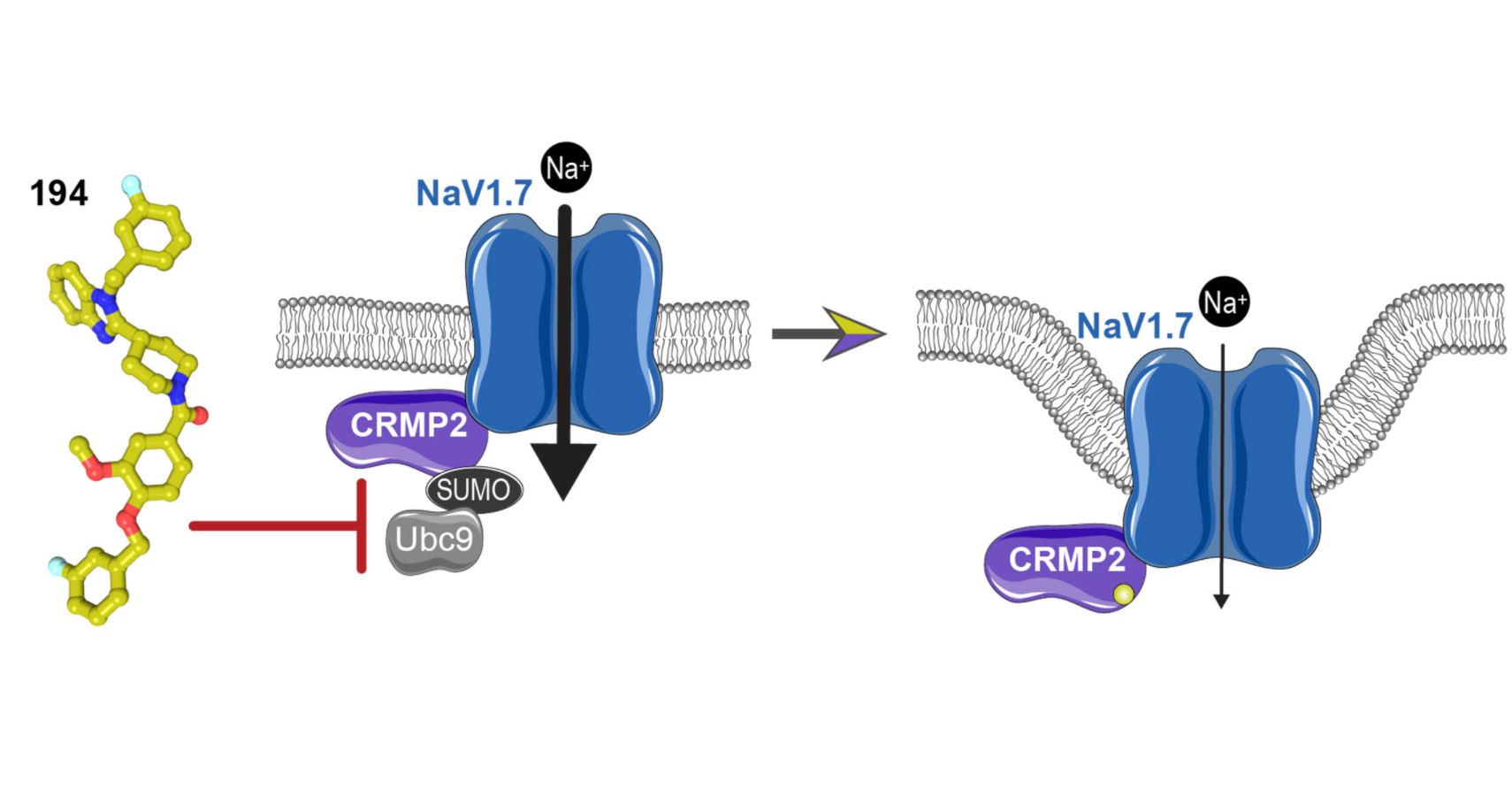
Compound 194 (left) was developed by researchers to uncouple the interaction between CRMP2 and the enzyme Ubc9, which indirectly regulates the sodium ion channel NaV1.7. A new study showed that the resulting reduction in sodium currents reduced pain. (Image: Samantha Perez-Miller, Aude Chefdeville and Rajesh Khanna)
Researchers targeted a common sodium ion channel to reverse pain, with positive results that could lead to a non-addictive solution to treat pain. Researchers at the University of Arizona Health Sciences are closer to developing a safe and effective non-opioid pain reliever after a study showed that a new compound they created reduces the sensation of pain by regulating a biological channel linked to pain.
Most people experience pain at some point in their lives, and the...












Recent Comments