


First Quantum Simulation of Baryons

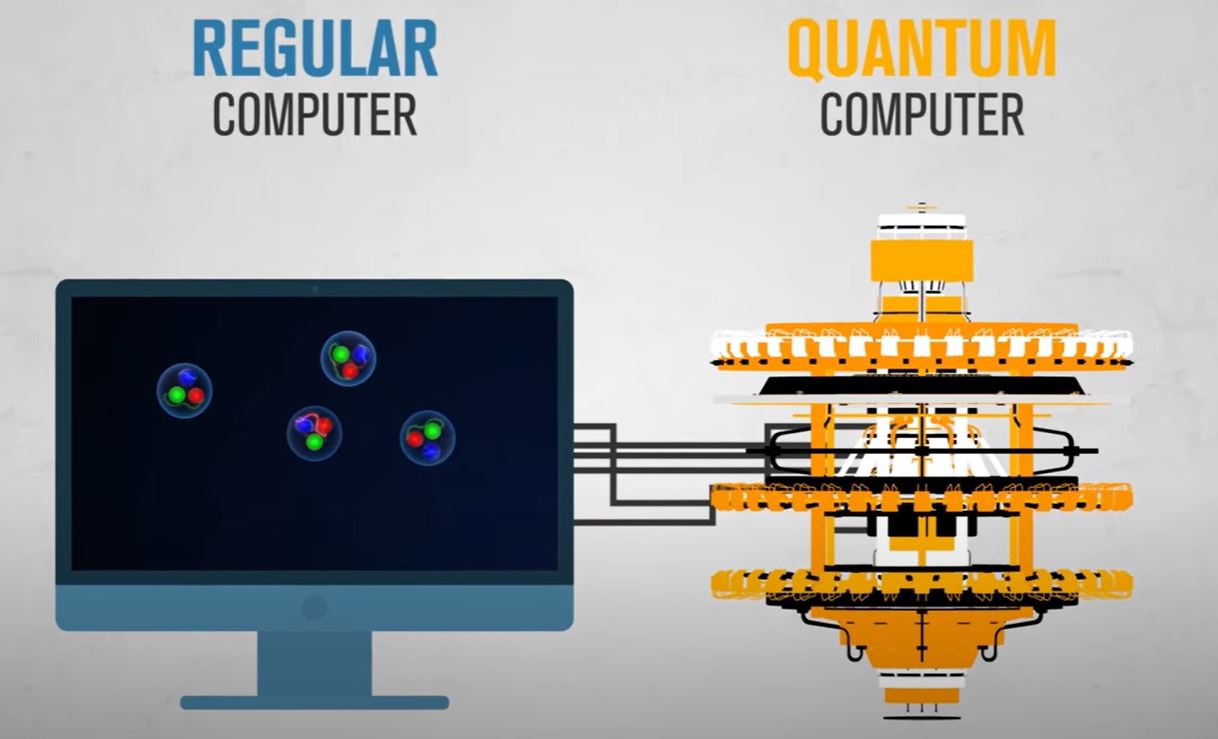
A team of researchers led by an Institute for Quantum Computing (IQC) facu11lty member performed the first-ever simulation of baryons — fundamental quantum particles — on a quantum computer.

With their results, the team has taken a step towards more complex quantum simulations that will allow scientists to study neutron stars, learn more about the earliest moments of the universe, and realize the revolutionary potential of quantum computers.

“This is an important step forward — it is the first simulation of baryons on a quantum computer ever,” Christine Muschik, an IQC faculty member, said. “Instead of smashing particles in an accelerator, a quantum computer may one day allow us to simulate these interactions that we use to study the origins of the universe and so much more.”

...Read More

Black Hole found Hiding in Star Cluster Outside Our Galaxy

undefined
Using the European Southern Observatory’s Very Large Telescope (ESO’s VLT), astronomers have discovered a small black hole outside the Milky Way by looking at how it influences the motion of a star in its close vicinity. This is the first time this detection method has been used to reveal the presence of a black hole outside of our galaxy. The method could be key to unveiling hidden black holes in the Milky Way and nearby galaxies, and to help shed light on how these mysterious objects form and evolve.

Using the European Southern Observatory’s Very Large Telescope (ESO’s VLT), astronomers have discovered a small black hole outside the Milky Way by looking at how it influences the motion of a star in its close vicinity...

Read More

Seizure Forecasting with Wrist-Worn Devices possible for People with Epilepsy

medical illustration or graphic of a brain having a seizure representing epilepsy

A new study found patterns could be identified in patients who wear a special wristwatch monitoring device for six to 12 months, allowing about 30 minutes of warning before a seizure occurred. This worked well most of the time for five of six patients studied.

Despite medications, surgery and neurostimulation devices, many people with epilepsy continue to have seizures. The unpredictable nature of seizures is severely limiting. If seizures could be reliably forecast, people with epilepsy could alter their activities, take a fast-acting medication or turn up their neurostimulator to prevent a seizure or minimize its effects.

A new study in Scientific Reports by Mayo Clinic researchers and international collaborators found patterns could be identified in patients who wear a specia...

Read More

Engineers design Autonomous Robot that can Open Doors, find Wall Outlet to Recharge

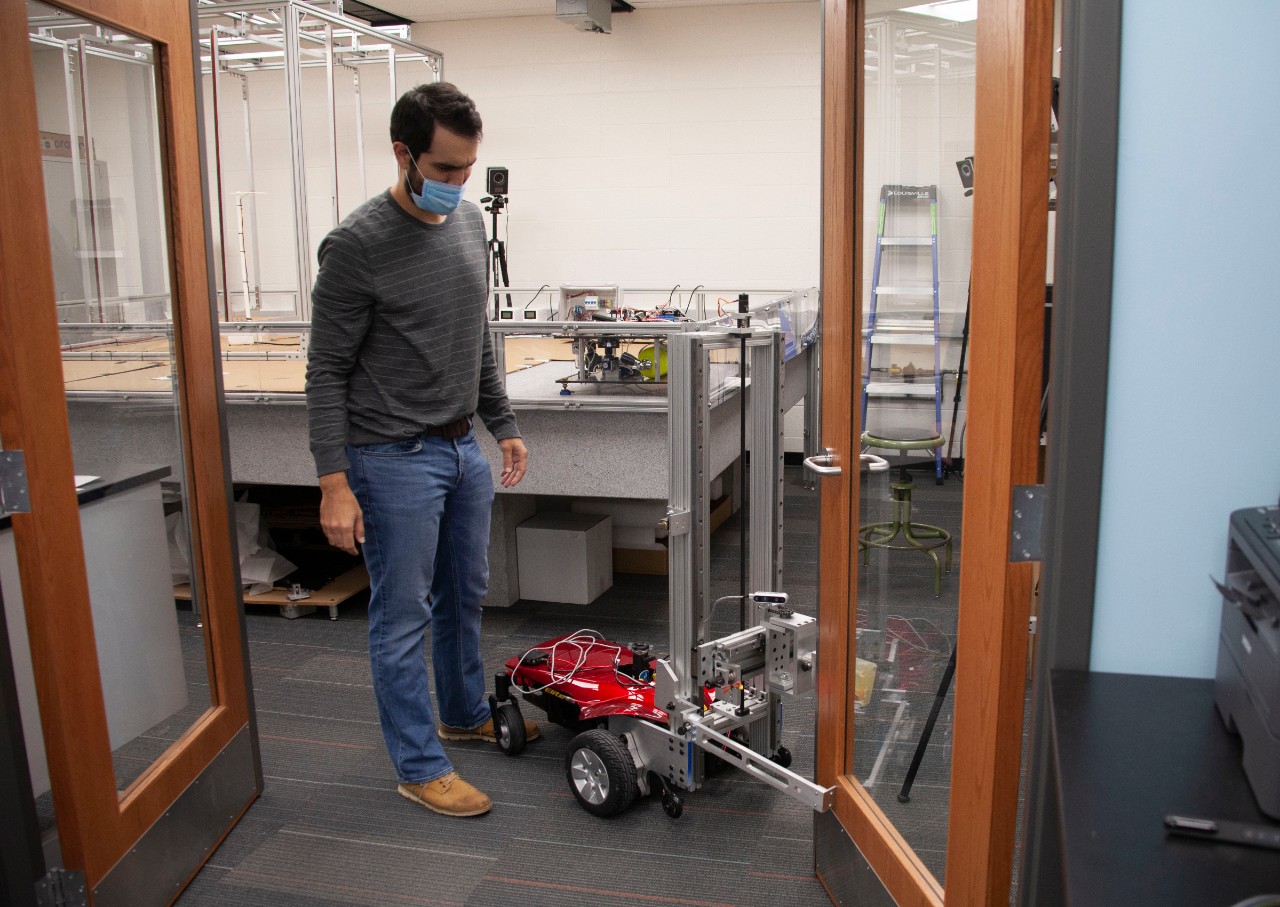
A student in a face mask stands nest to a robot holding open a door.
Engineering student Sam King demonstrates how UC’s autonomous robot pivots around a door in UC’s Intelligent Robotics and Autonomous Systems Laboratory. Photo/Ravenna Rutledge/UC Creative + Brand

Engineering students have designed an autonomous robot that can find and open doors in 3D digital simulations. Now they’re building the hardware for an autonomous robot that not only can open its own doors but also can find the nearest electric wall outlet to recharge without human help.

One flaw in the notion that robots will take over the world is that the world is full of doors.

And doors are kryptonite to robots, said Ou Ma, an aerospace engineering professor at the University of Cincinnati.

“Robots can do many things, but if you want one to open a door by itself and go through ...

Read More