




Thin-Film, High-Frequency Antenna Array offers new Flexibility for Wireless Communications

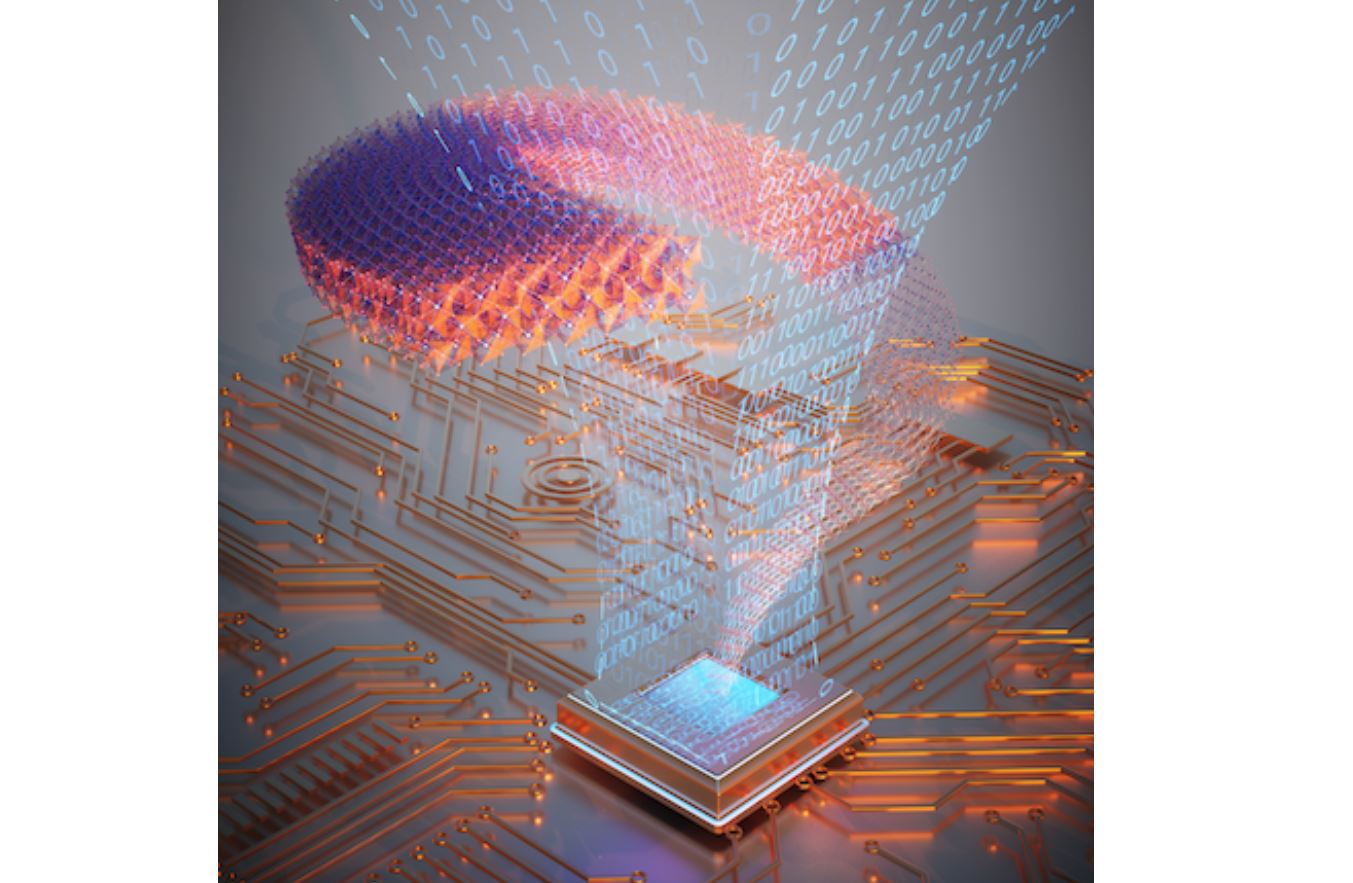
Princeton researchers have developed a new type of phased array antenna based on large-area electronics technology, which could enable many uses of emerging 5G and 6G wireless networks. The researchers tested the system on the roof of Princeton’s Andlinger Center for Energy and the Environment.
Can Wu

Princeton researchers have taken a step toward developing a type of antenna array that could coat an airplane’s wings, function as a skin patch transmitting signals to medical implants, or cover a room as wallpaper that communicates with internet of things (IoT) devices.

The technology, which could enable many uses of emerging 5G and 6G wireless networks, is based on large-area electronics, a way of fabricating electronic circuits on thin, flexible materials...

Read More


ALMA scientists detect signs of Water in a Galaxy far, far away

Credit: ALMA (ESO/NAOJ/NRAO)/S. Dagnello (NRAO)

New study marks most distant detection of required element for life as we know it in a regular star-forming galaxy. Water has been detected in the most massive galaxy in the early Universe, according to new observations from the Atacama Large Millimeter/submillimeter Array (ALMA). Scientists studying SPT0311-58 found H20, along with carbon monoxide in the galaxy, which is located nearly 12.88 billion light years from Earth. Detection of these two molecules in abundance suggests that the molecular Universe was going strong shortly after the elements were forged in early stars...

Read More

Artificial Intelligence to Detect Colorectal Cancer

A Tulane University researcher found that artificial intelligence can accurately detect and diagnose colorectal cancer from tissue scans as well or better than pathologists, according to a new study in the journal Nature Communications.

The study, which was conducted by researchers from Tulane, Central South University in China, the University of Oklahoma Health Sciences Center, Temple University, and Florida State University, was designed to test whether AI could be a tool to help pathologists keep pace with the rising demand for their services.

Pathologists evaluate and label thousands of histopathology images on a regular basis to tell whether someone has cancer...

Read More

Researchers discover Predictable Behavior in Promising Material for Computer Memory

Research findings recently featured on the cover of the journal Advanced Electronic Materials.
Nov 01, 2021 — Atlanta, GA

A team of researchers has discovered unexpectedly familiar behavior in the antiferroelectric material known as zirconium dioxide, or zirconia. In the last few years, a class of materials called antiferroelectrics has been increasingly studied for its potential applications in modern computer memory devices. Research has shown that antiferroelectric-based memories might have greater energy efficiency and faster read and write speeds than conventional memories, among other appealing attributes. Further, the same compounds that can exhibit antiferroelectric behavior are already integrated into existing semiconductor chip manufacturing processes.

Now, a team led by ...

Read More