Saturn makes Waves in its own Rings

Saturn Makes Waves in its Own Rings
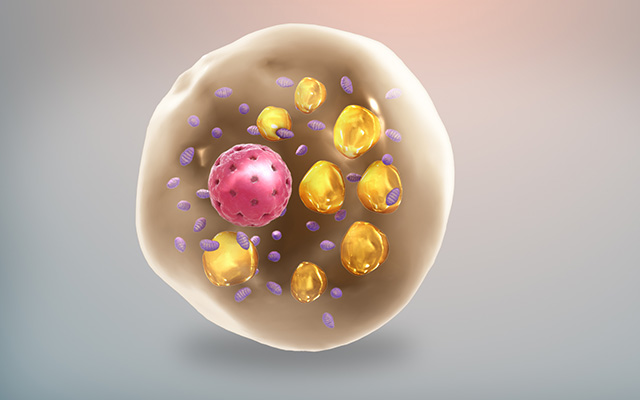
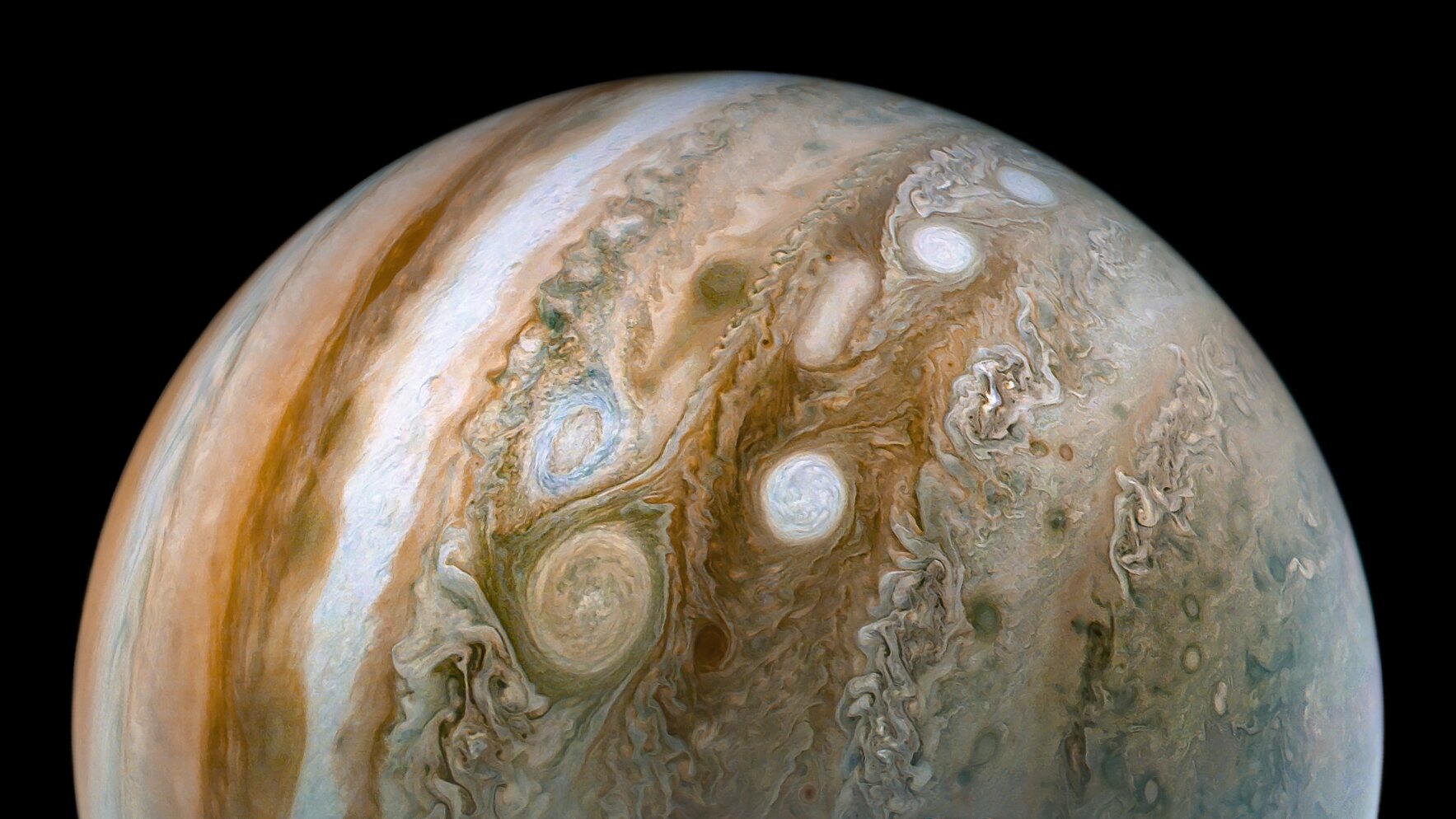
An illustration of Saturn and its “fuzzy” core. Credit: Caltech/R. Hurt (IPAC)

In the same way that earthquakes cause our planet to rumble, oscillations in the interior of Saturn make the gas giant jiggle around ever so slightly. Those motions, in turn, cause ripples in Saturn’s rings.

In a new study accepted in the journal Nature Astronomy, two Caltech astronomers have analyzed those rippling rings to reveal new information about the core of Saturn. For their study, they used older data captured by NASA’s Cassini, a spacecraft that orbited the ringed giant for 13 years before it dove into the planet’s atmosphere and disintegrated in 2017.

The findings suggest that the planet’s core is not a hard ball of rock, as some previous theories had proposed, but a diffuse soup of ice, roc...

Read More

Nearby Star-forming Region yields Clues to the Formation of our Solar System

figure-1-450.jpg
Multi-wavelength observations of the Ophiuchus star-forming region reveal interactions between clouds of star-forming gas and radionuclides produced in a nearby cluster of young stars. The top image (a) shows the distribution of aluminum-26 in red, traced by gamma-ray emissions. The central box represents the area covered in the bottom left image (b), which shows the distribution of protostars in the Ophiuchus clouds as red dots. The area in the box is shown in the bottom right image (c), a deep near-infrared color composite image of the L1688 cloud, containing many well known prestellar dense-gas cores with disks and protostars (see larger image below). (Credit: Forbes et al., Nature Astronomy 2021)

The Ophiuchus star-forming complex offers an analog for the formation of the solar sys...

Read More

Study reveals missing Link between High-Fat Diet, Microbiota and Heart Disease

Mariana Byndloss, DVM, PhD, Woongjae Yoo, PhD, and colleagues are studying how a high-fat diet may contribute to heart disease. (Photo taken prior to revised masking guidelines.)
Mariana Byndloss, DVM, PhD, Woongjae Yoo, PhD, and colleagues are studying how a high-fat diet contributes to heart disease. (photo by Donn Jones, taken prior to revised masking guidelines)

A high-fat diet disrupts the biology of the gut’s inner lining and its microbial communities — and promotes the production of a metabolite that may contribute to heart disease, according to a study published Aug. 13 in the journal Science.

The discoveries in animal models support a key role for the intestines and microbiota in the development of cardiovascular disease, said Mariana Byndloss, DVM, PhD, assistant professor of Pathology, Microbiology and Immunology at Vanderbilt University Medical Center.

The intestines, she noted, have been relatively understudied by scientists seeking to unders...

Read More

Engineers make Critical Advance in Quantum Computer Design

Dr Jarryd Pla and Prof. Andrew Dzurak look from behind a transparent screen showing mathematical workings
Dr Jarryd Pla and Professor Andrew Dzurak have solved the problem of how to reliably control not just a few, but millions of qubits. Photo: UNSW

Quantum engineers from UNSW Sydney have removed a major obstacle that has stood in the way of quantum computers becoming a reality. They discovered a new technique they say will be capable of controlling millions of spin qubits—the basic units of information in a silicon quantum processor.

Until now, quantum computer engineers and scientists have worked with a proof-of-concept model of quantum processors by demonstrating the control of only a handful of qubits.

But with their latest research, published today in Science Advances, the team have found what they consider “the missing jigsaw piece” in the quantum computer architecture that ...

Read More