Bio-inspired, Blood-Repelling Tissue Glue could Seal Wounds Quickly

barnacles sticking to rock
MIT engineers have designed a strong, biocompatible glue that can seal injured tissues and stop bleeding, inspired by the sticky substance that barnacles use to cling to rocks.
Credits:Image: stock photo

A new adhesive that mimics the sticky substance barnacles use to cling to rocks may offer a better way to treat traumatic injuries. Inspired by the sticky substance that barnacles use to cling to rocks, MIT engineers have designed a strong, biocompatible glue that can seal injured tissues and stop bleeding.

The new paste can adhere to surfaces even when they are covered with blood, and can form a tight seal within about 15 seconds of application...

Read More

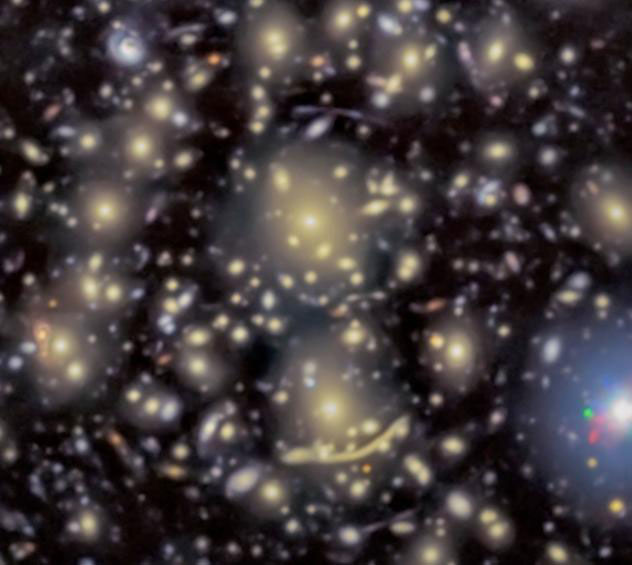
New findings on the Evolution of Galaxies

Planets, Stars, Gravitational Waves, and the Formation of Galaxies

Research paper provides new insights into how central supermassive blackholes influence the evolution of their host galaxy. Galaxies eventually undergo a phase in which they lose most of their gas, which results in a change into their properties over the course of their evolution. Current models for galaxy evolution suggest this should eventually happen to all galaxies, including our own Milky Way; astronomers have now uncovered key insights into this process.

Emirati national Aisha Al Yazeedi, a research scientist at the NYU Abu Dhabi (NYUAD) Center for Astro, Particle, and Planetary Physics, has published her first research paper, featuring some key findings on the evolution of galaxies.

Commenting on the findings, Al Yazeedi said: “The evolution of galaxies is directly linked...

Read More

Emergent Magnetic Monopoles Controlled at Room Temperature

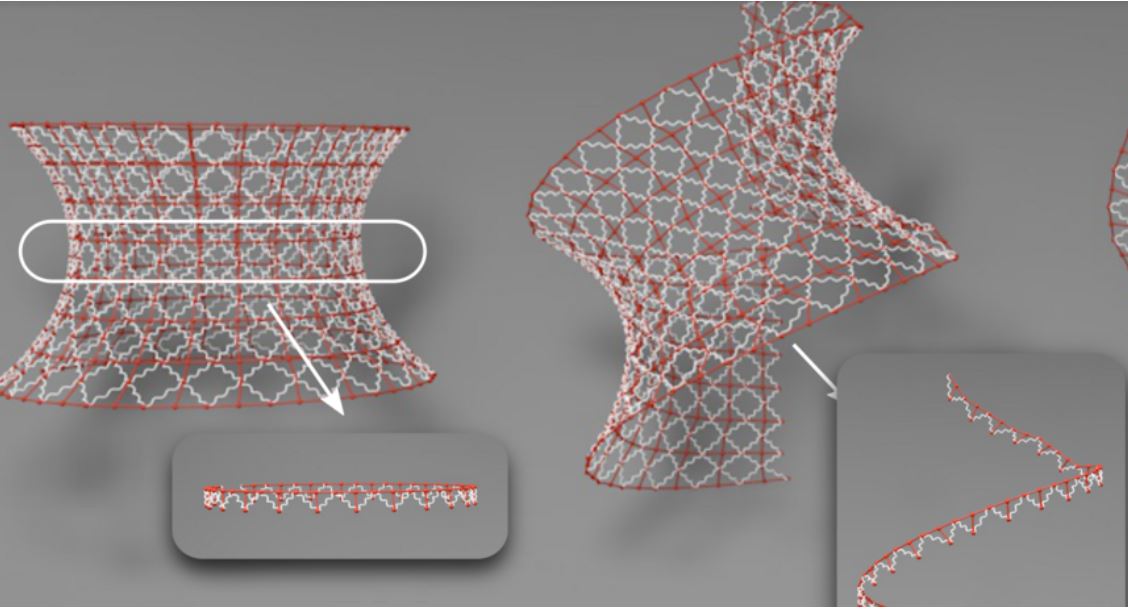
Researchers at the University of Vienna have designed a new 3D magnetic nanonetwork, where magnetic monopoles emerge due to rising magnetic frustration among the nanoelements, and are stable at room temperature. (© Sabri Koraltan)

Three dimensional (3D) nanonetwork promise a new era in modern solid state physics with numerous applications in photonics, biomedicine, and spintronics. The realization of 3D magnetic nano-architectures could enable ultra-fast and low-energy data storage devices. Due to competing magnetic interactions in these systems magnetic charges or magnetic monopoles can emerge, which can be utilized as mobile, binary information carriers. Researchers have now designed the first 3D artificial spin ice lattice hosting unbound magnetic charges...

Read More

Light Therapy Helps Burn Injuries Heal Faster by Triggering Growth Protein

Praveen Arany holds blue light to face in room filled with red light.
Praveen Arany, assistant professor of oral biology in the UB School of Dental Medicine, led the development of a burn healing protocol for light therapy. Photographer: Douglas Levere

Light therapy may accelerate the healing of burns, according to a University at Buffalo-led study. The research, published in Scientific Reports, found that photobiomodulation therapy – a form of low-dose light therapy capable of relieving pain and promoting healing and tissue regeneration – sped up recovery from burns and reduced inflammation in mice by activating endogenous TGF-beta 1, a protein that controls cell growth and division.

The findings may impact therapeutic treatments for burn injuries, which affect more than 6 million people worldwide each year, says lead investigator Praveen Arany, DDS,...

Read More