Solving Solar Puzzle could help save Earth from Planet-wide Blackouts

Artist's image of the internal structure of the Sun. NASA
Diagram showing the internal structure of the Sun based on existing theory that assumes circular convection cells near the solar surface. Dr Vasil’s new model suggests thinner, spinning ‘cigar-shaped’ convection cells driving the Sun’s magnetic dynamo. Image: NASA

Scientists in Australia and in the USA have solved a long-standing mystery about the Sun that could help astronomers predict space weather and help us prepare for potentially devastating geomagnetic storms if they were to hit Earth.

The Sun’s internal magnetic field is directly responsible for space weather — streams of high-energy particles from the Sun that can be triggered by solar flares, sunspots or coronal mass ejections that produce geomagnetic storms...

Read More

New device can diagnose COVID-19 from Saliva Samples

tabletop covid testing device
Engineers at MIT and Harvard University have designed a small tabletop device that can detect SARS-CoV-2 from a saliva sample in about an hour.
Credits:Image: Devora Najjar

The tabletop diagnostic yields results in an hour and can be programmed to detect variants of the SARS-CoV-2 virus. Researchers report that the diagnostic is just as accurate as PCR tests.

Engineers at MIT and Harvard University showed that the device can also be used to detect specific viral mutations linked to some of the SARS-CoV-2 variants that are now circulating. This result can also be obtained within an hour, potentially making it much easier to track different variants of the virus, especially in regions that don’t have access to genetic sequencing facilities.

“We demonstrated that our platform can be ...

Read More

Ocean World: Rocky Exoplanet has just Half the Mass of Venus

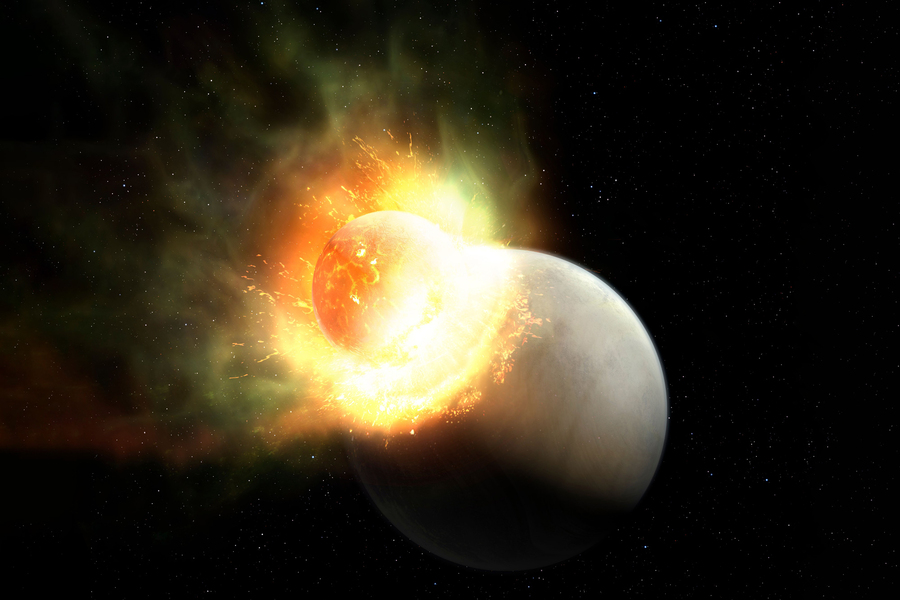
A team of astronomers have used the European Southern Observatory’s Very Large Telescope (ESO’s VLT) in Chile to shed new light on planets around a nearby star, L98-59, that resemble those in the inner Solar System. Amongst the findings are a planet with half the mass of Venus — the lightest exoplanet ever to be measured using the radial velocity technique — an ocean world, and a possible planet in the habitable zone.

“The planet in the habitable zone may have an atmosphere that could protect and support life,” says María Rosa Zapatero Osorio, an astronomer at the Centre for Astrobiology in Madrid, Spain, and one of the authors of the study published today in Astronomy & Astrophysics.

The results are an important step in the quest to find life on Earth-sized planets outside the...

Read More

This Touchy-Feely Glove Senses and Maps Tactile Stimuli

the glove with visible sensors
An MIT team of engineers has designed a new touch-sensing glove that can “feel” pressure and other tactile stimuli. The glove’s inside lining is studded with small, kernel-sized electrodes that can sense and map subtle changes in pressure.
Credits:Image: Courtesy of the researchers

The design could help restore motor function after stroke, enhance virtual gaming experiences. When you pick up a balloon, the pressure to keep hold of it is different from what you would exert to grasp a jar. And now engineers at MIT and elsewhere have a way to precisely measure and map such subtleties of tactile dexterity.

The team has designed a new touch-sensing glove that can “feel” pressure and other tactile stimuli...

Read More