Anatomy of the Red Planet: Mars-quakes Reveal Interior

Using seismic data, researchers have now measured the red planet’s crust, mantle and core (Graphic: Chris Bickel/Science, Data: InSight Mars SEIS Data Service (2019). Reprinted with permission from AAAS)

Researchers have been able to use seismic data to look inside Mars for the first time. They measured the crust, mantle and core and narrowed down their composition. Since early 2019, researchers have been recording and analysing marsquakes as part of the InSight mission. This relies on a seismometer whose data acquisition and control electronics were developed at ETH Zurich. Using this data, the researchers have now measured the red planet’s crust, mantle and core — data that will help determine the formation and evolution of Mars and, by extension, the entire solar system.

We kno...

Read More

Neurotransmitter Levels Predict Math Ability

Neurotransmitter levels predict math ability
Scanning was completed both during Time 1 and Time 2 (approximately 1.5 years later) in each of the 5 age groups (6-year-olds, 10-year-olds, 14-year-olds, 16-year-olds, and 18+-year-olds). Credit: Zacharopoulos G, et al., 2021, PLOS Biology

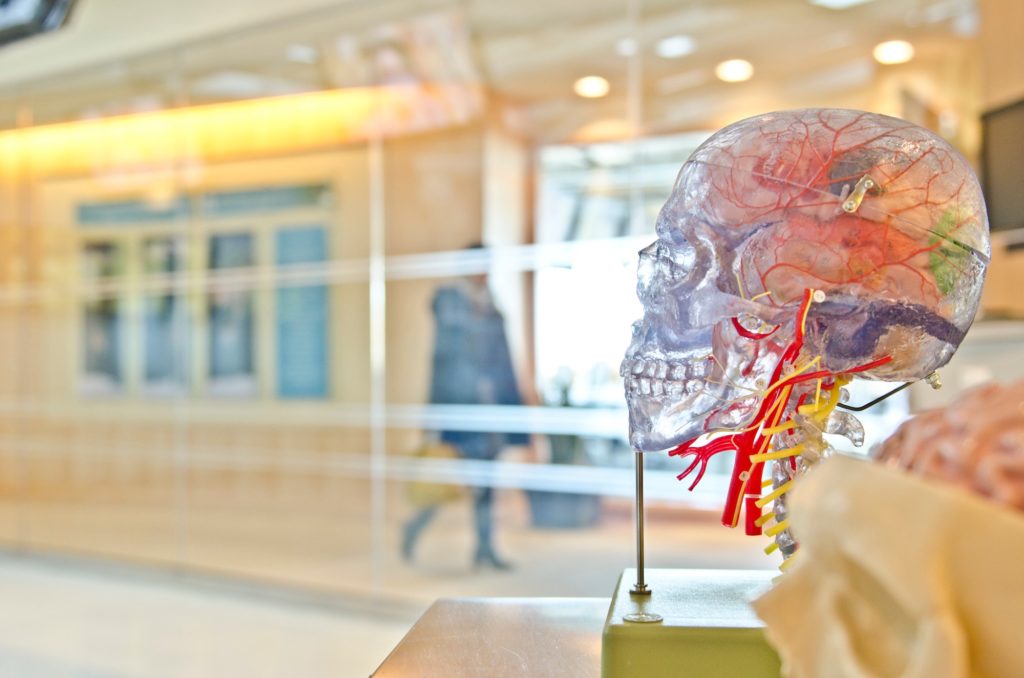
The neurotransmitters GABA and glutamate have complementary roles—GABA inhibits neurons, while glutamate makes them more active. Published 22nd July in PLOS Biology, researchers led by Roi Cohen Kadosh and George Zacharopoulos from the University of Oxford show that levels of these two neurotransmitters in the intraparietal sulcus of the brain can predict mathematics ability. The study also found that the relationships between the two neurotransmitters and arithmetic fluency switched as children developed into adults.

Levels of brain excitement...

Read More

‘Magic-Angle’ Trilayer Graphene may be a rare, Magnet-Proof Superconductor

magic-angle twisted trilayer graphene
MIT physicists have observed signs of a rare type of superconductivity in a material called “magic-angle” twisted trilayer graphene.
Credits:Image: Courtesy of the researchers

New findings might help inform the design of more powerful MRI machines or robust quantum computers. MIT physicists have observed signs of a rare type of superconductivity in a material called magic-angle twisted trilayer graphene. In a study appearing in Nature, the researchers report that the material exhibits superconductivity at surprisingly high magnetic fields of up to 10 Tesla, which is three times higher than what the material is predicted to endure if it were a conventional superconductor.

The results strongly imply that magic-angle trilayer graphene, which was initially discovered by the same grou...

Read More

Spotted: An Exoplanet with the Potential to Form Moons

Astronomers at the Center for Astrophysics | Harvard & Smithsonian have helped detect the clear presence of a moon-forming region around an exoplanet — a planet outside of our Solar System. The new observations, published Thursday in The Astrophysical Journal Letters, may shed light on how moons and planets form in young stellar systems.

The detected region is known as a circumplanetary disk, a ring-shaped area surrounding a planet where moons and other satellites may form. The observed disk surrounds exoplanet PDS 70c, one of two giant, Jupiter-like planets orbiting a star nearly 400 light-years away...

Read More