‘Magic-Angle’ Trilayer Graphene may be a rare, Magnet-Proof Superconductor

magic-angle twisted trilayer graphene
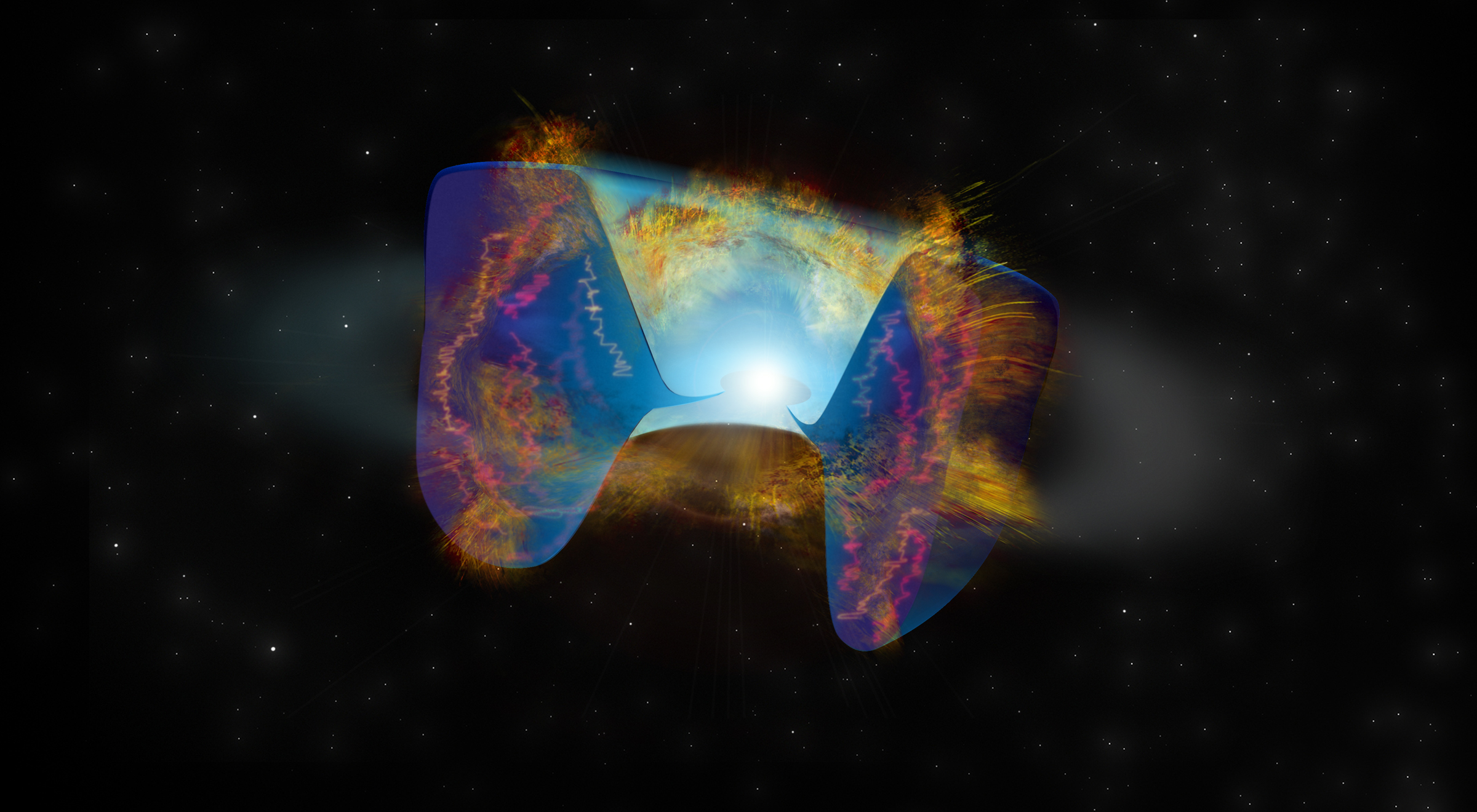
MIT physicists have observed signs of a rare type of superconductivity in a material called “magic-angle” twisted trilayer graphene.
Credits:Image: Courtesy of the researchers

New findings might help inform the design of more powerful MRI machines or robust quantum computers. MIT physicists have observed signs of a rare type of superconductivity in a material called magic-angle twisted trilayer graphene. In a study appearing in Nature, the researchers report that the material exhibits superconductivity at surprisingly high magnetic fields of up to 10 Tesla, which is three times higher than what the material is predicted to endure if it were a conventional superconductor.

The results strongly imply that magic-angle trilayer graphene, which was initially discovered by the same grou...

Read More

Spotted: An Exoplanet with the Potential to Form Moons

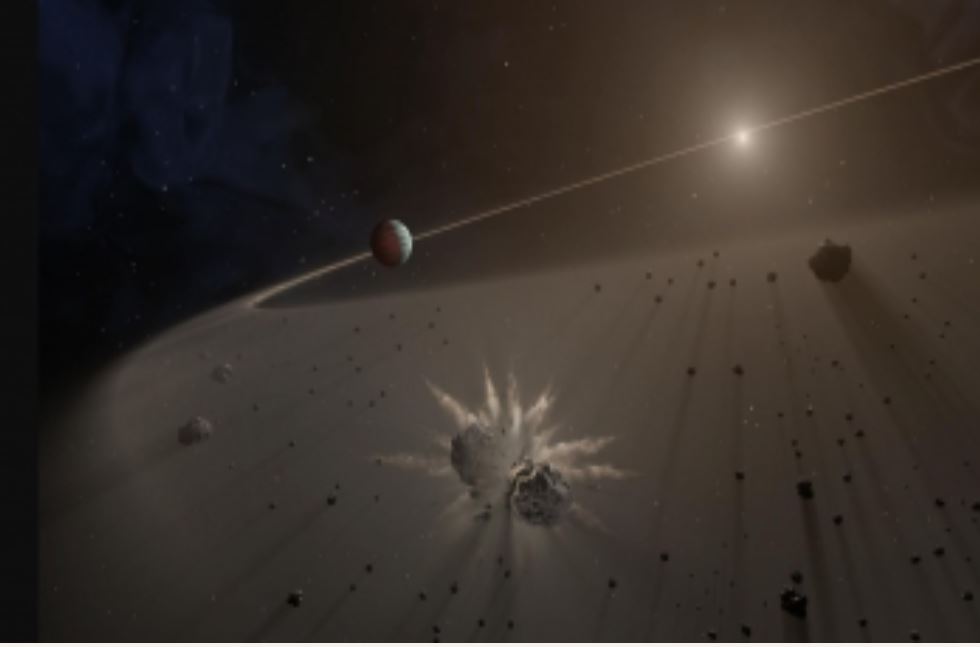
Astronomers at the Center for Astrophysics | Harvard & Smithsonian have helped detect the clear presence of a moon-forming region around an exoplanet — a planet outside of our Solar System. The new observations, published Thursday in The Astrophysical Journal Letters, may shed light on how moons and planets form in young stellar systems.

The detected region is known as a circumplanetary disk, a ring-shaped area surrounding a planet where moons and other satellites may form. The observed disk surrounds exoplanet PDS 70c, one of two giant, Jupiter-like planets orbiting a star nearly 400 light-years away...

Read More

Study finds unleashing Treg cells may lead to Treatments for Multiple Sclerosis

Genetic deletion of Piezo1 in T cells leads to protection in autoimmunity: In the absence of Piezo1, Tregs expand more and, due to their increased numbers, are more effective in containing the damage inflicted by the effector T cells during an autoimmune neuroinflammation. Effector T cell function is not affected in the absence of Piezo1.
CREDIT
UCI School of Medicine

In a new University of California, Irvine-led study, researchers found that a certain protein prevented regulatory T cells (Tregs) from effectively doing their job in controlling the damaging effects of inflammation in a model of multiple sclerosis (MS), a devastating autoimmune disease of the nervous system.

Published this month in Science Advances, the new study illuminates the important role of Piezo1, a specialized p...

Read More

Scientists create World’s Thinnest Magnet

Illustration of magnetic coupling in a cobalt-doped zinc-oxide monolayer. Red, blue, and yellow spheres represent cobalt, oxygen, and zinc atoms, respectively. (Credit: Berkeley Lab)

The development of an ultrathin magnet that operates at room temperature could lead to new applications in computing and electronics—such as high-density, compact spintronic memory devices—and new tools for the study of quantum physics. It was discovered by scientists at the Department of Energy’s Lawrence Berkeley National Laboratory (Berkeley Lab) and UC Berkeley.

“We’re the first to make a room-temperature 2-D magnet that is chemically stable under ambient conditions,” said senior author Jie Yao, a faculty scientist in Berkeley Lab’s Materials Sciences Division and associate professor of material...

Read More