3D printing tagged posts

New 3D Printing Method could jump-start creation of tiny Medical Devices for the body

NIST scientists get soft on 3D printing
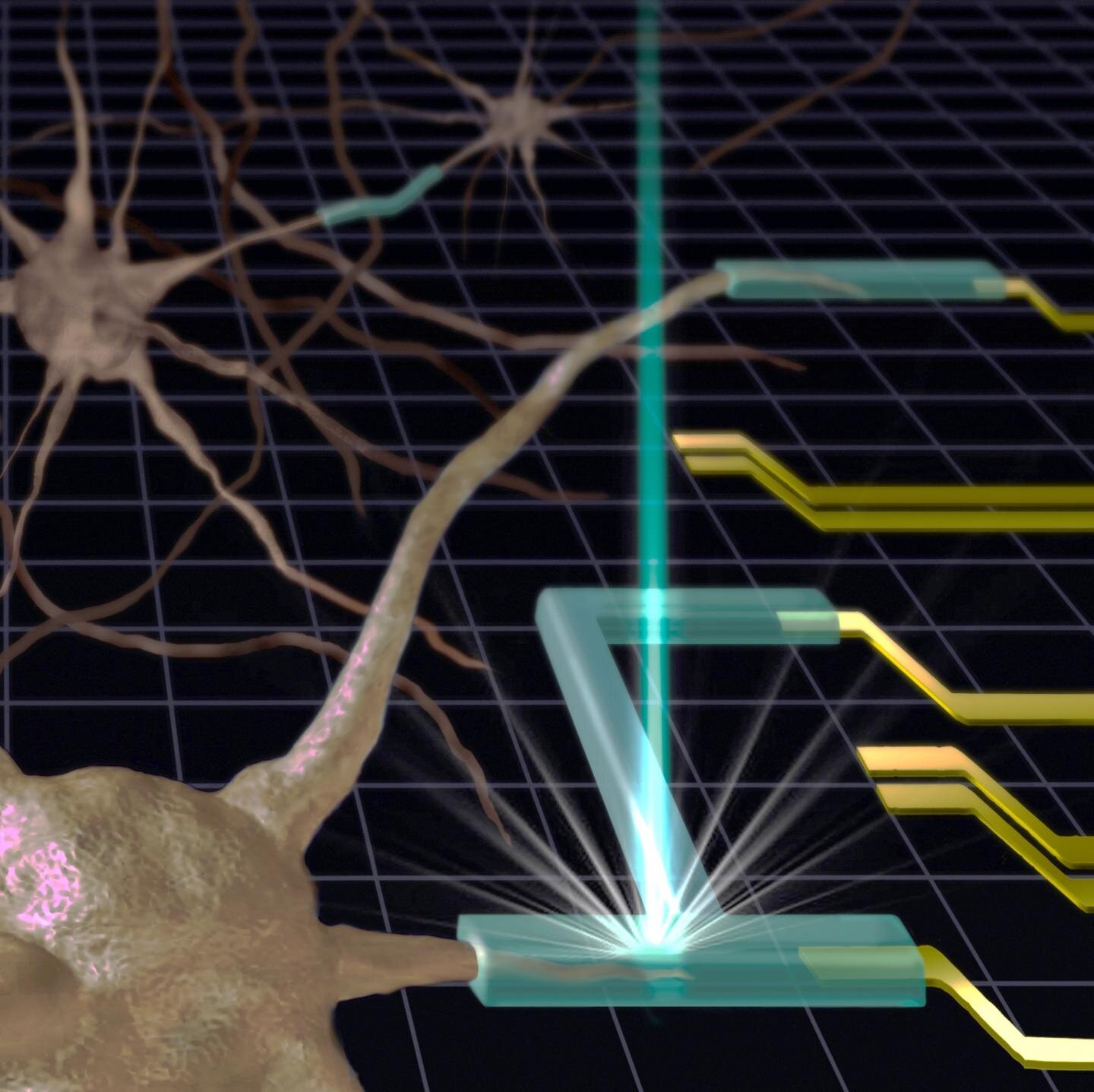
Illustration of a prospective biocompatible interface shows that hydrogels (green tubing), which can be generated by an electron or X-ray beam 3D-printing process, act as artificial synapses or junctions, connecting neurons (brown) to electrodes (yellow). Credit: A. Strelcov/NIST

Researchers at the National Institute of Standards and Technology (NIST) have developed a new method of 3D-printing gels and other soft materials. Published in a new paper, it has the potential to create complex structures with nanometer-scale precision. Because many gels are compatible with living cells, the new method could jump-start the production of soft tiny medical devices such as drug delivery systems or flexible electrodes that can be inserted into the human body.

A standard 3D printer makes solid ...

Read More

Researchers 3D Print lifelike Heart Valve Models

Model
Patient-specific organ models, which include integrated 3D-printed soft sensor arrays, are fabricated using specialized inks and a customized 3D printing process. Such models can be used in preparation for minimally invasive procedures to improve outcomes in thousands of patients worldwide. Credit: McAlpine Group, University of Minnesota

Organ model could improve surgical outcomes for thousands of patients worldwide. Researchers from the University of Minnesota, with support from Medtronic, have developed a groundbreaking process for multi-material 3D printing of lifelike models of the heart’s aortic valve and the surrounding structures that mimic the exact look and feel of a real patient.

These patient-specific organ models, which include 3D-printed soft sensor arrays integrated in...

Read More

Superior ‘Bio-Ink’ for 3D Printing pioneered

This 3D printing system would print gel scaffolds, or support structures, for growing human tissues. The system would include hyaluronic acid and polyethylene glycol as the basic “ink cartridges” and other cartridges featuring inks with different cells and ligands that serve as binding sites for cells.
Image: Madison Godesky

Researchers are developing materials to help grow human tissues. Rutgers biomedical engineers have developed a “bio-ink” for 3D printed materials that could serve as scaffolds for growing human tissues to repair or replace damaged ones in the body.

Bioengineered tissues show promise in regenerative, precision and personalized medicine; product development; and basic research, especially with the advent of 3D printing of biomaterials that could serve as scaf...

Read More

Step toward ‘Ink’ development for 3D Printing a Bioprosthetic Ovary

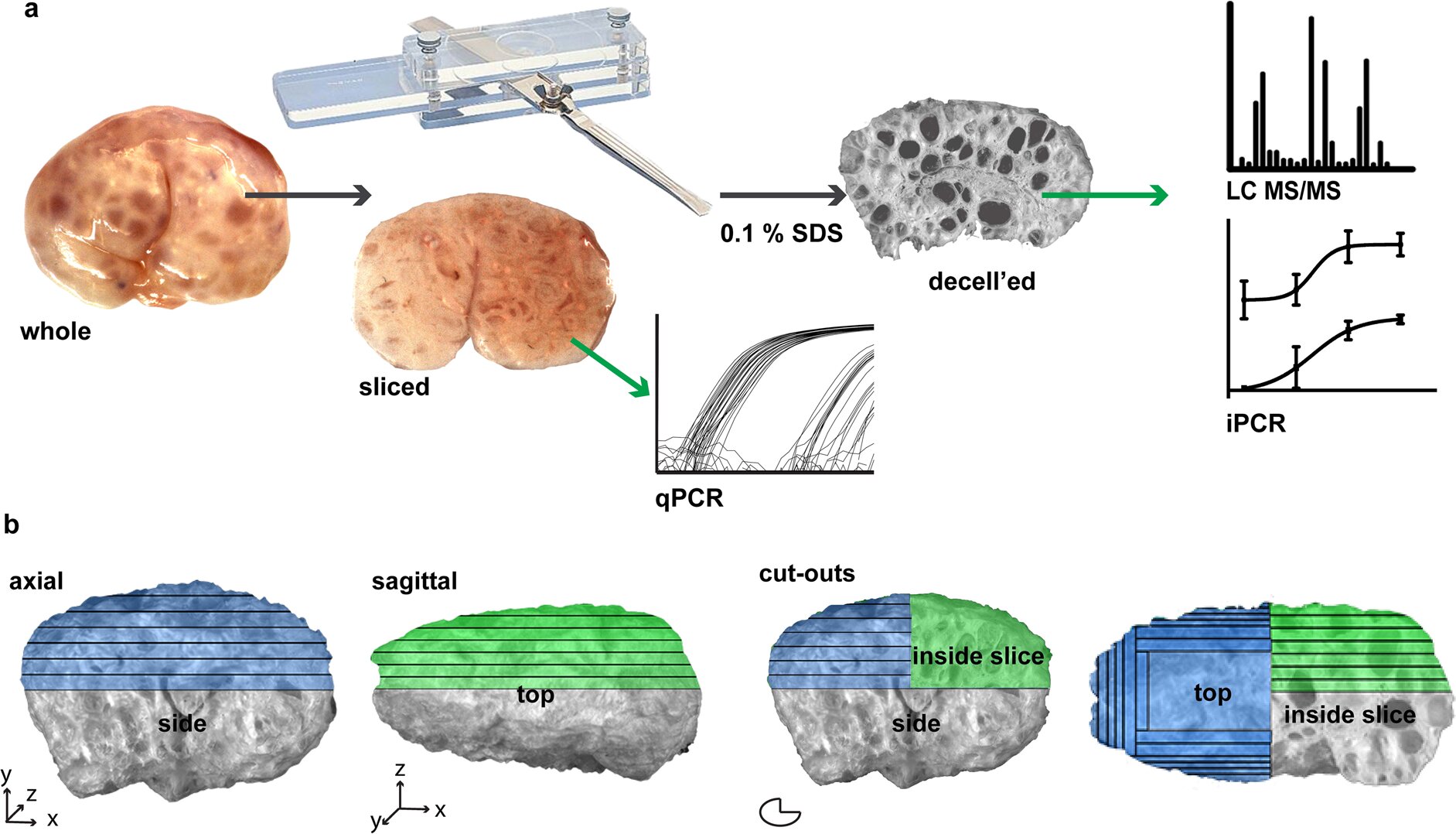
Schematic of (a) processing the porcine ovary with a tissue slicer, prior to qPCR analysis, decellularization then proteomics analysis and iPCR validation. (b) Ovaries were sliced axially and sagittally. SDS, sodium dodecyl sulfate; decell’ed, decellularized; LC MS/MS, liquid chromatography tandem mass spectrometry; iPCR, immuno PCR. Credit: Scientific Reports (2019). DOI: 10.1038/s41598-019-56454-3

Findings a huge step forward in fertility preservation and hormone restoration. For the first time, scientists identified and mapped the location of structural proteins in a pig ovary. Ongoing development of an “ink” with these proteins will be used for 3-D printing an artificial (or bio-prosthetic) ovary that could be implanted and allow a woman to have a child...

Read More