active galactic nuclei tagged posts

Homing in on the X-ray sky with eROSITA’s second data release

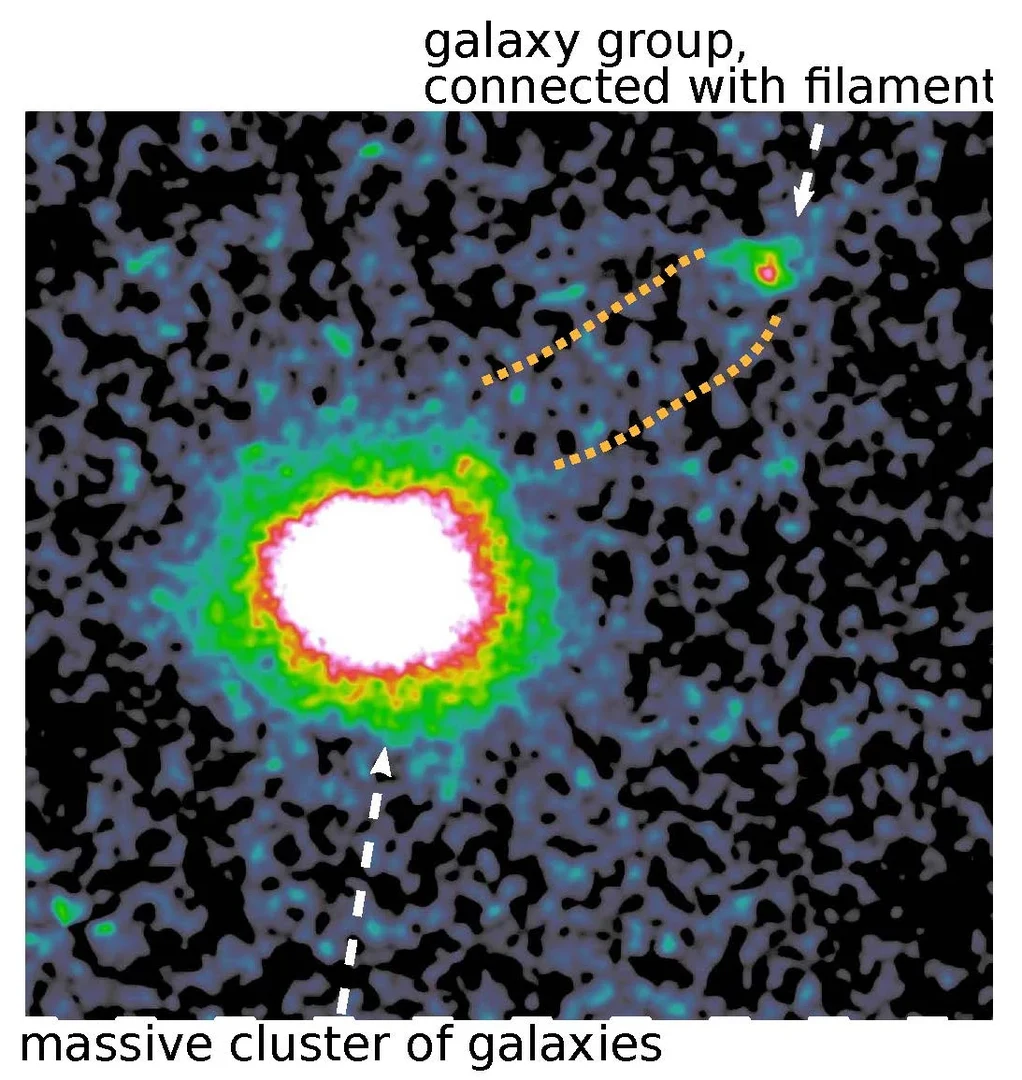
An X-ray image of galaxy cluster A3266
An X-ray image of galaxy cluster A3266 – The massive galaxy cluster A3266 is shining brightly in the X-ray light and is connected to a nearby group of galaxies by a gaseous filament.© Jakob Dietl/Uni Bonn/eROSITA-DE

The German eROSITA consortium (eROSITA-DE), which includes the University of Bonn and is led by the Max Planck Institute for Extraterrestrial Physics (MPE), has released its second major public data set, the “eROSITA Data Release 2” (DR2).

Built from the first three all-sky surveys conducted by the eROSITA telescope aboard the Spectrum-Roentgen-Gamma (SRG) mission, DR2 provides the most sensitive and comprehensive catalog of the X-ray sky currently available to the public...

Read More
JWST spots a strange red dot so extreme scientists can’t explain it

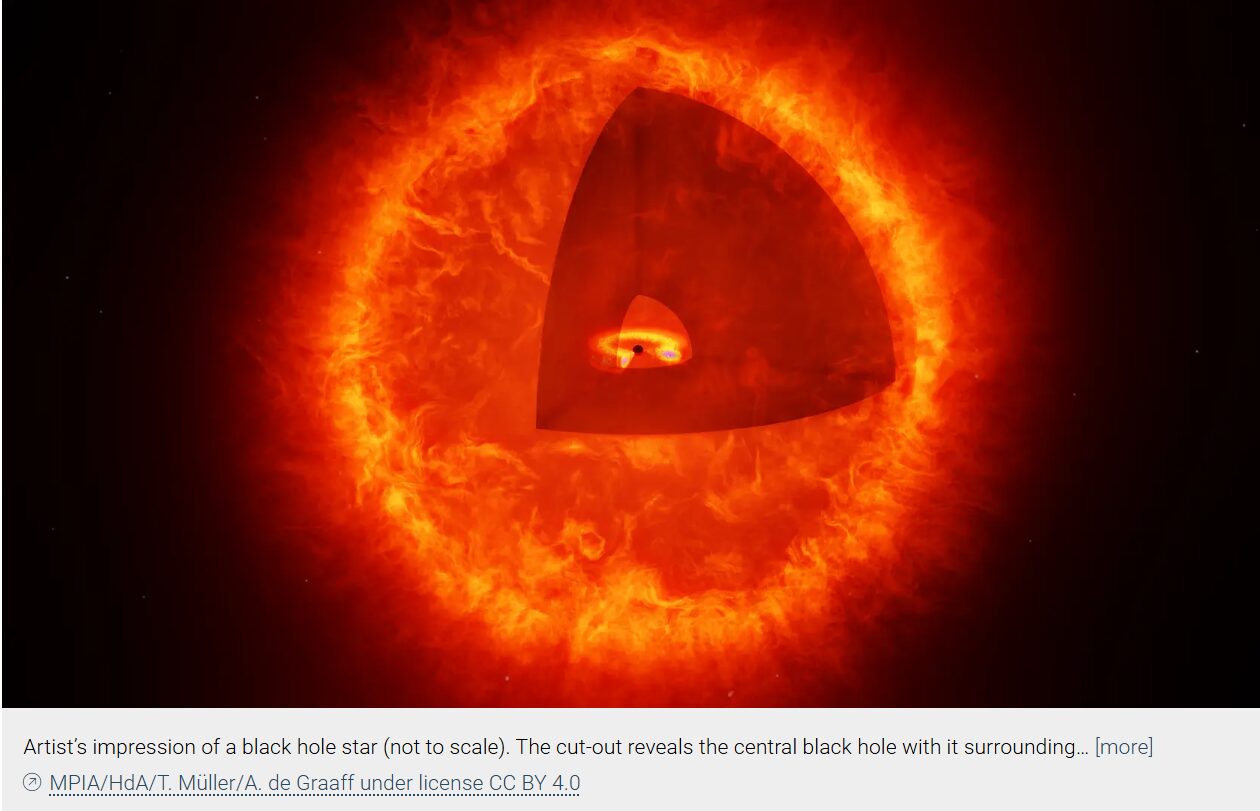
The discovery of strange, ultra-red objects—especially the extreme case known as The Cliff—has pushed astronomers to propose an entirely new type of cosmic structure: black hole stars. These exotic hybrids could explain rapid black hole growth in the early universe, but their existence remains unproven.

In the summer of 2022, only a few weeks after the James Webb Space Telescope (JWST) began delivering its first scientific images, astronomers noticed an unexpected pattern: tiny red points scattered throughout the new observations. These extremely compact, distinctly red objects appeared with remarkable clarity thanks to JWST’s sensitivity, and there were far more of them than expected...

Read More

AI helps Distinguish Dark Matter from Cosmic Noise

An AI-powered tool can distinguish dark matter’s elusive effects from other cosmic phenomena, which could bring us closer to unlocking the secrets of dark matter.

Dark matter is the invisible force holding the universe together – or so we think. It makes up around 85% of all matter and around 27% of the universe’s contents, but since we can’t see it directly, we have to study its gravitational effects on galaxies and other cosmic structures. Despite decades of research, the true nature of dark matter remains one of science’s most elusive questions.

According to a leading theory, dark matter might be a type of particle that barely interacts with anything else, except through gravity...

Read More

Investigating the Contribution of Gamma-Ray Blazar Flares to Neutrino Flux

Fermi spots a record flare from blazar.
Caption: A new study suggests that high-energy neutrinos of blazars might be produced mainly during the gamma-ray flare phase.
Credit: NASA Goddard Space Flight Center from flickr (https://www.flickr.com/photos/24662369@N07/19578977022)
License type: CC BY 2.0

Gamma-ray flares from blazars can be accompanied by high-energy neutrino emission. To better understand this phenomenon, an international research team has statistically analyzed 145 bright blazars. They constructed weekly binned light curves and utilized a Bayesian algorithm, finding that their sample was dominated by blazars with low flare duty cycles and energy fractions. The study suggests that high-energy neutrinos of blazars might be produced mainly during the flare phase.

Blazars ...

Read More