
AI chips tagged posts

Soundwaves could power a new kind of chip inspired by the human brain

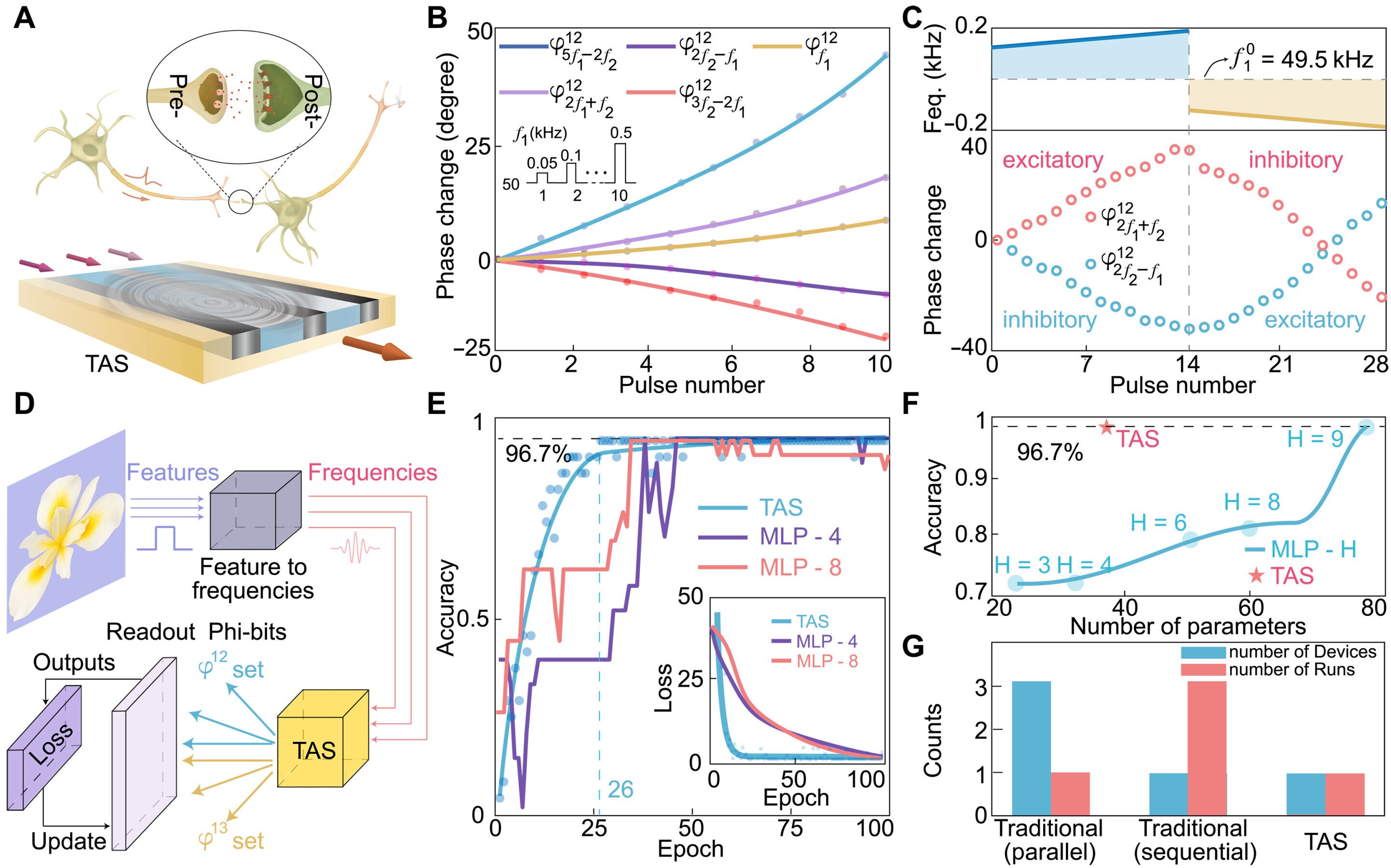
Neuromorphic functionality and computational benchmarking of TAS. Credit: Science Advances (2026). DOI: 10.1126/sciadv.aec6633

Neuromorphic computing is a computing approach that mimics how the human brain works. Our gray matter is a marvel of nature, capable of handling huge volumes of data with incredible energy efficiency. While modern AI hardware is becoming better at processing complex tasks, it consumes vast amounts of energy.

One of the promises of neuromorphic computing is that it places memory and processing in the same location, using far less energy than traditional AI chips. However, even the most sophisticated neuromorphic systems are fairly simple and don’t come close to matching the number of connections among human neurons.

But a new study published in the journal...

Read More
Liquid cooling technology for semiconductor chips is 10 times more efficient than previous record

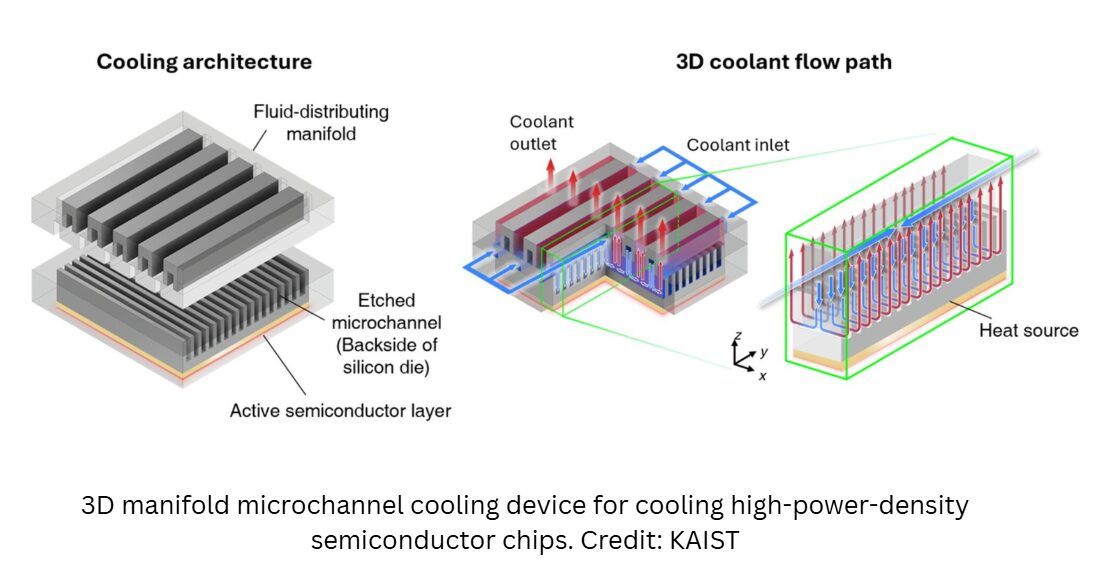
AI data centers are power-hungry. Not only do artificial intelligence computations consume enormous amounts of electricity, but a significant amount of energy is also required to cool the semiconductor chips that heat up during operation. As AI chips continue to deliver higher performance, the amount of heat they generate increases rapidly. As a result, conventional air cooling and external copper heat spreaders are approaching their practical limits. To address this challenge, a KAIST research team has developed an ultra-high-efficiency liquid-cooling technology that cools semiconductor chips from within.

A joint research team led by Professor Sung Jin Kim of the Department of Mechanical Engineering and Professor Ikjin Lee of the School of AI and Computing has developed a highly e...

Read More

How controlling light inside a tiny resonator could speed AI chips and secure communications

Breakthrough in data processing via light control
Dual-bus resonator. Credit: The Korea Advanced Institute of Science and Technology (KAIST)

A new technology allows light to be “designed” into desired forms, potentially making AI and communication technologies faster and more accurate. A KAIST research team has developed an “integrated photonic resonator”—a core component of next-generation optical integrated circuits that process data using light. Interestingly, the research was led by an undergraduate student. This technology is expected to serve as a key foundation for next-generation security technologies such as highspeed data processing and quantum communication.

The resonator developed by the research team of Professor Sangsik Kim from the School of Electrical Engineering, in collaboration with Professor Jae Woong Yoon’s t...

Read More

Engineers develop thin film to make AI chips faster and more energy efficient

UH engineers making AI faster, reducing power consumption
This is the two-dimensional thin film electric insulator designed in the University of Houston lab of Alamgir Karim to make AI faster and reduce power consumption. Credit: University of Houston

Addressing the staggering power and energy demands of artificial intelligence, engineers at the University of Houston have developed a revolutionary new thin-film material that promises to make AI devices significantly faster while dramatically cutting energy consumption.

The breakthrough, detailed in the journal ACS Nano, introduces a specialized two-dimensional (2D) thin film dielectric—or an electric insulator—designed to replace traditional, heat generating components in integrated circuit chips...

Read More