ALMA tagged posts

Scientists observe Mysterious Death of a Star Emitting Six Rings

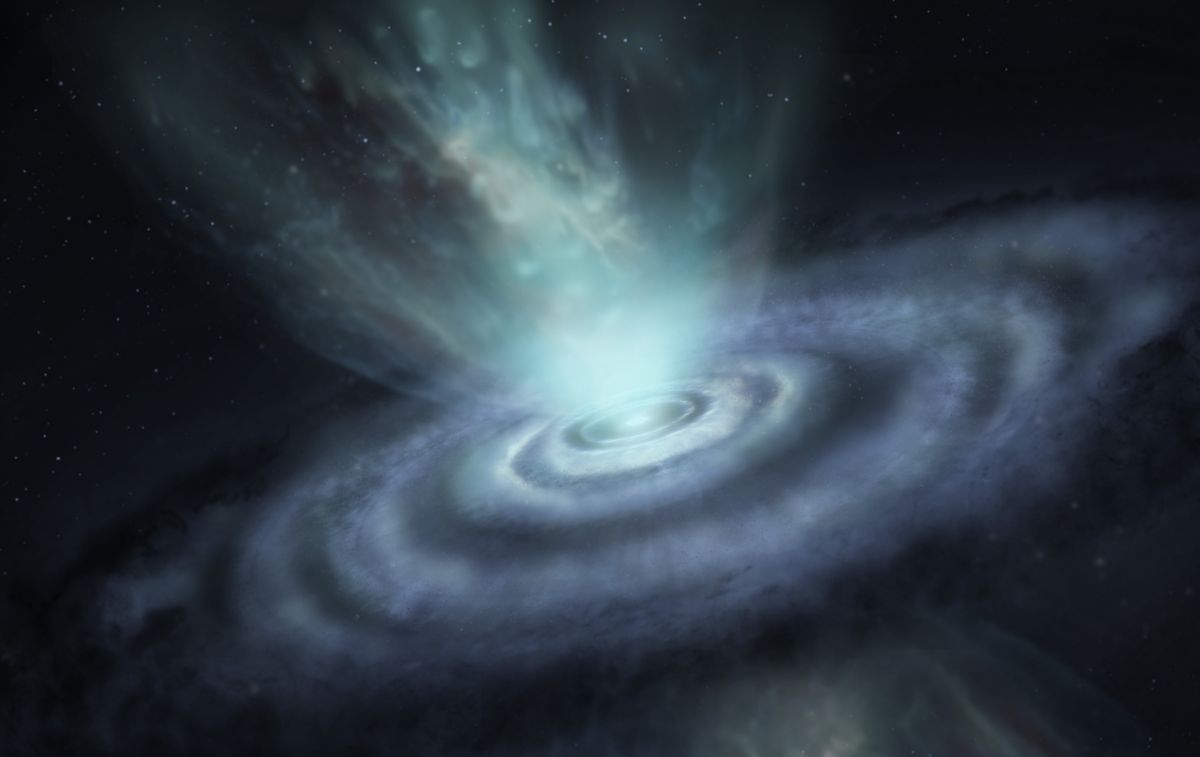
A rendering of the star V Hydrae, or V Hya for short. In its death throes, the star has emitted a series of expanding rings that scientists calculated are being formed every few hundred years, said Mark Morris, a UCLA professor of physics and astronomy.

Astrophysicists studying in unprecedented detail a red giant star named V Hydrae — abbreviated as V Hya — have witnessed the star’s mysterious death throes.

Researchers from UCLA and NASA’s Jet Propulsion Laboratory discovered that the carbon-rich star has expelled six slowly expanding molecular rings and an hourglass-shaped structure ejecting matter out into space at high speeds, signaling that the star is undergoing rapid evolution as it ends its life in a blaze of glory before shutting down its energy production.

“This is the f...

Read More

Cosmic History can explain the Properties of Mercury, Venus, Earth and Mars

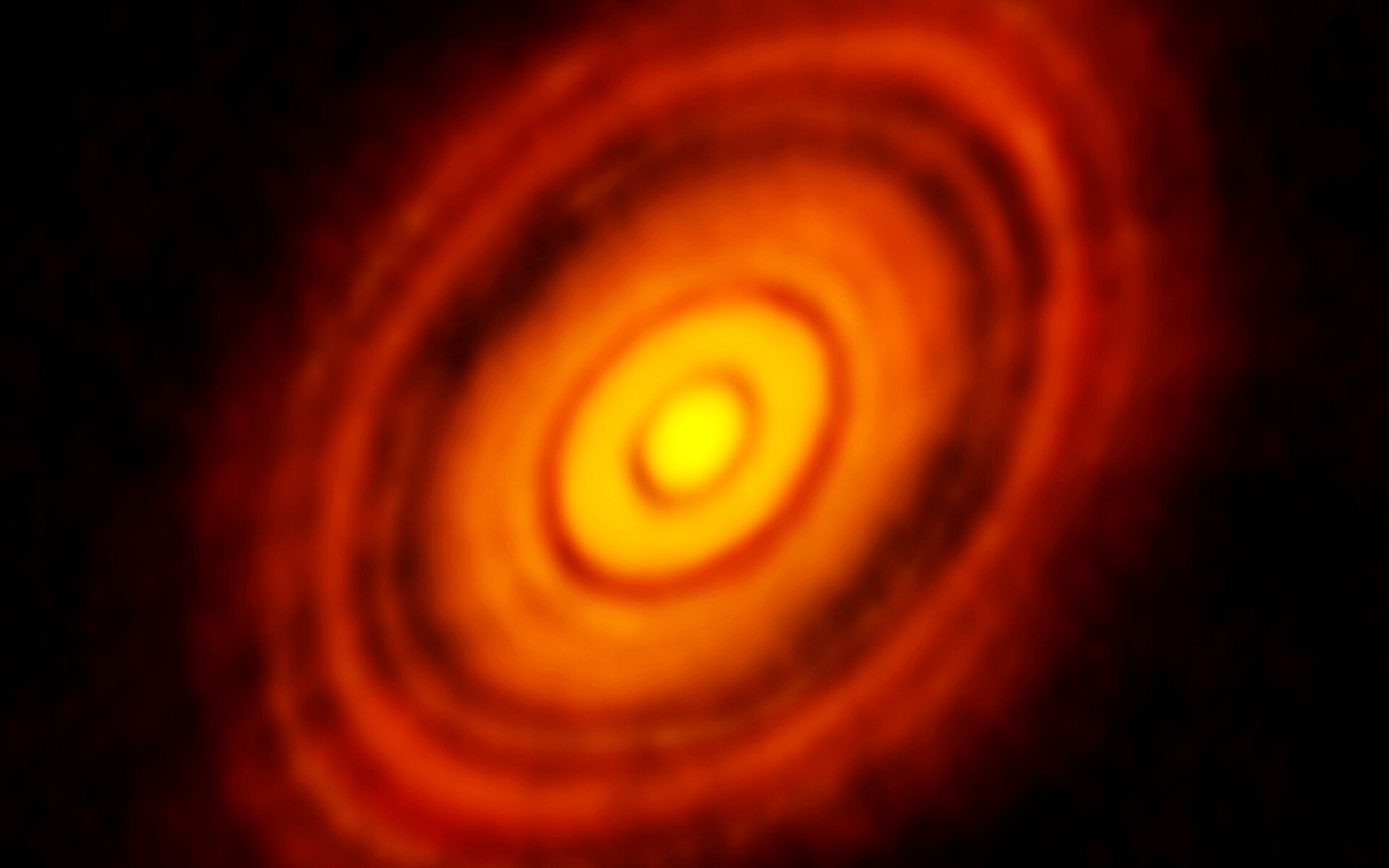
This is the sharpest image ever taken by ALMA — sharper than is routinely achieved in visible light with the NASA/ESA Hubble Space Telescope. It shows the protoplanetary disc surrounding the young star HL Tauri. These new ALMA observations reveal substructures within the disc that have never been seen before and even show the possible positions of planets forming in the dark patches within the system. Credit: ALMA (ESO/NAOJ/NRAO)

Astronomers have managed to link the properties of the inner planets of our solar system with our cosmic history: with the emergence of ring structures in the swirling disk of gas and dust in which these planets were formed...

Read More

Simulations provide Clue to Missing Planets Mystery

Simulations provide clue to missing planets mystery
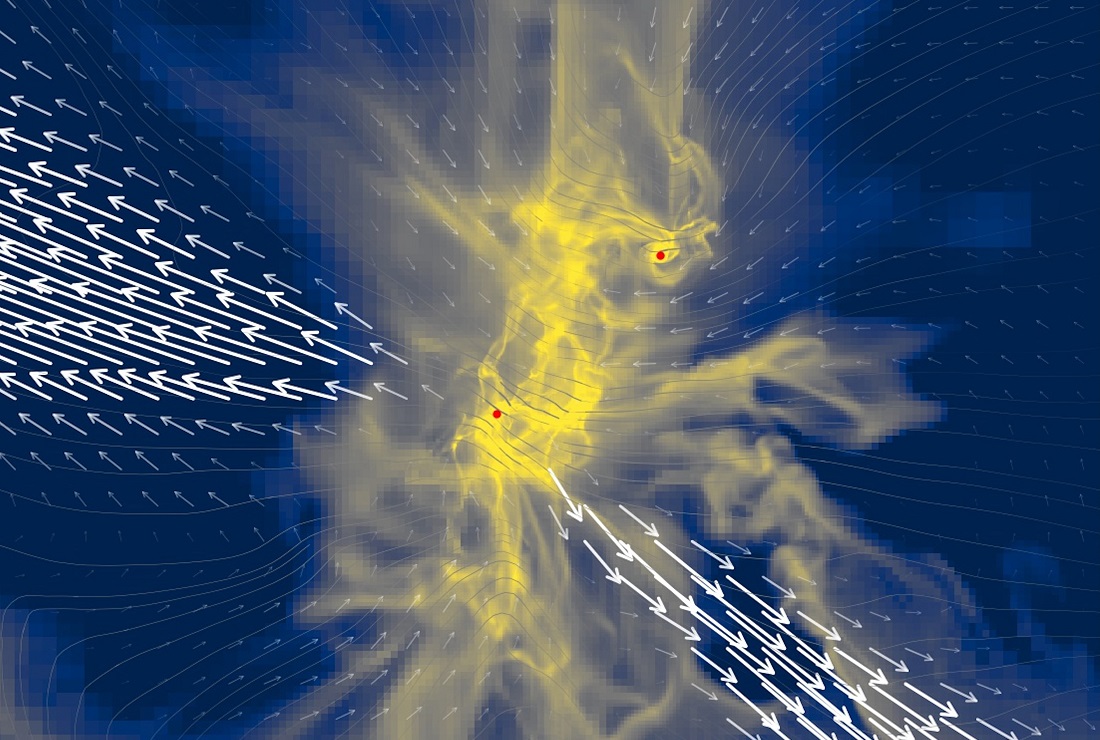
A protoplanetary disk as observed by ALMA (left), and a protoplanetary disk during planetary migration, as obtained from the ATERUI II simulation (right). The dashed line in the simulation represents the orbit of a planet, and the gray area indicates a region not covered by the computational domain of the simulation. Credit: Kazuhiro Kanagawa, ALMA(ESO/NAOJ/NRAO)

Forming planets are one possible explanation for the rings and gaps observed in disks of gas and dust around young stars. But this theory has trouble explaining why it is rare to find planets associated with rings. New supercomputer simulations show that after creating a ring, a planet can move away and leave the ring behind...

Read More

Astronomers make most Distant Detection yet of Fluorine in Star-Forming Galaxy

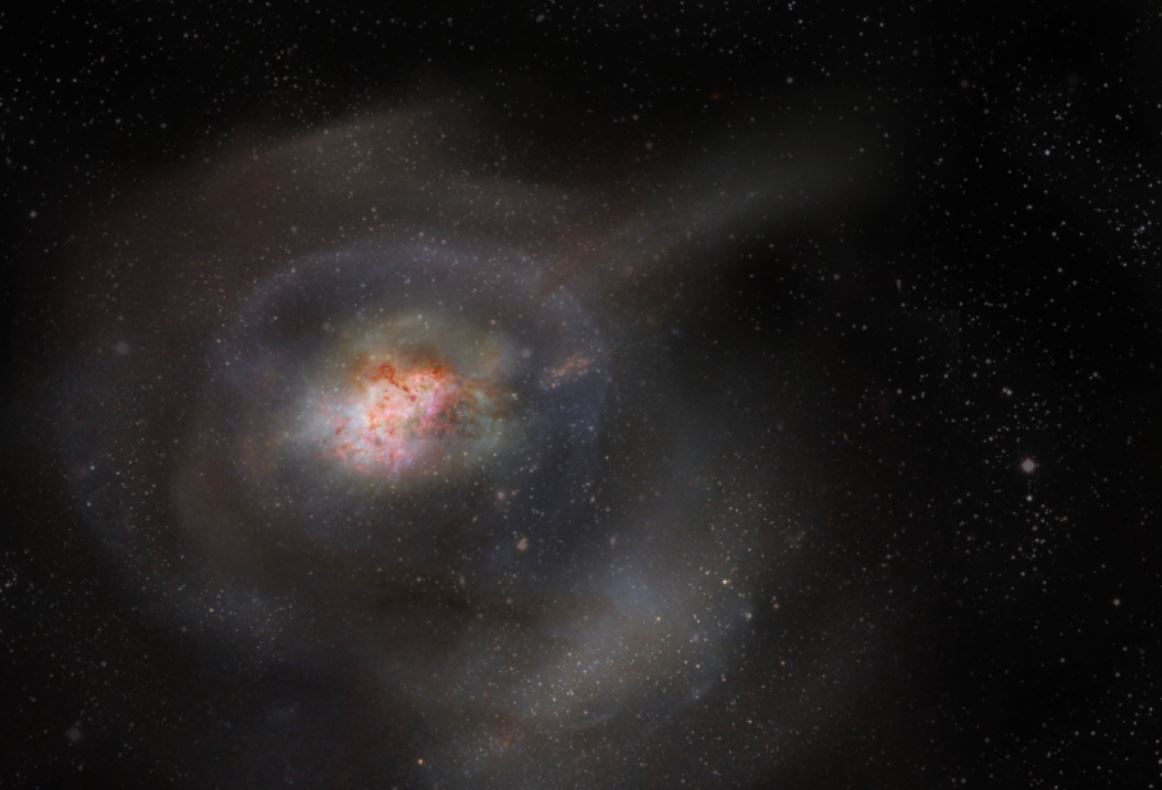
A new discovery is shedding light on how fluorine — an element found in our bones and teeth as fluoride — is forged in the Universe. Using the Atacama Large Millimeter/submillimeter Array (ALMA), in which the European Southern Observatory (ESO) is a partner, a team of astronomers have detected this element in a galaxy that is so far away its light has taken over 12 billion years to reach us. This is the first time fluorine has been spotted in such a distant star-forming galaxy.

A new discovery is shedding light on how fluorine – an element found in our bones and teeth as fluoride – is forged in the Universe...

Read More