ALMA tagged posts

Stars and Planets grow up Together as Siblings

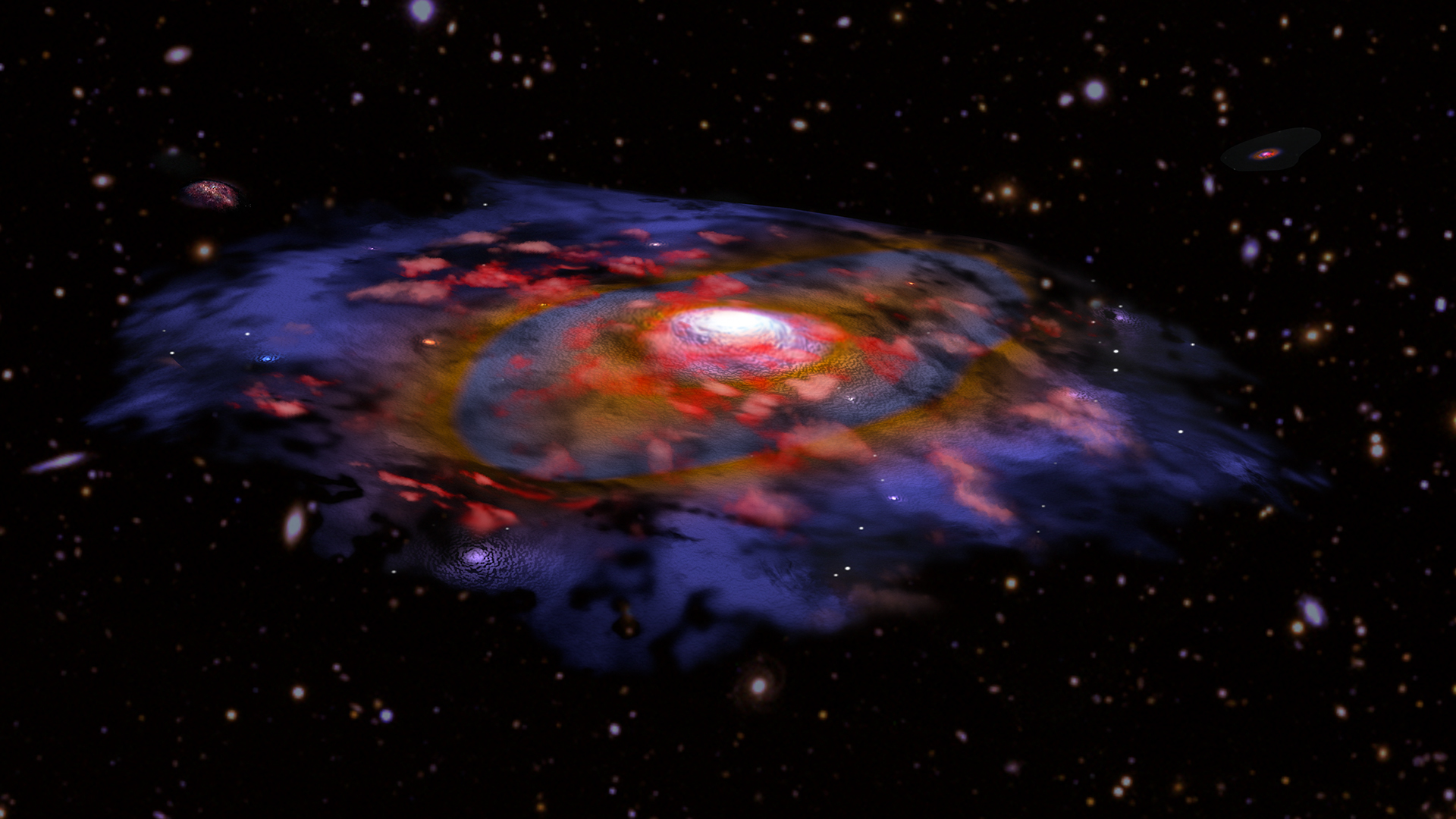
The rings and gaps in the IRS 63 dust disk compared to a sketch of orbits in our own Solar System at the same scale…
© © MPE/D. Segura-Cox

Astronomers have found compelling evidence that planets start to form while infant stars are still growing. The high-resolution image obtained with the Atacama Large Millimeter/submillimeter Array (ALMA) shows a young proto-stellar disk with multiple gaps and rings of dust. This new result, just published in Nature, shows the youngest and most detailed example of dust rings acting as cosmic cradles, where the seeds of planets form and take hold.

An international team of scientists led by Dominique Segura-Cox at the Max Planck Institute for Extraterrestrial Physics (MPE) in Germany targeted the proto-star IRS 63 with the ALMA radio observatory...

Read More

Possible Marker of Life Spotted on Venus

undefined
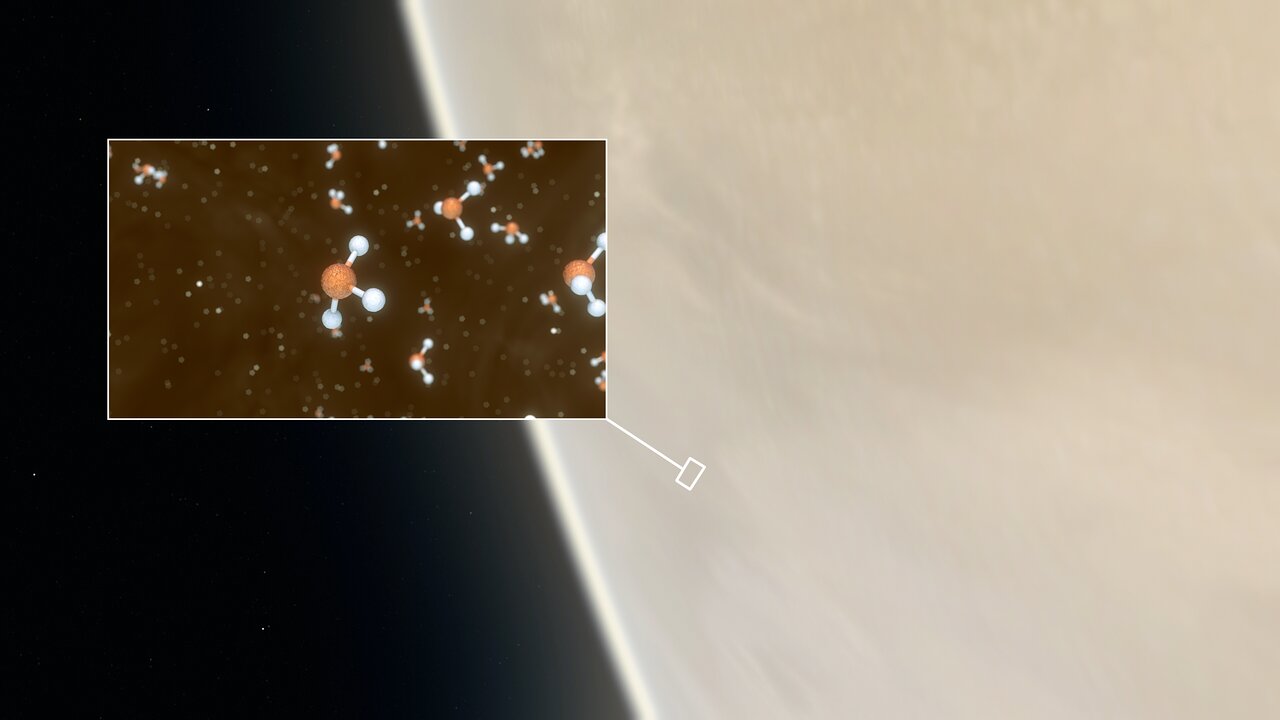
An international team of astronomers today announced the discovery of a rare molecule — phosphine — in the clouds of Venus. On Earth, this gas is only made industrially or by microbes that thrive in oxygen-free environments. Astronomers have speculated for decades that high clouds on Venus could offer a home for microbes — floating free of the scorching surface but needing to tolerate very high acidity. The detection of phosphine could point to such extra-terrestrial “aerial” life.

An international team of astronomers today announced the discovery of a rare molecule – phosphine – in the clouds of Venus. On Earth, this gas is only made industrially or by microbes that thrive in oxygen-free environments...

Read More

Breakthrough in Deciphering Birth of Supermassive Black Holes

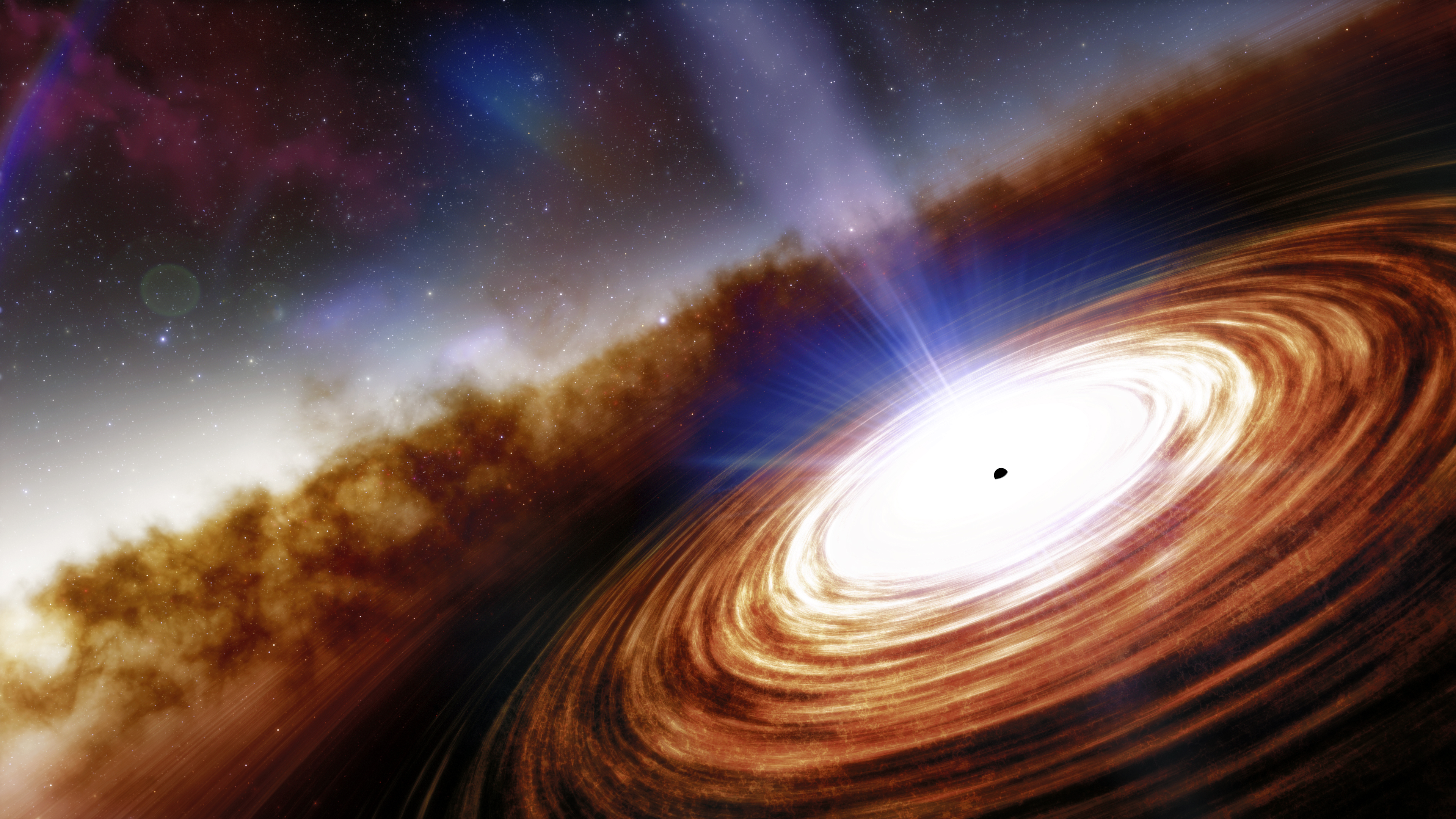
Black hole image
A research team led by Cardiff University scientists say they are closer to understanding how a supermassive black hole (SMBH) is born thanks to a new technique that has enabled them to zoom in on one of these enigmatic cosmic objects in unprecedented detail.

Astronomers zoom in on black hole with one of the lowest masses ever observed in nearby. A research team led by Cardiff University scientists say they are closer to understanding how a supermassive black hole (SMBH) is born thanks to a new technique that has enabled them to zoom in on one of these enigmatic cosmic objects in unprecedented detail.

Scientists are unsure as to whether SMBHs were formed in the extreme conditions shortly after the big bang, in a process dubbed a ‘direct collapse’, or were grown much later from ‘seed...

Read More

ALMA Spots Twinkling Heart of Milky Way

Hot spots circling around the black hole could produce the quasi-periodic millimeter emission detected with ALMA. Credit: Keio University

Astronomers using the Atacama Large Millimeter/submillimeter Array (ALMA) found quasi-periodic flickers in millimeter-waves from the center of the Milky Way, Sagittarius (Sgr) A*. The team interpreted these blinks to be due to the rotation of radio spots circling the supermassive black hole with an orbit radius smaller than that of Mercury. This is an interesting clue to investigate space-time with extreme gravity.

“It has been known that Sgr A* sometimes flares up in millimeter wavelength,” tells Yuhei Iwata, the lead author of the paper published in the Astrophysical Journal Letters and a graduate student at Keio University, Japan...

Read More