artificial intelligence tagged posts

Q&A: How to Train AI when you Don’t Have Enough Data

Artificial intelligence excels at sorting through information and detecting patterns or trends. But these machine learning algorithms need to be trained with large amounts of data first.

As researchers explore potential applications for AI, they have found scenarios where AI could be really useful—such as analyzing X-ray image data to look for evidence of rare conditions or detecting a rare fish species caught on a commercial fishing boat—but there’s not enough data to accurately train the algorithms.

Jenq-Neng Hwang, University of Washington professor of electrical and computer and engineering, specializes in these issues. For example, Hwang and his team developed a method that teaches AI to monitor how many distinct poses a baby can achieve throughout the day...

Read More

New Study uses Machine Learning to Bridge the Reality Gap in Quantum Devices

New study uses machine learning to bridge the reality gap in quantum devices
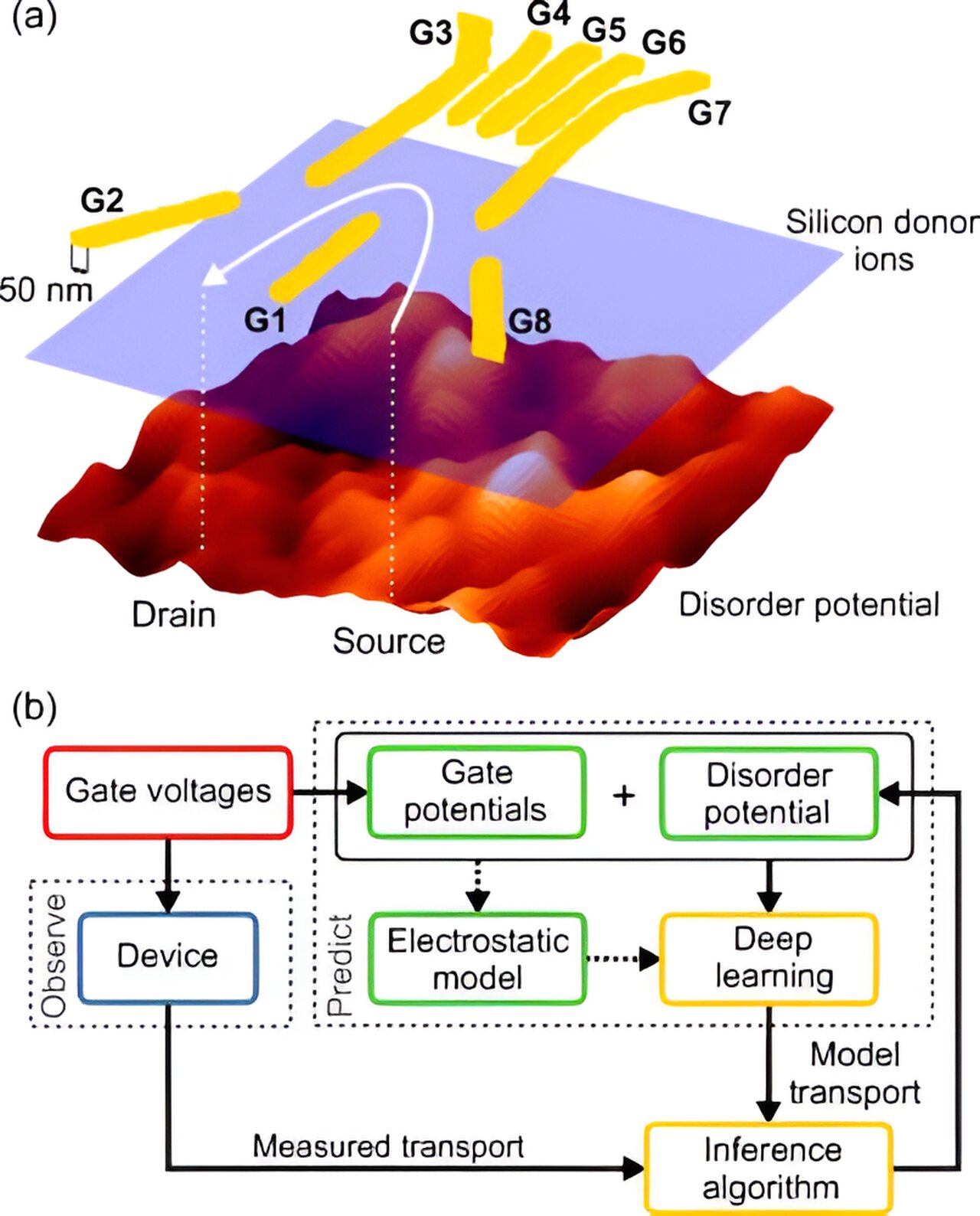
(a) Device geometry including the gate electrodes (labeled G1–G8), donor ion plane, and an example disorder potential experienced by confined electrons. Typical flow of current from source to drain is indicated by the white arrow. (b) Schematic of the disorder inference process. Colors indicate the following: red for experimentally controllable variables, green for quantities relevant to the electrostatic model, blue for experimental device, and yellow for machine learning methods. Dashed arrows represent the process of generating training data for the deep learning approximation and are not part of the disorder inference process. Credit: Physical Review X (2024). DOI: 10.1103/PhysRevX.14.011001

A study led by the University of Oxford has used the power of machine learning to ove...

Read More

DeepMind achieves Giant Leap in Sorting Speed

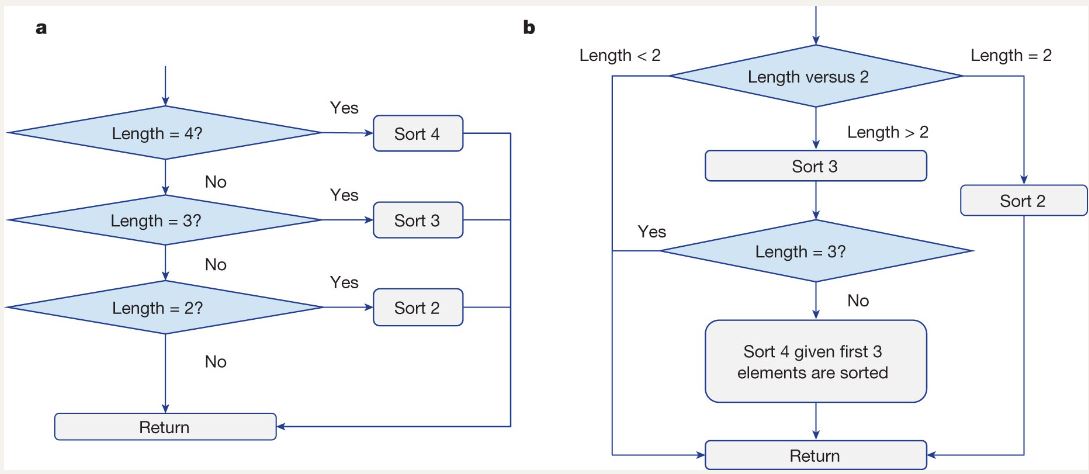
Fundamentally different algorithms discovered by AlphaDev. a, A flow diagram of the variable sort 4 (VarSort4) human benchmark algorithm. In this algorithm, a sequence of unsorted numbers are input into the algorithm. If the sequence length is four, three or two numbers, then the corresponding sort 4, sort 3 or sort 2 sorting network is called that sorts the resulting sequence. The result is then returned and output by the function. b, The VarSort4 algorithm discovered by AlphaDev. This algorithm also receives sequences of length four, three or two numbers as input. In this case, if the length is two, then it calls the sort 2 sorting network and returns. If the length is three then it calls sort 3 to sort the first three numbers and returns...
Read More

Researchers use AI to discover New Planet outside Solar System

The exoplanet was detected using machine learning, a branch of artificial intelligence

A University of Georgia research team has confirmed evidence of a previously unknown planet outside of our solar system, and they used machine learning tools to detect it.

A recent study by the team showed that machine learning can correctly determine if an exoplanet is present by looking in protoplanetary disks, the gas around newly formed stars.

The newly published findings represent a first step toward using machine learning to identify previously overlooked exoplanets.

“We confirmed the planet using traditional techniques, but our models directed us to run those simulations and showed us exactly where the planet might be,” said Jason Terry, doctoral student in the UGA Franklin Colleg...

Read More