cancer tagged posts

Parkinson’s, Cancer, type 2 Diabetes Share a Key Element that Drives Disease

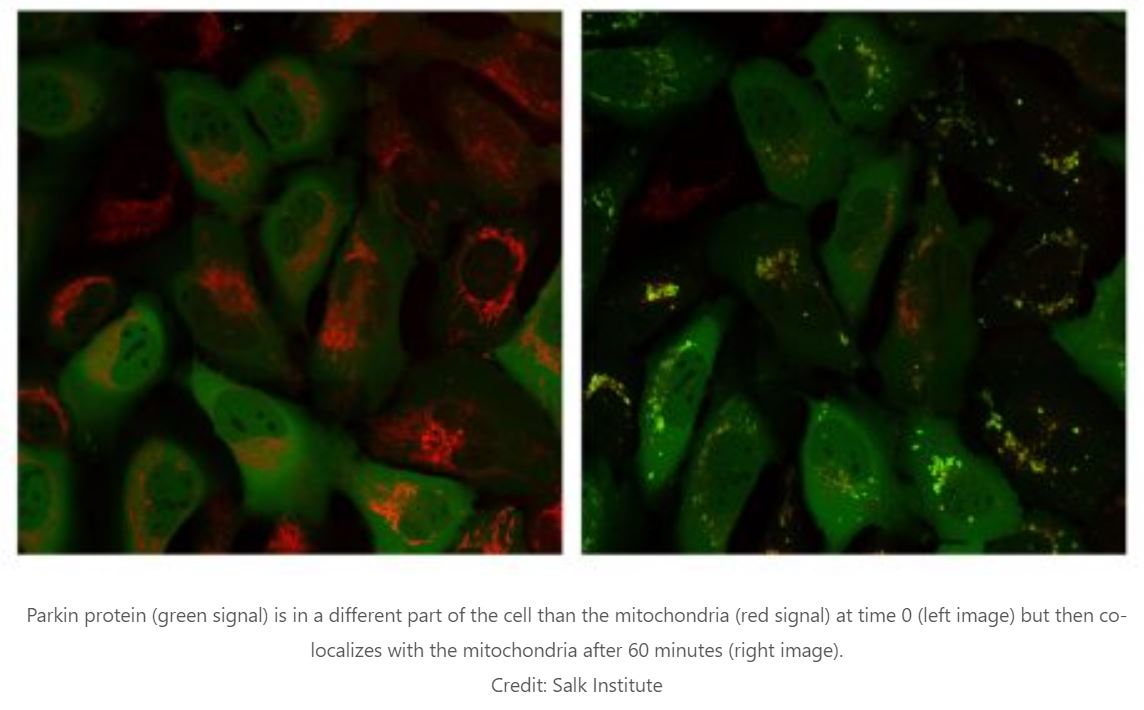
Enzyme with central role in cancer and type 2 diabetes also activates. Researchers have discovered a direct link between a master sensor of cell stress and a protein that protects the power stations of cells. The same pathway is also tied to type 2 diabetes and cancer, which could open a new avenue for treating all three diseases.

When cells are stressed, chemical alarms go off, setting in motion a flurry of activity that protects the cell’s most important players. During the rush, a protein called Parkin hurries to protect the mitochondria, the power stations that generate energy for the cell. Now Salk researchers have discovered a direct link between a master sensor of cell stress and Parkin itself...

Read More

The Right ‘5-a-day’ Mix is 2 Fruit and 3 Vegetable Servings for Longer Life

Studies representing nearly 2 million adults worldwide show that eating about five daily servings of fruits and vegetables, in which 2 are fruits and 3 are vegetables, is likely the optimal amount for a longer life, according to new research published today in the American Heart Association’s flagship journal Circulation.

Diets rich in fruits and vegetables help reduce risk for numerous chronic health conditions that are leading causes of death, including cardiovascular disease and cancer. Yet, only about one in 10 adults eat enough fruits or vegetables, according to the U.S. Centers for Disease Control and Prevention.

“While groups like the American Heart Association recommend four to five servings each of fruits and vegetables daily, consumers likely get inconsistent messages ...

Read More

Newly Synthesized Fungal Compound can switch on a Self-Destruct Button for Cancer

A newly synthesized version of a fungal compound could be a powerful new tool against cancer
vitanovski/Depositphotos

Leading organic chemists synthesize fungal molecule capable of reactivating the self-destruct gene in aggressive cancer cells. Cancers cells use a special technique to propagate; they delete their ‘programmed death’ gene through mutation, ‘forget’ to die when their lifetime is over, and continue to grow instead. A research team has developed a method through which a fungal compound capable of rearming the self-destruct gene in certain cancer cells can be artificially produced in marketable quantities, providing a potential cancer therapeutic strategy.

All human body cells have a certain lifespan, during which they perform their essential duties...

Read More

A ‘Switch’ that turns Autoimmunity Drugs into powerful Anti-Cancer Treatments

CCI

Scientists from the Antibody and Vaccine group at the University of Southampton have discovered a way to transform antibody drugs previously developed to treat autoimmunity into antibodies with powerful anti-cancer activity through a simple molecular “switch.”

This work, published in the journal Cancer Cell, focuses on a molecule called CD40 which is present on the surface of immune cells and controls both autoimmunity and cancer. In autoimmunity, CD40 is thought to be over-stimulated, increasing the chance of the immune system attacking healthy tissues; whereas in cancer, CD40 is believed to be under-stimulated, enabling tumour cells to evade the immune system. Targeting of CD40 with antibody drugs is ongoing in therapeutic interventions for both diseases.

Accordingly, antibody...

Read More