
CDW tagged posts

Room temperature electron behavior defies expectations, hinting at ultra-efficient electronics

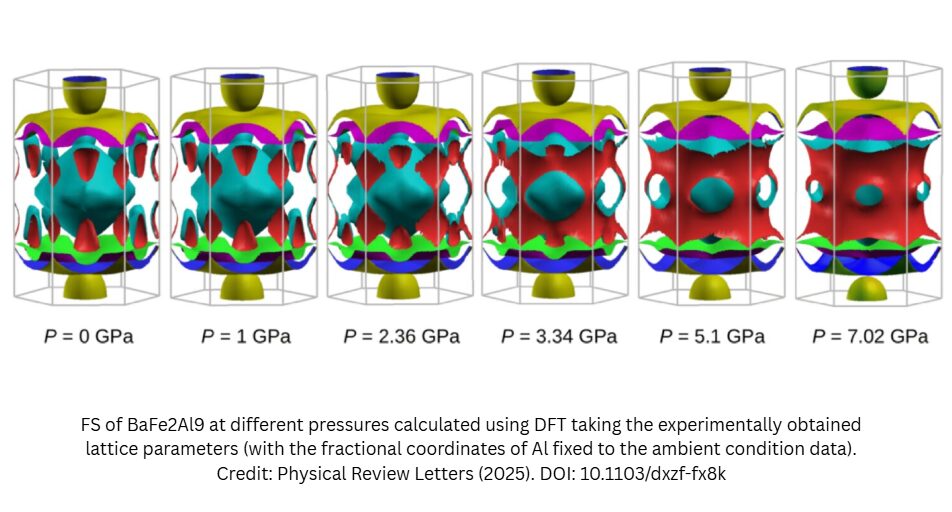
Scientists have discovered a way to efficiently transfer electrical current through specific materials at room temperature, a finding that could revolutionize superconductivity and reshape energy preservation and generation.

The paper is published in the journal Physical Review Letters.

The much-sought-after breakthrough hinges on applying high pressure to certain materials, forcing their electrons closer together and unlocking extraordinary electronic behaviors.

“Our research explores how electrons interact inside solid materials—interactions that give rise to remarkable phenomena such as high-temperature superconductivity and charge-density waves (CDWs),” said Dr. Mahmoud Abdel-Hafiez, associate professor of physics at the University of Sharjah.

“These effects are impo...

Read More
A New Leap in Understanding Nickel Oxide Superconductors

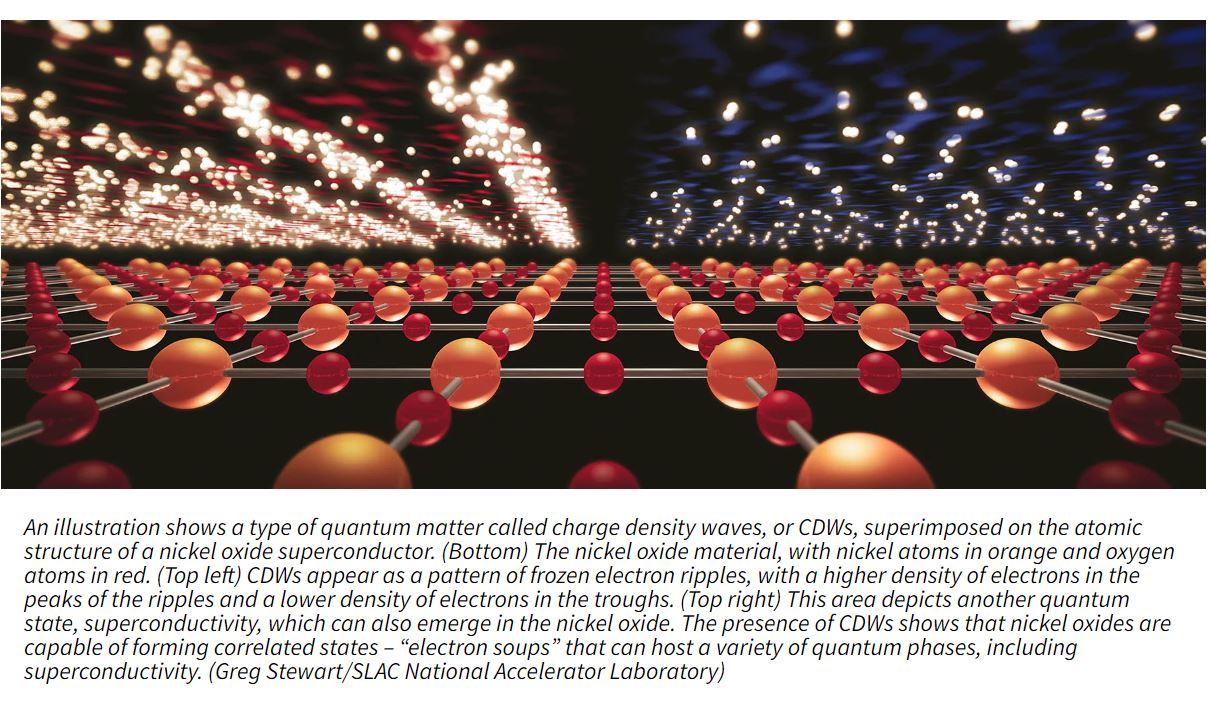
A new study shows that nickel oxide superconductors, which conduct electricity with no loss at higher temperatures than conventional superconductors do, contain a type of quantum matter called charge density waves, or CDWs, that can accompany superconductivity.

The presence of CDWs shows that these recently discovered materials, also known as nickelates, are capable of forming correlated states — “electron soups” that can host a variety of quantum phases, including superconductivity, researchers from the Department of Energy’s SLAC National Accelerator Laboratory and Stanford University reported in Nature Physics today.

“Unlike in any other superconductor we know about, CDWs appear even before we dope the material by replacing some atoms with others to change the number of elect...

Read More