cognitive decline tagged posts

‘Supportive’ brain cells may actively drive cognitive decline

brain cell
Credit: Pixabay/CC0 Public Domain

Brain cells that produce the protective coating around nerve fibers can become dysfunctional with age and may actively contribute to cognitive decline, according to new research.

A study found that people with more severe cognitive decline had changes to nerve fibers and myelin—the protective coating around nerve fibers that helps messages travel efficiently through the brain. The study is published in the journal Nature Medicine.

Experiments in mice showed that disrupting oligodendrocytes—the cells that produce myelin—also altered the coating and impaired cognitive performance.

Experts say the findings overturn the longstanding view that these cells are always supportive of healthy brain function and could pave the way for new treatment...

Read More
The gut can drive age-associated memory loss, research reveals

The gut can drive age-associated memory loss
An intestinal immune cell detects medium-chain fatty acids produced by aging gut bacteria through the GPR84 receptor, releasing inflammatory molecules that block signaling along the vagus nerve to the hippocampus. Disruption of this gut-brain pathway drives age-associated cognitive decline. Credit: Thaiss Lab

We become forgetful as we age. This is often seen as a universal truth, but in fact it is far from universal: some people remain incredibly sharp at 100 years old, while others experience memory loss starting in middle age.

While it seems logical that age-related cognitive decline would be blamed on brain aging and degeneration (which, like anything in the brain, is notoriously hard to treat), there’s some evidence that processes elsewhere in the body influence the brain’s abil...

Read More

Type 2 Diabetes Accelerates Brain Aging and Cognitive Decline

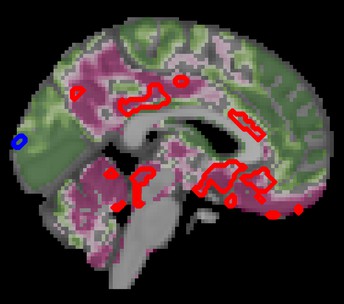
Aging effects on the brain, further exacerbated in type 2 diabetes. Image credit: Lilianne Mujica-Parodi (CC BY 4.0)

Scientists have demonstrated that normal brain aging is accelerated by approximately 26% in people with progressive type 2 diabetes compared with individuals without the disease, reports a study published today in eLife.

The authors evaluated the relationship between typical brain aging and that seen in type 2 diabetes, and observed that type 2 diabetes follows a similar pattern of neurodegeneration as aging, but which progresses faster. One important implication of this finding is that even typical brain aging may reflect changes in the brain’s regulation of glucose by insulin.

The results further suggest that by the time type 2 diabetes is formally diagnosed, the...

Read More

AI-enabled ECGs may Identify Patients at Greater risk of Stroke, Cognitive Decline

Atrial fibrillation, the most common cardiac rhythm abnormality, has been linked to one-third of ischemic strokes, the most common type of stroke. But atrial fibrillation is underdiagnosed, partly because many patients are asymptomatic.

Artificial intelligence-enabled electrocardiography (ECG) was recently shown to identify the presence of brief episodes of atrial fibrillation, and the ability of an AI-enabled ECG algorithm to predict atrial fibrillation up to 10 years before clinical diagnosis has been confirmed in a population-based study conducted by Mayo Clinic researchers.

A new population-based study from Mayo Clinic now offers evidence that the algorithm can help identify patients at greater risk of cognitive decline...

Read More