
Crohn’s disease tagged posts

Bacteria links Crohn’s Disease to Arthritis

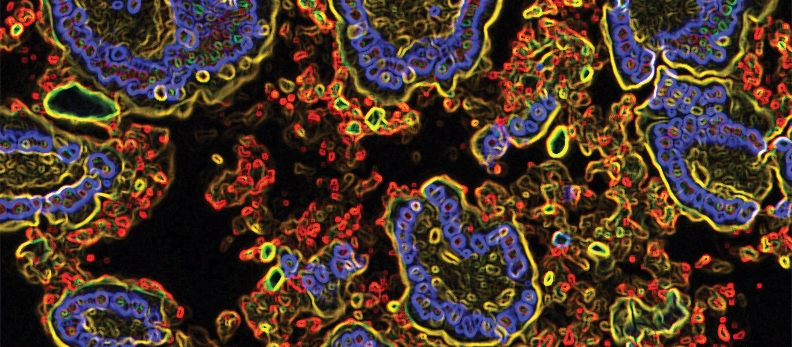
Crohn's disease bacteria drives arthritis. E. coli bacteria (red), which are abundant in the immunoglobulin-A-coated microbiota of patients with a Crohn's disease-associated condition called spondyloarthritis, promote systemic inflammation. The blue circular structures depict the nuclei of cells called epithelial cells. All images: Dr. Kenneth Simpson, Cornell University.

Crohn’s disease bacteria drives arthritis. E. coli bacteria (red), which are abundant in the immunoglobulin-A-coated microbiota of patients with a Crohn’s disease-associated condition called spondyloarthritis, promote systemic inflammation. The blue circular structures depict the nuclei of cells called epithelial cells. All images: Dr. Kenneth Simpson, Cornell University.

Patients with Crohn’s disease, a type of inflammatory bowel disease (IBD) that causes abdominal pain and diarrhea, can also experience joint pain. In Crohn’s disease, which affects about 800,000 Americans, the immune system can attack not only the bowels, but the musculoskeletal system as well, leading to spondyloarthritis, a painful condition that affects the spine and joints. Now new research, published Feb...

Read More

Food-poisoning bacteria may be behind Crohn’s disease

Prior AIEC colonization leads to heightened cellular and proinflammatory cytokine responses.

Prior AIEC colonization leads to heightened cellular and proinflammatory cytokine responses.

People who retain a particular bacterium in their gut after a bout of food poisoning may be at an increased risk of developing Crohn’s disease later in life, according to a new study led by researchers at McMaster University. Using a mouse model of Crohn’s disease, the researchers discovered that acute infectious gastroenteritis caused by common food-poisoning bacteria accelerates the growth of adherent-invasive E. coli (AIEC) – a bacterium that has been linked to the development of Crohn’s.

Even after the mice had eliminated the food-poisoning bacteria, researchers still observed increased levels of AIEC in the gut, which led to worsened symptoms over a long period of time...

Read More

New Therapeutic Target for Crohn’s disease

Highlights •PKCλ/ι is required for Paneth cell differentiation •PKCλ/ι reduces EZH2 stability and promotes Atoh1 and Gfi1 expression •PKCλ/ι induces intestinal epithelial cell survival through the repression of JNK •PKCλ/ι loss enhances intestinal inflammation and cancer

Highlights •PKCλ/ι is required for Paneth cell differentiation •PKCλ/ι reduces EZH2 stability and promotes Atoh1 and Gfi1 expression •PKCλ/ι induces intestinal epithelial cell survival through the repression of JNK •PKCλ/ι loss enhances intestinal inflammation and cancer

A promising new target for future drugs to treat inflammatory bowel disease (IBD) has been found. The study also indicates that another protein, protein kinase C (PKC) λ/ι, may serve as a biomarker of IBD severity. “The intestine is protected by specialized cells, called Paneth cells, that secrete antimicrobial peptides,” said Jorge Moscat, Ph.D., deputy director and professor in the NCI-designated Cancer Center...

Read More

Starvation Signals control Intestinal Inflammation in mice

Research discoveries by Bali Pulendran (seated) and colleagues point to possible new treatment strategies for inflammatory bowel diseases and autoimmune diseases in humans. Credit: Image courtesy of Emory Health Sciences

Research discoveries by Bali Pulendran (seated) and colleagues point to possible new treatment strategies for inflammatory bowel diseases and autoimmune diseases in humans. Credit: Image courtesy of Emory Health Sciences

Intestinal inflammation in mice can be dampened by subjecting them briefly to a diet restricted in amino acids. The findings, made by Bali Pulendran and colleagues at Emory University, highlight an ancient connection between cellular mechanisms to sense nutrient availability and control of inflammation. They also suggest that a low protein diet – or drugs that mimic its effects on immune cells – could be tools for the treatment of inflammatory bowel diseases, such as Crohn’s disease or ulcerative colitis.

This protective effect was shown to be mediated by molecule GCN2, wh...

Read More