dark matter tagged posts

Stars Travel More Slowly at Milky Way’s Edge

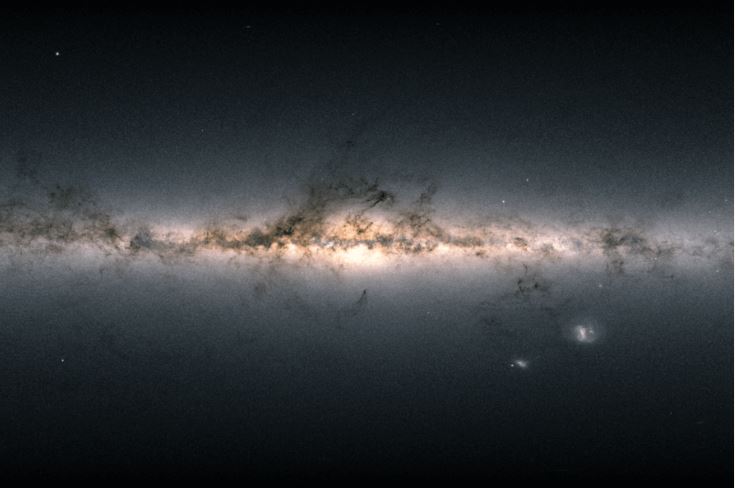
Physicists discovered stars near the edge of the Milky Way travel more slowly than those closer to its center — a surprise suggesting our galaxy’s gravitational core may have less dark matter than previously thought.

By clocking the speed of stars throughout the Milky Way galaxy, MIT physicists have found that stars further out in the galactic disk are traveling more slowly than expected compared to stars that are closer to the galaxy’s center. The findings raise a surprising possibility: The Milky Way’s gravitational core may be lighter in mass, and contain less dark matter, than previously thought.

The new results are based on the team’s analysis of data taken by the Gaia and APOGEE instruments...

Read More

Magnetic Fields in the Cosmos: Dark Matter could help us Discover their Origin

Magnetic fields in the Cosmos: dark matter could help us discover their origin
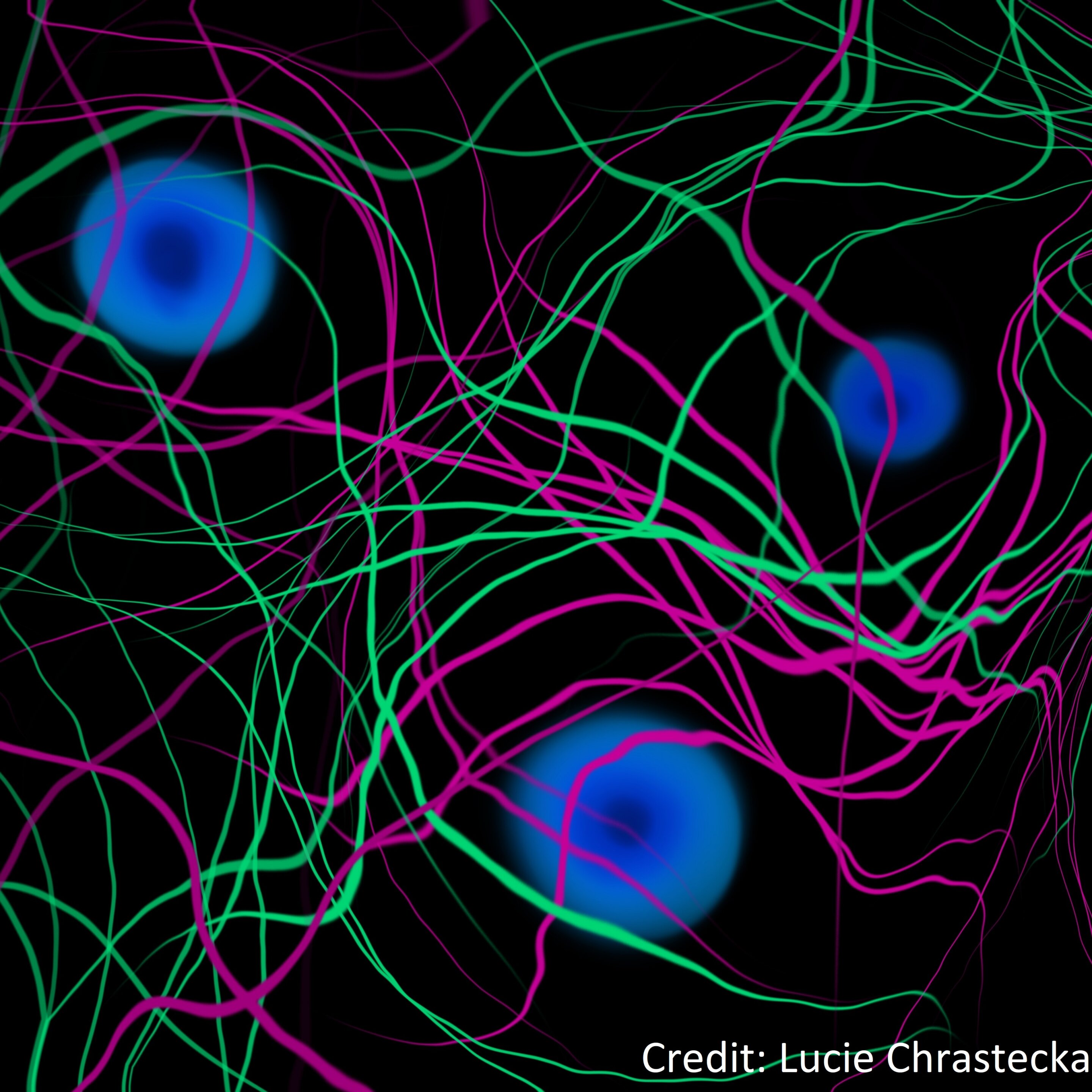
In the study, researchers showed that if magnetic fields are indeed primordial then it could cause an increase in dark matter density perturbations on small scales. The ultimate effect of this process would be the formation of mini-halos of dark matter, which, if detected, would hint towards a primordial nature of magnetic fields. Credit: Lucie Chrastecka

The mini-halos of dark matter scattered throughout the Cosmos could function as highly sensitive probes of primordial magnetic fields. This is what emerges from a theoretical study conducted by SISSA and published in Physical Review Letters. Present on immense scales, magnetic fields are found everywhere in the Universe. However, their origin are still subjects of debate among scholars...

Read More

Matter comprises of 31% of the Total amount of Matter and Energy in the Universe

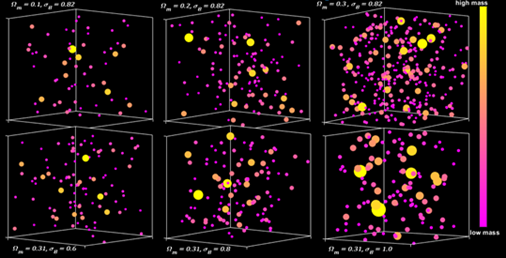
A research team relies on measuring the number of galaxy members to determine the mass of galaxy clusters. One of the most interesting and important questions in cosmology is, “How much matter exists in the universe?” An international team, including scientists at Chiba University, has now succeeded in measuring the total amount of matter for the second time. Reporting in The Astrophysical Journal, the team determined that matter makes up 31% of the total amount of matter and energy in the universe, with the remainder consisting of dark energy.

“Cosmologists believe that only about 20% of the total matter is made of regular or ‘baryonic’ matter, which includes stars, galaxies, atoms, and life,” explains first author Dr...

Read More

New Evidence for the Nature of Matter from Ancient Galaxies in the Early Universe

New evidence for the nature of matter from ancient galaxies in the early universe
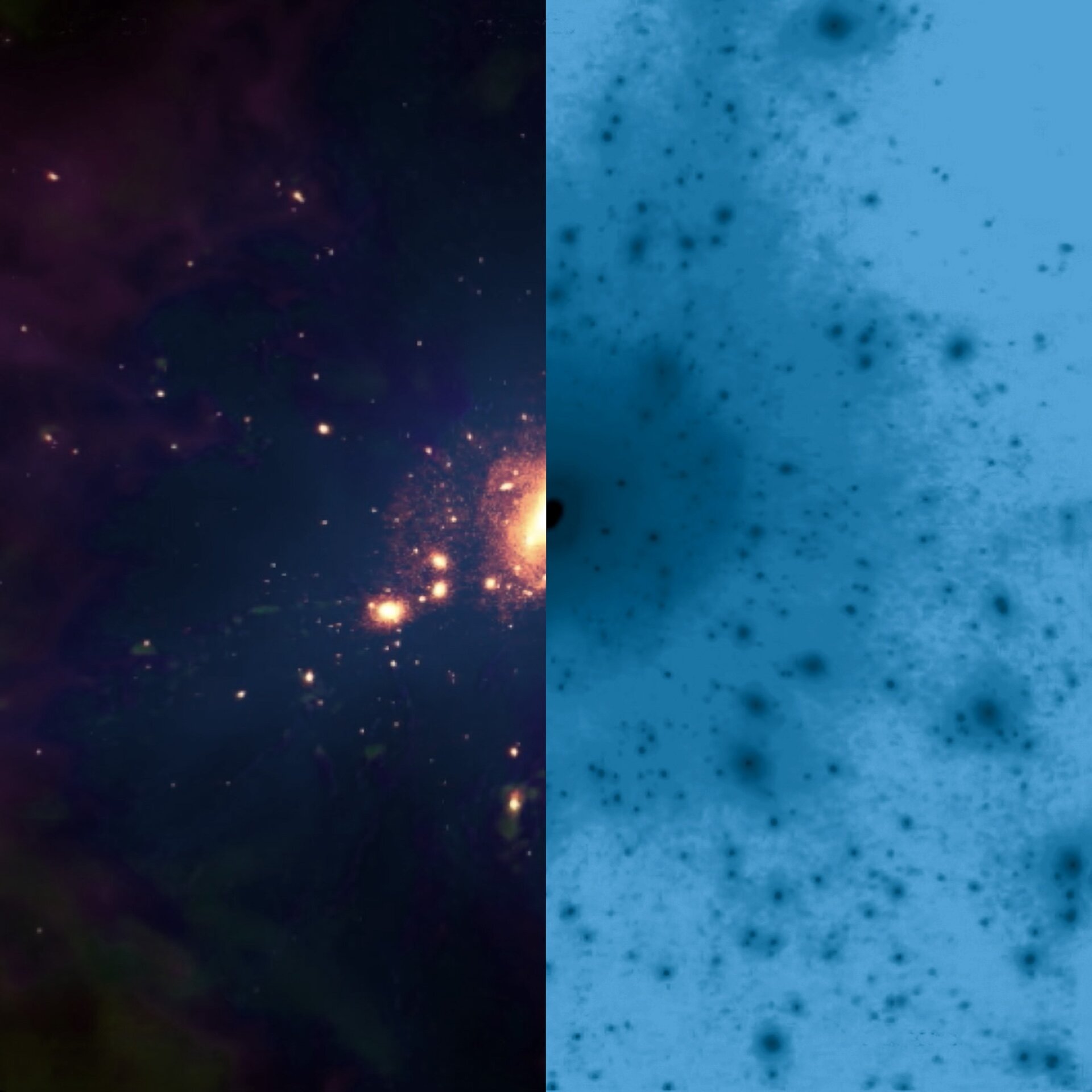
Distribution of primordial matter in cosmological models with hot dark matter (WDM, left) and cold dark matter. Credit: CDM, destra

Astrophysicists in Italy have shed new light on the nature of matter from the James Webb Space Telescope (JWST) detection of galaxies from 13 billion years ago and novel state-of-the-art numerical simulations of the first galaxies. The study adds another piece to the puzzle of the nature of matter in the universe.

While the commonly accepted paradigm of structure formation is based on non-relativistic matter that interacts only gravitationally, that is “cold” dark matter, alternative possibilities advocated to solve small-scale problems of the standard scenario rely on the hypothesis that dark matter is made of warm particles that possess a small, non-n...

Read More