
eROSITA tagged posts

Homing in on the X-ray sky with eROSITA’s second data release

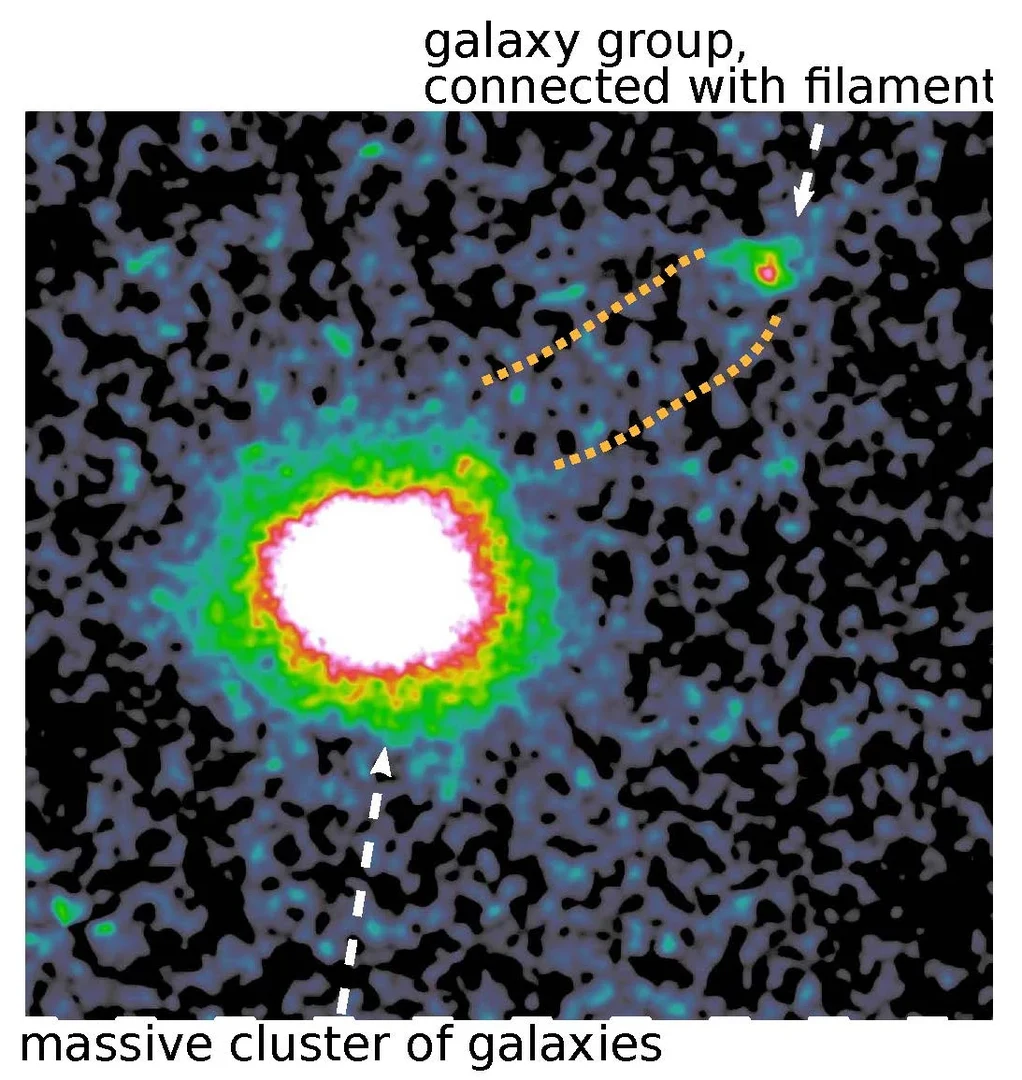
An X-ray image of galaxy cluster A3266
An X-ray image of galaxy cluster A3266 – The massive galaxy cluster A3266 is shining brightly in the X-ray light and is connected to a nearby group of galaxies by a gaseous filament.© Jakob Dietl/Uni Bonn/eROSITA-DE

The German eROSITA consortium (eROSITA-DE), which includes the University of Bonn and is led by the Max Planck Institute for Extraterrestrial Physics (MPE), has released its second major public data set, the “eROSITA Data Release 2” (DR2).

Built from the first three all-sky surveys conducted by the eROSITA telescope aboard the Spectrum-Roentgen-Gamma (SRG) mission, DR2 provides the most sensitive and comprehensive catalog of the X-ray sky currently available to the public...

Read More
Chandra resolves why black holes hit the brakes on growth

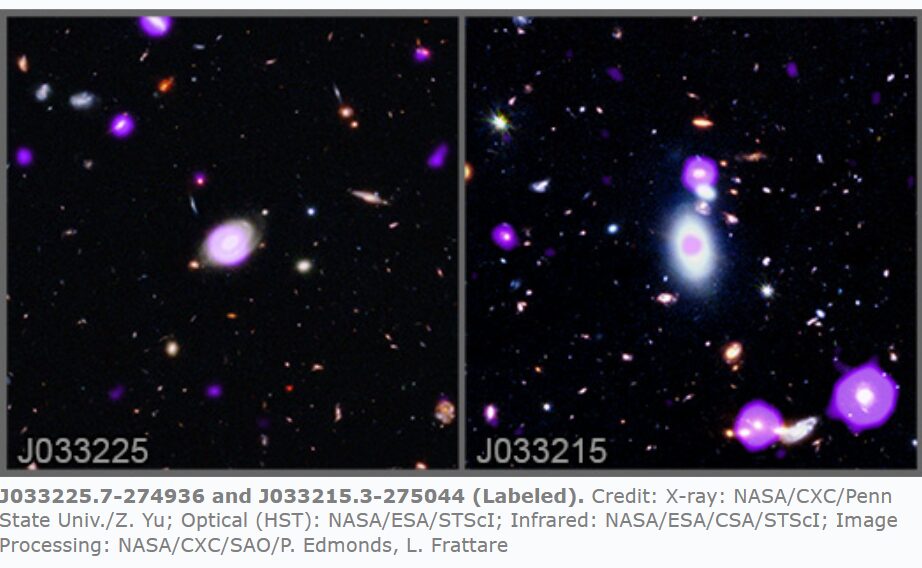
Astronomers have an answer for a long-running mystery in astrophysics: why is the growth of supermassive black holes so much lower today than in the past? A study using NASA’s Chandra X-ray Observatory and other X-ray telescopes found that supermassive black holes are unable to consume material as rapidly as they did in the distant past. The results appeared in the December 2025 issue of The Astrophysical Journal.

Ten billion years ago, there was a period that astronomers call “cosmic noon,” when the growth of supermassive black holes (those with millions to billions of times the mass of the sun) was at its peak across the entire history of the universe. Between cosmic noon and now, however, astronomers have seen a major slowdown in how rapidly black holes are growing.

“A longst...

Read More