
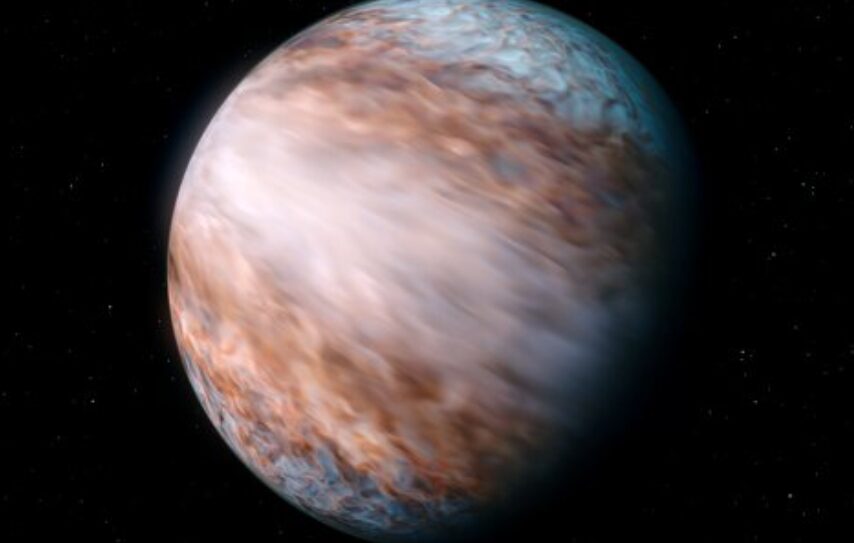
Astronomers have discovered extremely powerful winds pummeling the equator of WASP-127b, a giant exoplanet. Reaching speeds up to 33,000 km/h, the winds make up the fastest jet stream of its kind ever measured on a planet...
Read More

January 23, 2025,
 Astronomy/Space
Astronomers have discovered extremely powerful winds pummeling the equator of WASP-127b, a giant exoplanet. Reaching speeds up to 33,000 km/h, the winds make up the fastest jet stream of its kind ever measured on a planet...
Read More
September 8, 2024,
Astronomy/Space
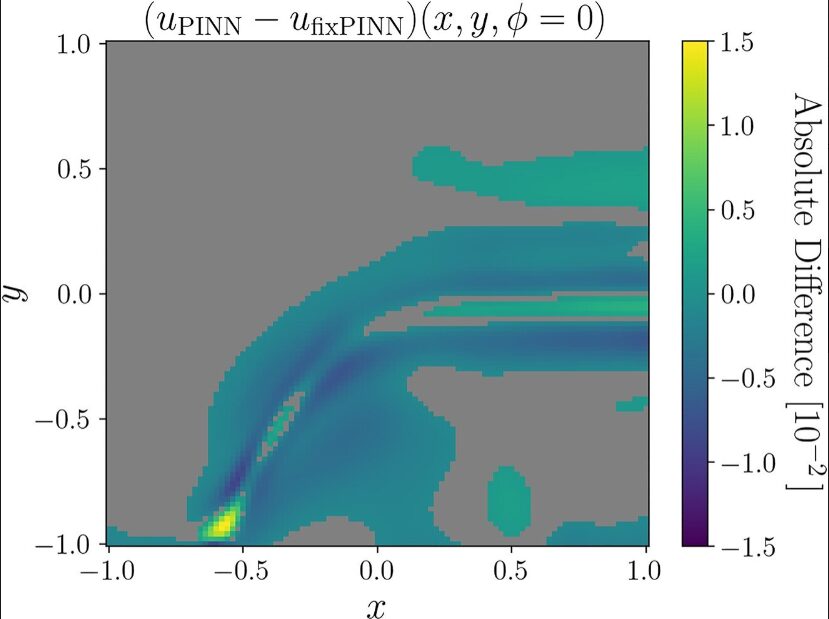
Researchers from LMU, the ORIGINS Excellence Cluster, the Max Planck Institute for Extraterrestrial Physics (MPE), and the ORIGINS Data Science Lab (ODSL) have made an important breakthrough in the analysis of exoplanet atmospheres.
Using physics-informed neural networks (PINNs), they have managed to model the complex light scattering in the atmospheres of exoplanets with greater precision than has previously been possible.
This method opens up new opportunities for the analysis of exoplanet atmospheres, especially with regard to the influence of clouds, and could significantly improv...
Read More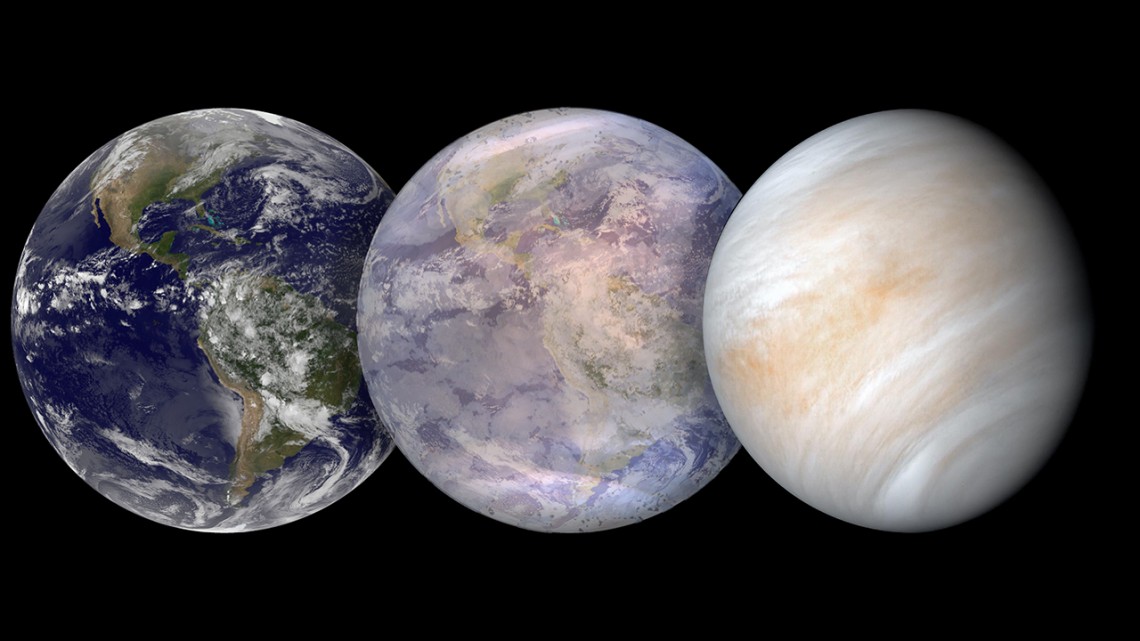
How close can a rocky planet be to a star, and still sustain water and life? A recently discovered exoplanet may be key to solving that Edge of Habitabilitymystery.
“Super-Earth” LP 890-9c (also named SPECULOOS-2c) is providing important insights about conditions at the inner edge of a star’s habitable zone and why Earth and Venus developed so differently, according to new research led by Lisa Kaltenegger, associate professor of astronomy at Cornell University.
Her team found LP 890-9c, which orbits close to the inner edge of its solar system’s habitable zone, would look vastly different depending on whether it still had warm oceans, a ste...
Read More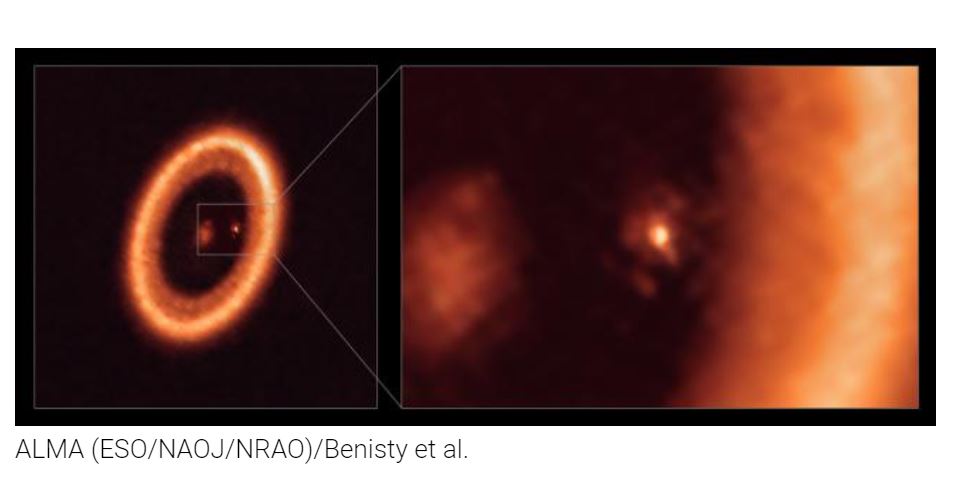
Astronomers at the Center for Astrophysics | Harvard & Smithsonian have helped detect the clear presence of a moon-forming region around an exoplanet — a planet outside of our Solar System. The new observations, published Thursday in The Astrophysical Journal Letters, may shed light on how moons and planets form in young stellar systems.
The detected region is known as a circumplanetary disk, a ring-shaped area surrounding a planet where moons and other satellites may form. The observed disk surrounds exoplanet PDS 70c, one of two giant, Jupiter-like planets orbiting a star nearly 400 light-years away...
Read More
Recent Comments