
Icecube tagged posts

Scientists may have found the source of the most powerful neutrino ever detected

Blazars May Explain Extreme Neutrino
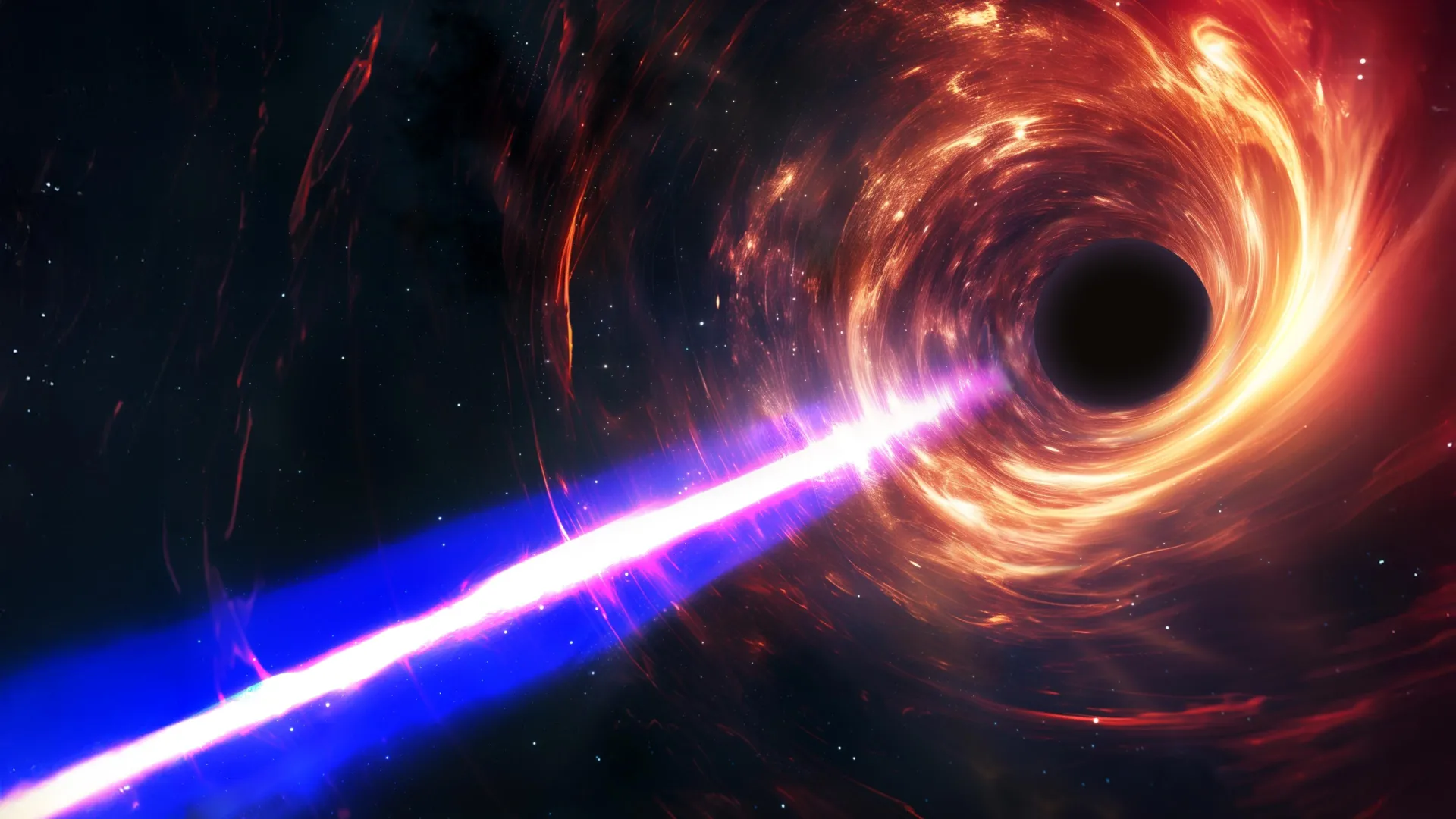
The most energetic neutrino ever detected may have come from blazars — monstrous black holes shooting particle jets toward Earth from distant galaxies. The discovery could reveal cosmic accelerators far more powerful than scientists previously imagined. Credit: Shutterstock

A record-shattering particle from deep space may have exposed some of the universe’s most extreme black hole engines. A mysterious particle from deep space has scientists buzzing after the most energetic neutrino ever detected slammed through the Mediterranean Sea. Now, researchers think they may have identified the cosmic “culprits” behind it: blazars — supermassive black holes blasting jets of matter straight toward Earth.

Three years ago, scientists detected something extraordinary deep beneath the M...

Read More
Investigating the Contribution of Gamma-Ray Blazar Flares to Neutrino Flux

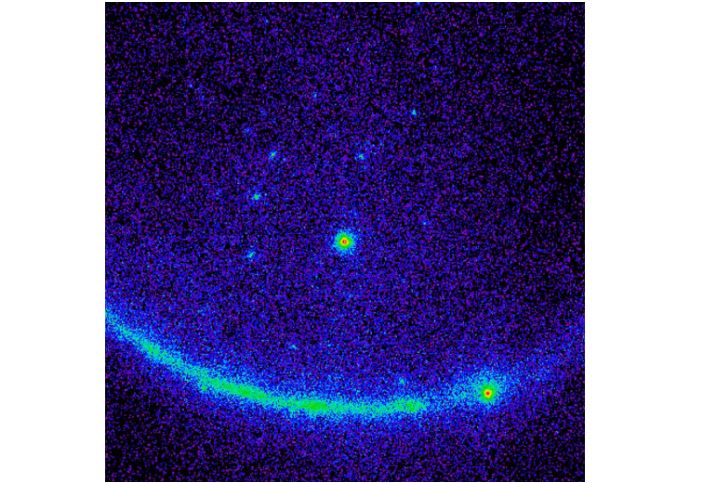
Fermi spots a record flare from blazar.
Caption: A new study suggests that high-energy neutrinos of blazars might be produced mainly during the gamma-ray flare phase.
Credit: NASA Goddard Space Flight Center from flickr (https://www.flickr.com/photos/24662369@N07/19578977022)
License type: CC BY 2.0

Gamma-ray flares from blazars can be accompanied by high-energy neutrino emission. To better understand this phenomenon, an international research team has statistically analyzed 145 bright blazars. They constructed weekly binned light curves and utilized a Bayesian algorithm, finding that their sample was dominated by blazars with low flare duty cycles and energy fractions. The study suggests that high-energy neutrinos of blazars might be produced mainly during the flare phase.

Blazars ...

Read More

A Neutrino Portrait of our Galaxy reveals High-Energy Particles from within the Milky Way

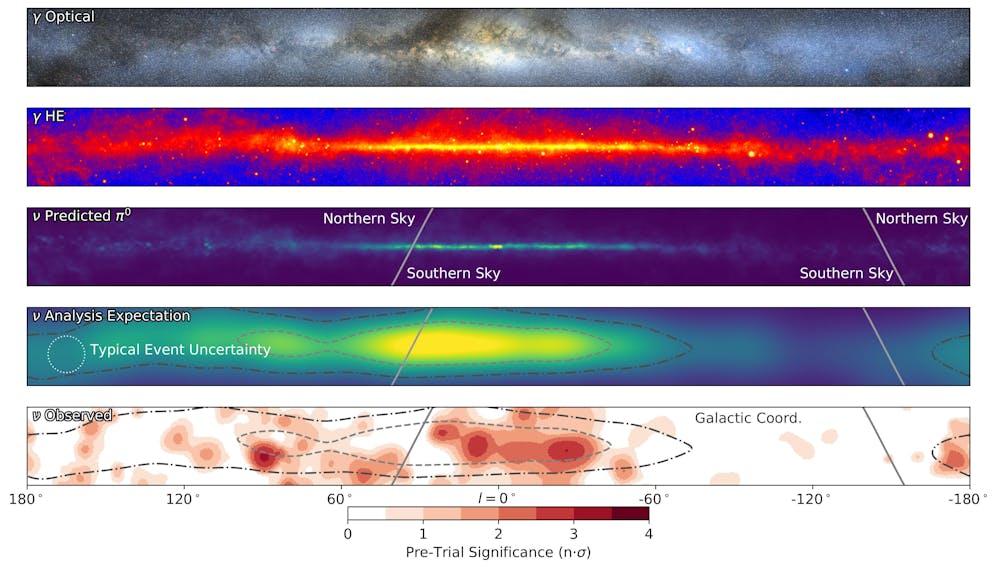
Five views of the Milky Way: the top two bands show visible light and gamma rays, while the lower three show expected and real neutrino results, plus a measure of the significance of neutrino events detected by IceCube. IceCube Collaboration

Our Milky Way galaxy is an awe-inspiring feature of the night sky, viewable with the naked eye as a hazy band of stars stretching from horizon to horizon.

For the first time, the IceCube Neutrino Observatory in Antarctica has produced an image of the Milky Way using neutrinos—tiny, ghost-like astronomical messengers.

In research published June 29 in the journal Science, the IceCube Collaboration—an international group of more than 350 scientists—presents evidence of high-energy neutrino emission coming from the Milky Way.

We have not...

Read More

Physicists design $100 Handheld Cosmic Ray Muon Detector

Physicists at MIT have designed a pocket-sized cosmic ray muon detector to track these ghostly particles. Credit: Courtesy of the researchers

Physicists at MIT have designed a pocket-sized cosmic ray muon detector to track these ghostly particles. Credit: Courtesy of the researchers

Pocket-sized device detects charged particles in surrounding air. At any given moment, Earth’s atmosphere is showered with high-energy cosmic rays that have been blasted from supernovae and other astrophysical phenomena far beyond the Solar System. When cosmic rays collide with Earth’s atmosphere, they decay into muons – charged particles that are slightly heavier than an electron. Muons last only fractions of a second, and during their fleeting lifespan they can be found through every layer of Earth’s atmosphere, circulating in the air around us and raining onto the surface at a rate similar to a light drizzle...

Read More