immune system tagged posts

Nanomaterial influences Gut Microbiome and Immune system Interactions

Decorative image
A new study by researchers at Karolinska Institutet shows that the aryl hydrocarbon receptor (AhR) in intestinal epithelial cells senses the nanomaterial graphen oxide and activates specific immune cells known as innate lymphoid cells. Illustration by Getty Images.

The nanomaterial graphene oxide — which is used in everything from electronics to sensors for biomolecules — can indirectly affect the immune system via the gut microbiome, as shown in a new study on zebrafish by researchers at Karolinska Institutet in Sweden. The findings are reported in the journal Nature Nanotechnology.

“This shows that we must factor the gut microbiome into our understanding of how nanomaterials affect the immune system,” says the paper’s corresponding author Bengt Fadeel, professor at the Institute o...

Read More

Type-I Interferon Stops Immune System from ‘going rogue’ during Viral Infections

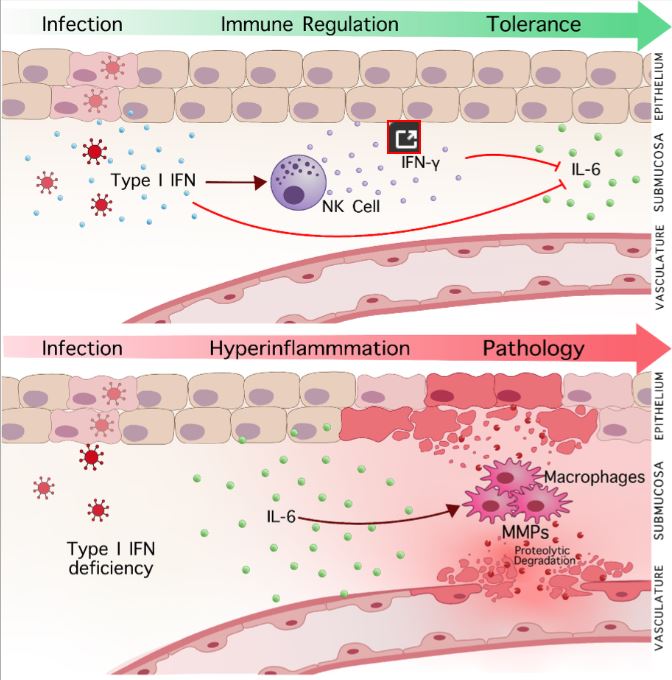
McMaster University researchers have found not only how some viral infections cause severe tissue damage, but also how to reduce that damage.

They have discovered how Type I interferon (IFN) stops the immune system from “going rogue” and attacking the body’s own tissues when fighting viral infections, including COVID-19.

Their paper was published in the journal PLOS Pathogens.

Senior author Ali Ashkar said IFN is a well-known anti-viral signaling molecule, that when released by the body’s cells, can trigger a powerful immune response against harmful viruses.

“What we have found is that it is also critical to stop white blood cells from releasing protease enzymes, which can damage organ tissue...

Read More

Magnesium is essential for the Immune System, including in the Fight Against Cancer

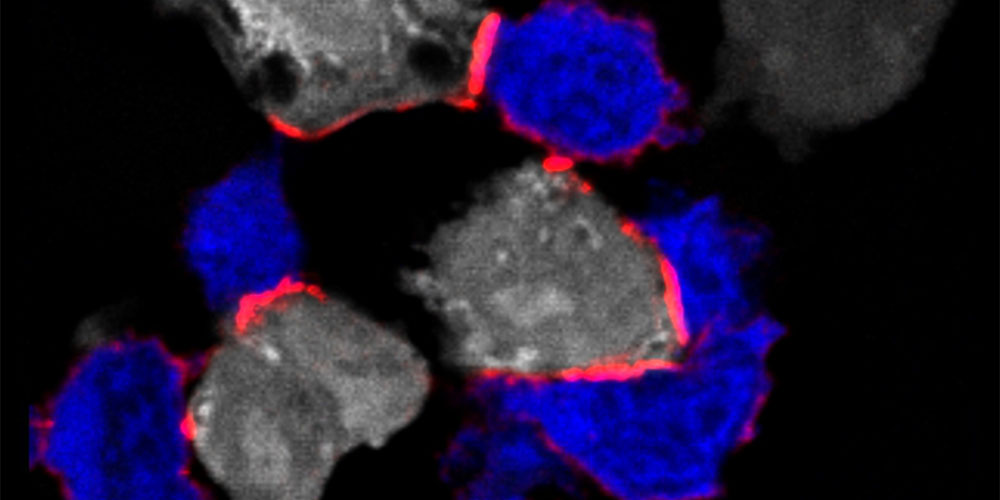
Immunofluorescence microscopy: T cells (blue) attack cancer cells (gray) by binding to them via their surface protein LFA-1. LFA-1 needs magnesium to adopt an active, elongated form (active LFA-1 in red). (Image: J. Lötscher et al., Cell, 2022)

The level of magnesium in the blood is an important factor in the immune system’s ability to tackle pathogens and cancer cells. Writing in the journal Cell, researchers from the University of Basel and University Hospital Basel have reported that T cells need a sufficient quantity of magnesium in order to operate efficiently. Their findings may have important implications for cancer patients.

Magnesium deficiency is associated with a variety of diseases, such as infections and cancer...

Read More

COVID-19 Can Trigger Self-Attacking Antibodies

Photo by Getty Images.
An illustration of antibodies (Y-shaped) responding to SARS-CoV-2 (orange), the novel coronavirus that causes COVID-19.

Infection with the virus that causes COVID-19 can trigger an immune response that lasts well beyond the initial infection and recovery—even among people who had mild symptoms or no symptoms at all, according to Cedars-Sinai investigators. The findings are published in the Journal of Translational Medicine.

When people are infected with a virus or other pathogen, their bodies unleash proteins called antibodies that detect foreign substances and keep them from invading cells. In some cases, however, people produce autoantibodies that can attack the body’s own organs and tissues over time.

The Cedars-Sinai investigators found that people w...

Read More