

In a glimpse of the early universe, astronomers have observed a galaxy as it appeared just 800 million years after the Big Bang—a cosmic Jekyll and Hyde that loo...
Read More

December 14, 2025,
 Astronomy/Space
In a glimpse of the early universe, astronomers have observed a galaxy as it appeared just 800 million years after the Big Bang—a cosmic Jekyll and Hyde that loo...
Read More
December 2, 2025,
Astronomy/Space
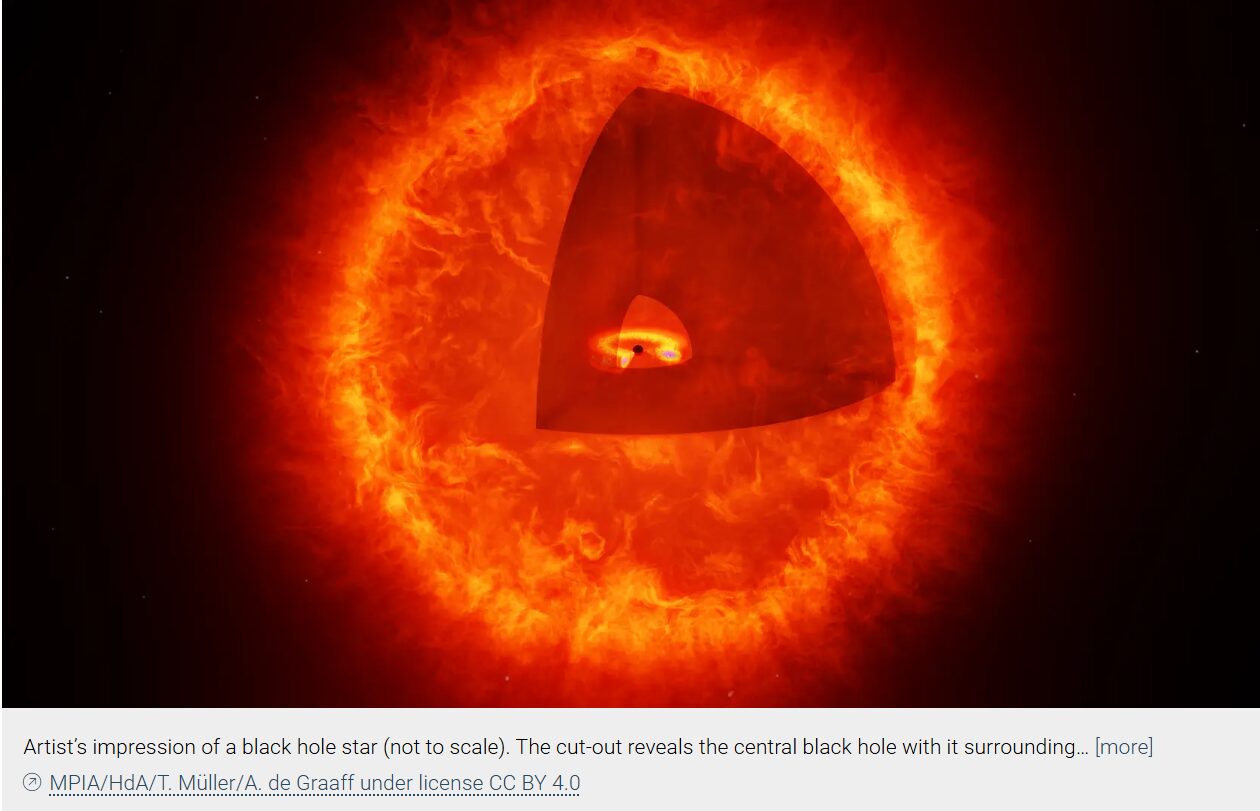
The discovery of strange, ultra-red objects—especially the extreme case known as The Cliff—has pushed astronomers to propose an entirely new type of cosmic structure: black hole stars. These exotic hybrids could explain rapid black hole growth in the early universe, but their existence remains unproven.
In the summer of 2022, only a few weeks after the James Webb Space Telescope (JWST) began delivering its first scientific images, astronomers noticed an unexpected pattern: tiny red points scattered throughout the new observations. These extremely compact, distinctly red objects appeared with remarkable clarity thanks to JWST’s sensitivity, and there were far more of them than expected...
Read More
October 21, 2025,
Astronomy/Space

The ice giants remain some of the most interesting places to explore in the solar system. Uranus in particular has drawn a lot of interest lately, especially after the 2022 Decadal Survey from the National Academies named it as the highest priority destination. But as of now, we still don’t have a fully fleshed out and planned mission ready to go for the multiple launch windows in the 2030s.
That might actually be an advantage, though, as a new system coming online might change the overall mission design fundamentally...
Read More
October 16, 2025,
Astronomy/Space
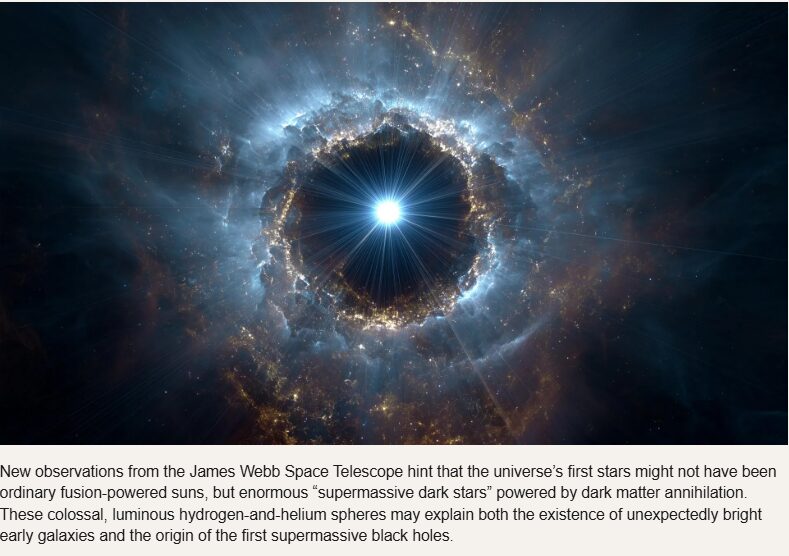
New observations from the James Webb Space Telescope hint that the universe’s first stars might not have been ordinary fusion-powered suns, but enormous “supermassive dark stars” powered by dark matter annihilation. These colossal, luminous hydrogen-and-helium spheres may explain both the existence of unexpectedly bright early galaxies and the origin of the first supermassive black holes.
In the early universe, a few hundred million years after the Big Bang, the first stars emerged from vast, untouched clouds of hydrogen and helium. Recent observations from the James Webb Space Telescope (JWST) suggest that some of these early stars may have been unlike the familiar (nuclear fusion-powered) stars that astronomers have studied for centuries...
Read More
Recent Comments