

LIDAR tagged posts

Breaking through the Resolution Barrier with Quantum-limited Precision

Photo (Paderborn University, Besim Mazhiqi). 

Researchers develop new method of measurement. Researchers at Paderborn University have developed a new method of distance measurement for systems such as GPS, which achieves more precise results than ever before. Using quantum physics, the team led by Leibniz Prize winner Professor Christine Silberhorn has successfully overcome the so-called resolution limit, which causes the “noise” we may see in photos, for example. Their findings have just been published in the academic journal Physical Review X Quantum (PRX Quantum).

Physicist Dr Benjamin Brecht explains the problem of the resolution limit: “In laser distance measurements a detector registers two light pulses of different intensities with a time difference...

Read More
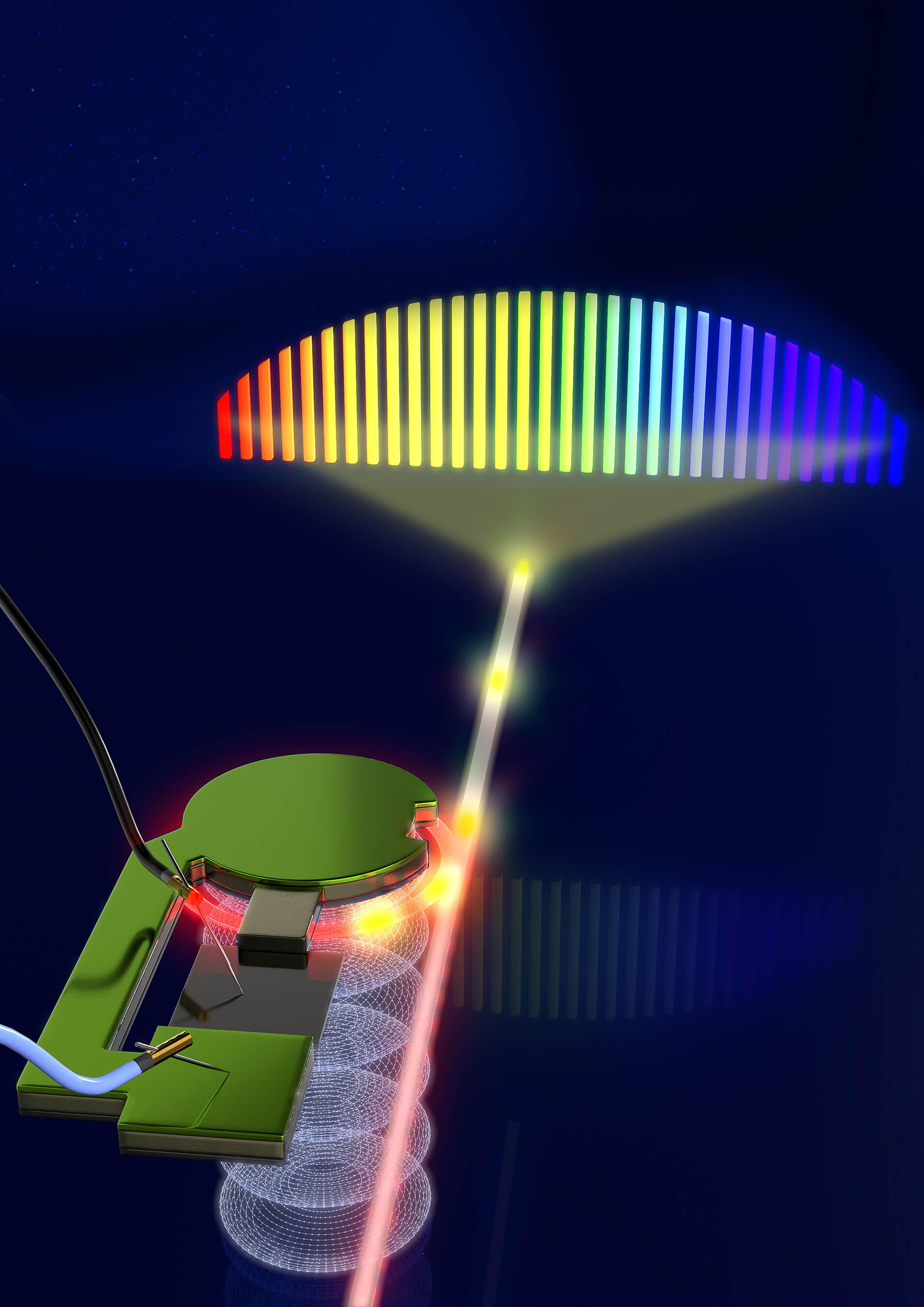
Tech to help Autonomous Vehicles better Scan for nearby Fast-Moving Objects

New technology uses acoustics to better control a pulse of laser light split into a frequency comb, potentially helping lidar to achieve detection of nearby high-speed objects. (WoogieWorks graphic/Alex Mehler)

Mechanical control and modulation of light on a silicon chip could enhance lidar. Researchers have built a way that lidar could achieve higher-resolution detection of nearby fast-moving objects through mechanical control and modulation of light on a silicon chip.

A self-driving car has a hard time recognizing the difference between a toddler and a brown bag that suddenly appears into view because of limitations in how it senses objects using lidar.

The autonomous vehicle industry is exploring “frequency modulated continuous wave” (FMCW) lidar to solve this problem...

Read More

Fleets of Drones could Aid Searches for Lost Hikers

MIT researchers describe an autonomous system for a fleet of drones to collaboratively search under dense forest canopies using only onboard computation and wireless communication — no GPS required. Images: Melanie Gonick

MIT researchers describe an autonomous system for a fleet of drones to collaboratively search under dense forest canopies using only onboard computation and wireless communication — no GPS required.
Images: Melanie Gonick

Autonomous System allows drones to cooperatively explore terrain under thick forest canopies where GPS signals are unreliable. The drones use only onboard computation and wireless communication – no GPS required.

Each autonomous quadrotor drone is equipped with laser-range finders for position estimation, localization, and path planning. As the drone flies around, it creates an individual 3D map of the terrain. Algorithms help it recognize unexplored and already-searched spots, so it knows when it’s fully mapped an area...

Read More