magnetic field tagged posts

Plant-based Materials give ‘Life’ to Tiny Soft Robots

Soft robot in a maze

A team of University of Waterloo researchers has created smart, advanced materials that will be the building blocks for a future generation of soft medical microrobots.

These tiny robots have the potential to conduct medical procedures, such as biopsy, and cell and tissue transport, in a minimally invasive fashion. They can move through confined and flooded environments, like the human body, and deliver delicate and light cargo, such as cells or tissues, to a target position.

The tiny soft robots are a maximum of one centimetre long and are bio-compatible and non-toxic. The robots are made of advanced hydrogel composites that include sustainable cellulose nanoparticles derived from plants.

This research, led by Hamed Shahsavan, a professor in the Department of Chemical Engine...

Read More
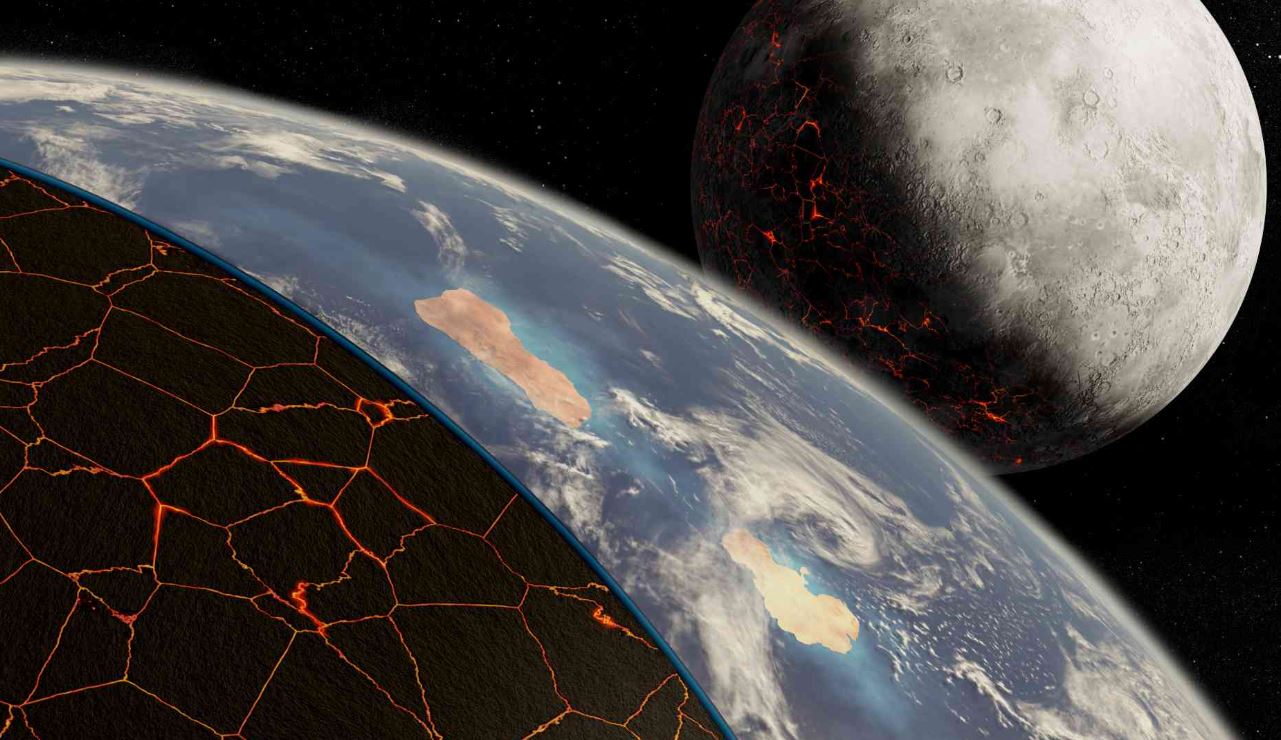
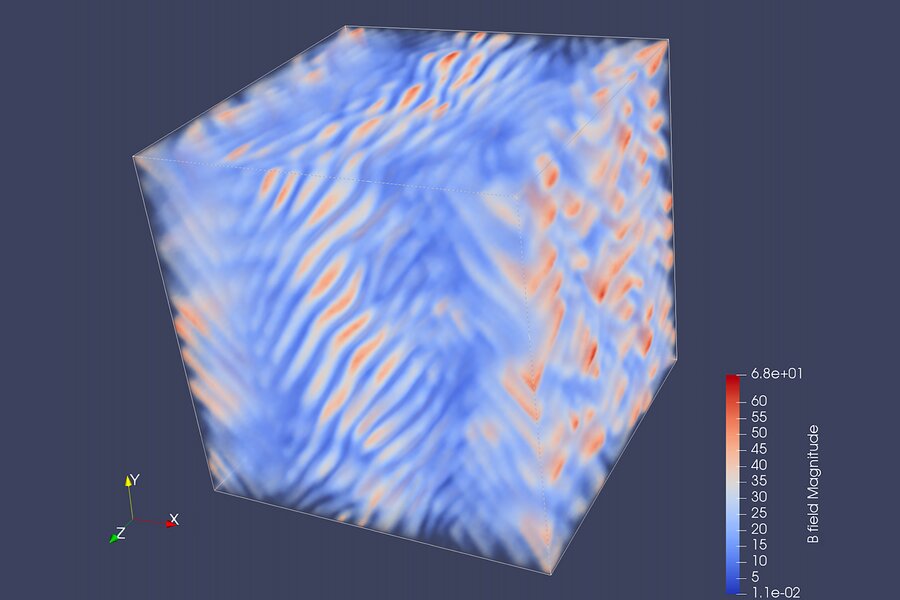
Plate Tectonics Not Required for the Emergence of Life

Plate tectonics involves the horizontal movement and interaction of large plates on Earth’s surface. New research indicates that mobile plate tectonics—thought to be necessary for the creation of a habitable planet—was not occurring on Earth 3.9 billion years ago. (University of Rochester illustration / Michael Osadciw)

The finding contradicts previous assumptions about the role of mobile plate tectonics in the development of life on Earth. New finding contradicts previous assumptions about the role of mobile plate tectonics in the development of life on Earth. Moreover, the data suggests that ‘when we’re looking for exoplanets that harbor life, the planets do not necessarily need to have plate tectonics,’ says the lead author of a new paper.

Scientists have taken a journey ba...

Read More

How the Universe got its Magnetic Field

How the universe got its magnetic field | MIT News
Visualization of filamentary seed magnetic fields emerging from large-scale motions of unmagnetized plasma in a first-principles numerical simulation. Credit: Muni Zhou et al

When we look out into space, all of the astrophysical objects that we see are embedded in magnetic fields. This is true not only in the neighborhood of stars and planets, but also in the deep space between galaxies and galactic clusters. These fields are weak—typically much weaker than those of a refrigerator magnet—but they are dynamically significant in the sense that they have profound effects on the dynamics of the universe. Despite decades of intense interest and research, the origin of these cosmic magnetic fields remains one of the most profound mysteries in cosmology.

In previous research, scientist...

Read More

Physicists explain how Type of Aurora on Mars is Formed

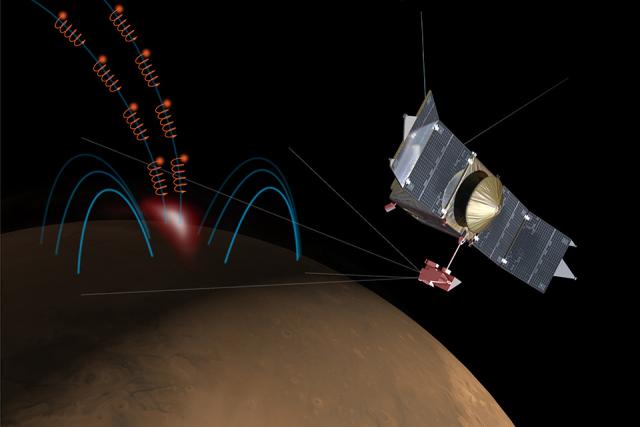
Researchers led by the University of Iowa have learned how a type of aurora on Mars is formed. In a new study, the physicists report discrete aurora form through the interaction of the solar wind and the crust at Mars’ southern hemisphere. Photo by CU/LASP.

Physicists led by the University of Iowa have learned how a type of aurora on Mars is formed.

In a new study, the physicists studied discrete aurora, a light-in-the-sky display that occurs mostly during the night in the red planet’s southern hemisphere. While scientists have known about discrete aurora on Mars-which also occur on Earth – they did not know how they formed...

Read More