mRNA tagged posts

Scientists recruit red blood cells to deliver genetic cargo with instructions to kill cancer

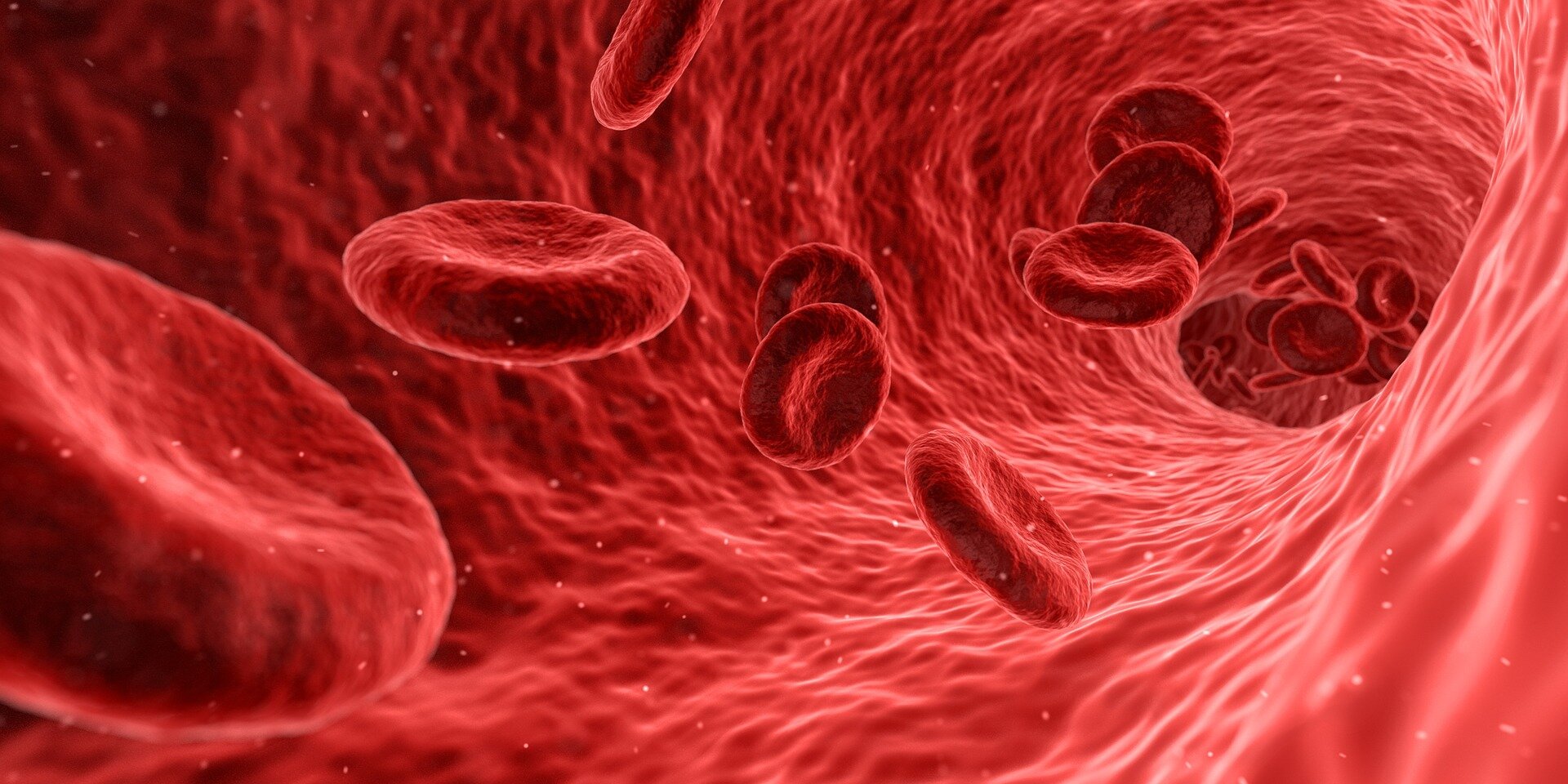
red blood cells
Credit: CC0 Public Domain

Scientists have developed a way to turn the body’s own immune cells into cancer-fighting agents—without removing them from the body—by using red blood cells to deliver genetic instructions. Current CAR (chimeric antigen receptor) therapies typically involve collecting a patient’s T cells, genetically modifying them in the laboratory, and then reinfusing them in a process that can take weeks. The new strategy aims to bypass that step.

In a study published in Science Translational Medicine, researchers at Westlake Laboratory of Life Sciences and Biomedicine in Hangzhou, China, report that they used engineered erythrocytes, or red blood cells, to carry messenger RNA—mRNA—that reprograms myeloid cells into tumor-targeting cells inside the body.

“Engi...

Read More
Cell-permeable peptide shows promise in nerve cell regeneration

Research team unlocks clues to repairing damaged nerves
Expression of G3BP1 acidic domain in CNS neurons facilitates axon regeneration. Credit: Proceedings of the National Academy of Sciences (2025). DOI: 10.1073/pnas.2411811122

Each year, according to the National Institutes of Health (NIH), millions of people in the U.S. are affected by spinal cord and traumatic brain injuries, along with neuro-developmental and degenerative diseases such as ADHD, autism, cerebral palsy, Alzheimer’s disease, multiple sclerosis, epilepsy and Parkinson’s disease.

Assistant Professor Pabitra Sahoo, of Rutgers University-Newark’s Department of Biological Sciences, has made it his life’s work to understand how our neurological system becomes damaged by these injuries and conditions, and when and how neurons in our central and peripheral nervous systems re...

Read More

How an Ultrasensitive On-Off Switch helps Axolotls Regrow Limbs

It’s one of the mysteries of nature: How does the axolotl, a small salamander, boast a superhero-like ability to regrow nearly any part of its body? For years, scientists have studied the amazing regenerative properties of the axolotl to inform wound healing in humans.

Now, Stanford Medicine researchers have made a leap forward in understanding what sets the axolotl apart from other animals. Axolotls, they discovered, have an ultra-sensitive version of mTOR, a molecule that acts as an on-off switch for protein production. And, like survivalists who fill their basements with non-perishable food for hard times, axolotl cells stockpile messenger RNA molecules, which contain genetic instructions for producing proteins.

The combination of an easily activated mTOR molecule and a repos...

Read More

Researchers discover how Long-lasting Memories Form in the Brain

Researchers discover how long-lasting memories form in the brain
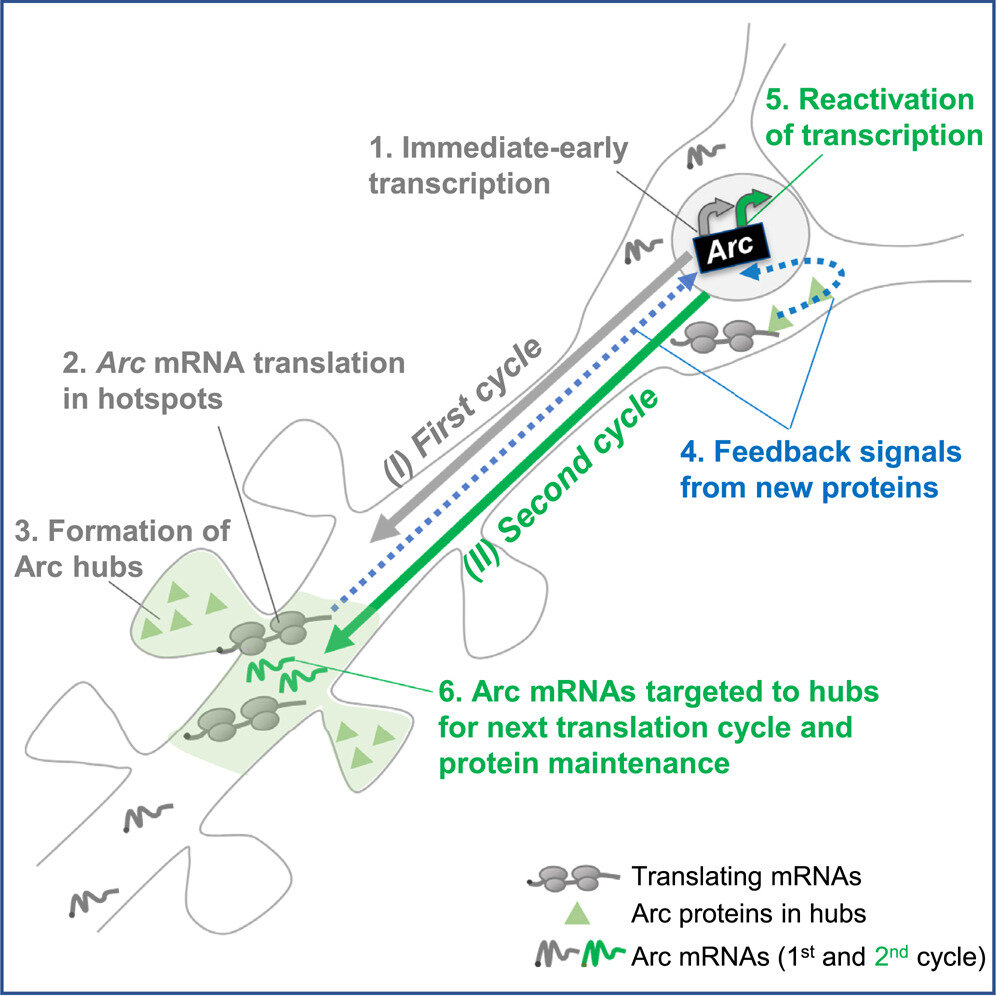
Graphical abstract. Credit: Neuron (2023). DOI: 10.1016/j.neuron.2023.04.005

Helping your mother make pancakes when you were three…riding your bike without training wheels…your first romantic kiss: How do we retain vivid memories of long-ago events? As described in a paper published in Neuron, researchers at Albert Einstein College of Medicine have found the explanation.

“The ability to learn new information and store it for long periods is one of the brain’s most remarkable features,” said Robert H. Singer, Ph.D., a co-corresponding author of the paper. “We’ve made a startling discovery in mice regarding the molecular basis for making those long-term memories.” Dr. Singer is professor of cell biology and in the Dominick P...

Read More